Statins, a heart prevention staple, weren’t to blame for muscle loss in a cohort study
Preventing heart diseasePart of a story we are following · 3 articles · See every update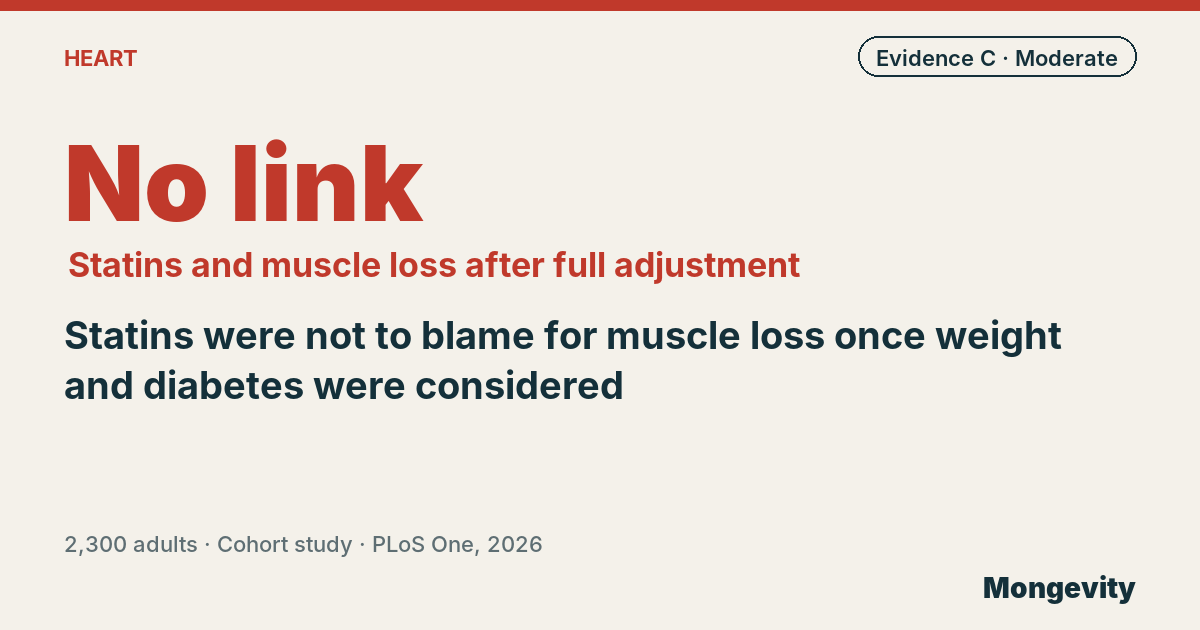
Statin users seemed to lose more leg muscle at first, but the difference disappeared after accounting for body mass index and diabetes, in a study of 2,300 adults followed from 2021 to 2023 at one center, published Sept. 3, 2026, in PLoS One. Fear of muscle loss shouldn’t derail heart disease prevention with statins.
Statins lower cholesterol and prevent heart attacks and strokes, but many people worry they harm muscles. Muscle aches are a common complaint, and some fear statins speed up muscle loss with age.
What did the study look at?
Researchers analyzed adults who had repeated health checkups at one center between 2021 and 2023. Muscle mass in arms, legs and the whole body was measured with bioelectrical impedance, a quick test that estimates body composition. Among 2,300 participants, 334 (14.5%) took statins continuously. Statin users were older and more often had metabolic conditions such as diabetes.
What did the study find about heart disease prevention?
- Without adjustments, statin users lost more leg muscle and total limb muscle than non-users.
- The difference remained after accounting for age and sex.
- After also accounting for body mass index and diabetes, statin use was no longer linked to faster loss in any muscle measure.
- No differences were seen in arm muscle or in the overall skeletal muscle index in any analysis.
Why does this matter?
Fear of muscle damage is one of the main reasons people stop statins, which raises their risk of heart attack and stroke. This study suggests that the muscle loss seen in statin users is better explained by the health conditions that led them to take statins than by the drug itself.
How solid is this evidence?
It’s moderate. Mongevity rates it C on our A-to-E scale: a cohort with repeated measurements. Limits: it came from one center, follow-up lasted about two years, muscle was estimated by impedance rather than more precise scans, statin use was partly self-reported and observational data can’t rule out other explanations.
What are the open questions?
Longer studies with more precise muscle measurements and strength tests, especially in older adults, would help confirm the findings.
What does this mean for you?
If you take a statin and have muscle aches, talk with your doctor: a dose change or a different statin often helps, and true statin muscle damage is rare. Don’t stop it on your own. The best protection for your muscles is strength training and enough protein.
How do I explain this at dinner?
People worry statins eat away at their muscles. In this study, statin users did seem to lose a bit more leg muscle, but once researchers accounted for weight and diabetes, the statin itself wasn’t to blame. A good question for the table: who here does any strength exercise each week?
In one sentence: in a cohort of 2,300 adults, statin use was not independently linked to faster muscle mass decline after adjusting for body mass index and diabetes.
Questions and answers
- Do statins cause muscle loss?
- In this study, not after accounting for body mass index and diabetes.
- Why did statin users seem to lose more muscle?
- They were older and had more metabolic conditions, which explained the difference.
- What if I have muscle aches on a statin?
- Talk with your doctor; changing the dose or type often helps. Don't stop on your own.
- How can I protect my muscles?
- Strength training and enough protein.