For heart prevention, olive oil’s oleic acid didn’t change weight or blood pressure
Preventing heart diseasePart of a story we are following · 3 articles · See every update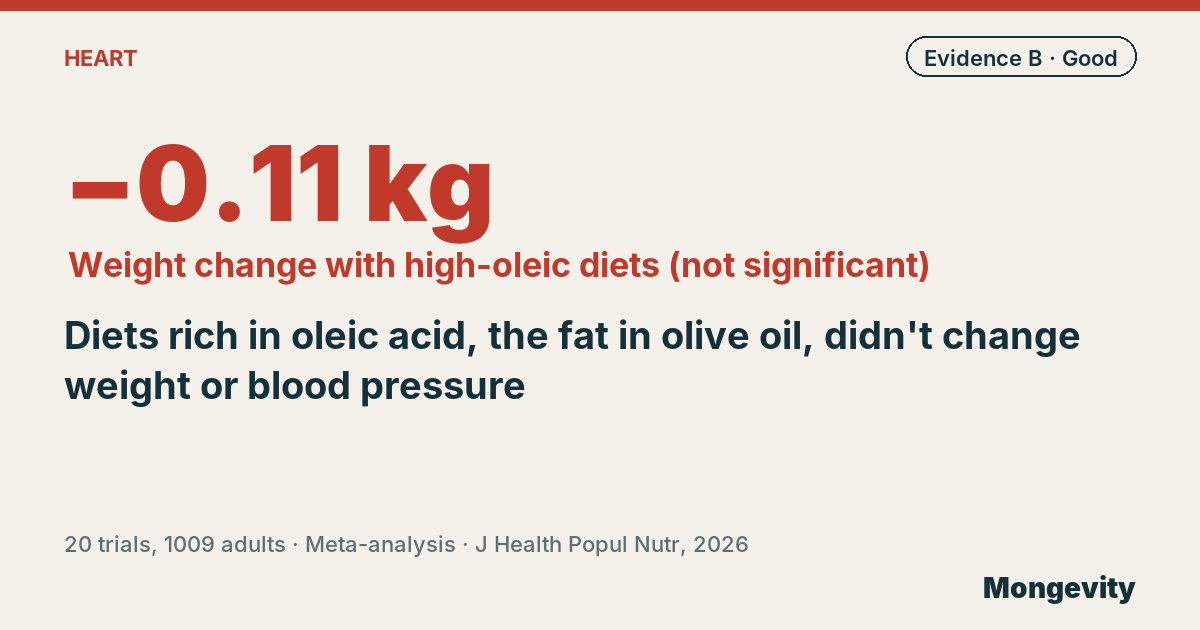
Diets rich in oleic acid, the main fat in olive oil, did not change body weight, body fat, inflammation markers or blood pressure compared with low-oleic diets at the same calories, in a meta-analysis of 20 randomized trials with 1009 adults published in July 2026 in Journal of Health, Population and Nutrition. For heart disease prevention, olive oil works as part of a whole diet.
Oleic acid is the main fat in olive oil, and also in high-oleic sunflower and canola oils, avocados and some nuts. It’s often praised for heart health and weight control.
What did the study look at?
Researchers pooled randomized trials in adults that compared diets high in oleic acid with diets low in it. Most were designed to keep calories the same, so that any difference would come from the type of fat, not from eating more or less. They found 20 trials with 1009 participants, published between 1991 and 2023.
What did the study find about heart disease prevention?
- High-oleic diets did not significantly change body weight (−0.11 kg), body mass index or total body fat.
- They did not change leptin, C-reactive protein or several inflammatory cytokines.
- Blood pressure did not change.
- Waist circumference rose slightly, by 0.63 cm, a finding the authors consider of minimal clinical relevance and possibly short-term.
- Differences between trials were consistently low.
Why does this matter?
Olive oil’s benefits for the heart are supported by large trials of the Mediterranean diet, where it comes together with vegetables, legumes, fish and nuts. This review suggests that oleic acid by itself, at the same calories, isn’t a weight-loss or blood pressure tool. Its value is likely in replacing saturated and processed fats and as part of an overall healthy pattern.
How solid is this evidence?
It’s good. Mongevity rates it B on our A-to-E scale: a meta-analysis of randomized trials with low heterogeneity. Limits: many trials were short and small, some are decades old, and the tiny change in waist size may reflect short-term shifts rather than real fat gain.
What are the open questions?
Longer and larger trials could clarify long-term effects on belly fat and inflammation, and whether results differ by the source of oleic acid.
What does this mean for you?
Keep using olive oil and other unsaturated oils instead of butter or lard, but don’t expect them alone to lower your weight or blood pressure. Calories still count, and the benefits come from the whole diet: plenty of plants, little processed food and regular activity.
How do I explain this at dinner?
Researchers pooled 20 trials where people ate diets rich in the fat found in olive oil, without changing calories. Weight, inflammation and blood pressure stayed the same. Olive oil is a good choice, but it’s not magic on its own. A good question for the table: what oil do we cook with most?
In one sentence: in 20 randomized trials, high-oleic diets were metabolically neutral for weight, body fat, inflammation and blood pressure compared with low-oleic diets.
Questions and answers
- What is oleic acid?
- The main fat in olive oil, also found in high-oleic sunflower and canola oils, avocados and some nuts.
- Did it help with weight?
- No: body weight changed by −0.11 kg, not significant.
- Did it lower blood pressure or inflammation?
- No significant changes were found.
- Should I stop using olive oil?
- No. It's a good replacement for saturated fats; it just isn't a standalone weight tool.