Less education and wealth meant more biological wear and tear with aging
Who gets to age wellPart of a story we are following · 4 articles · See every update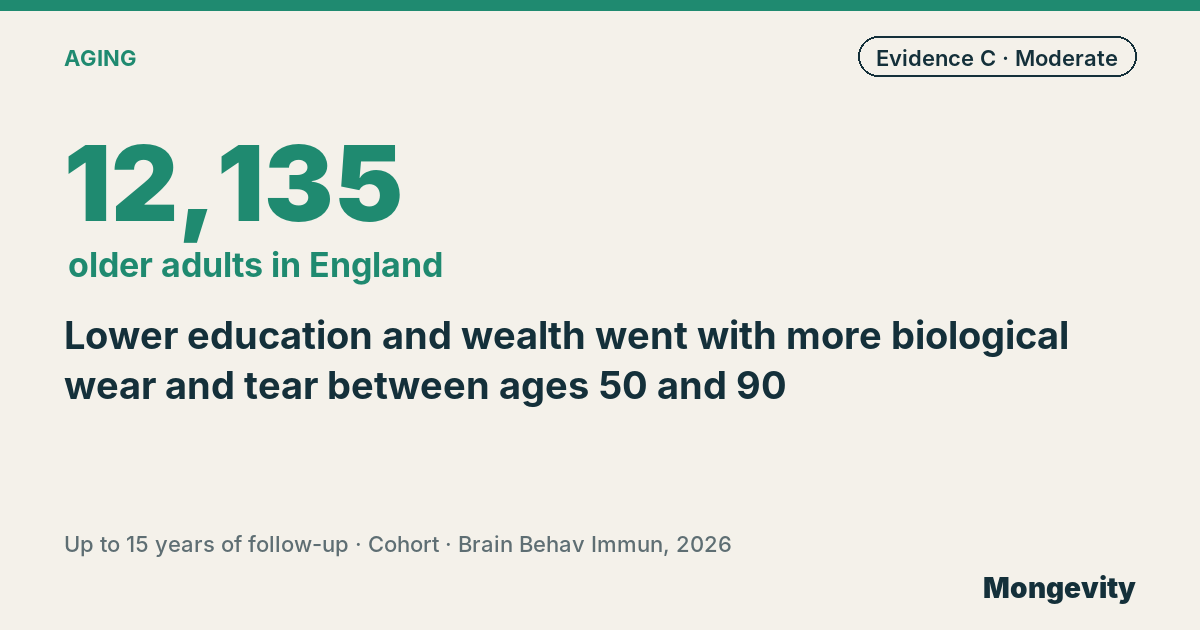
Lower education and lower wealth were linked to higher allostatic load, a measure of biological wear and tear, over up to 15 years in 12,135 older adults in England, in a study published Oct. 29, 2026, in Brain, Behavior, and Immunity. Healthy aging is unequal from the inside out.
People with less money and education tend to have worse health, but how does social position get under the skin? One idea is chronic stress, which can be measured in the body as allostatic load: a combined score of biomarkers such as blood pressure, cholesterol, blood sugar and inflammation.
What did the study look at?
Researchers used five waves of the English Longitudinal Study of Ageing, with 12,135 participants. They measured allostatic load from nine biomarkers at four time points and estimated how it changed between ages 50 and 90, by sex, according to education, occupation and wealth.
What did the study find about healthy aging?
- Allostatic load rose until about age 80 and then declined.
- Women had higher allostatic load trajectories than men.
- Lower education was linked to higher allostatic load, even after accounting for other illnesses, habits and body size.
- Lower wealth remained linked to higher allostatic load, while the link with manual occupation disappeared after adjustment.
- The social gradient, where higher social position goes with better health, differed between men and women.
Why does this matter?
It shows, with repeated measurements in the same people, that social disadvantage is reflected in the body over time. That supports policies and health care that address inequalities, not just individual habits.
How solid is this evidence?
It’s moderate. Mongevity rates it C on our A-to-E scale. The study is large, long and uses repeated biomarkers, which is rare. But it’s observational, the allostatic load score is a summary measure, and people who stay in long studies may be healthier than those who drop out.
What does this mean for you?
Stress and money worries can affect your body, not just your mood. Regular checks of blood pressure, sugar and cholesterol matter for everyone, especially in later life. Social support, sleep and physical activity can help buffer stress.
How do I explain this at dinner?
Scientists measured signs of wear and tear in the bodies of thousands of older people for years. Those with less schooling and less money showed more wear. A good question for the table: what helps people handle stress when life is hard?
In one sentence: in older adults in England, lower education and wealth were linked to more biological wear and tear over time, with higher levels in women.
Questions and answers
- What is allostatic load?
- A combined score of biomarkers, such as blood pressure, cholesterol, blood sugar and inflammation, that reflects the body's wear and tear from chronic stress.
- Does wealth affect biological aging?
- In this study, lower wealth and lower education were linked to higher allostatic load over time.
- Are there differences between men and women?
- Yes: women had higher allostatic load trajectories, and the social gradient differed by sex.