Aging in three African countries: 36% of adults over 40 had two or more chronic diseases
Who gets to age wellPart of a story we are following · 4 articles · See every update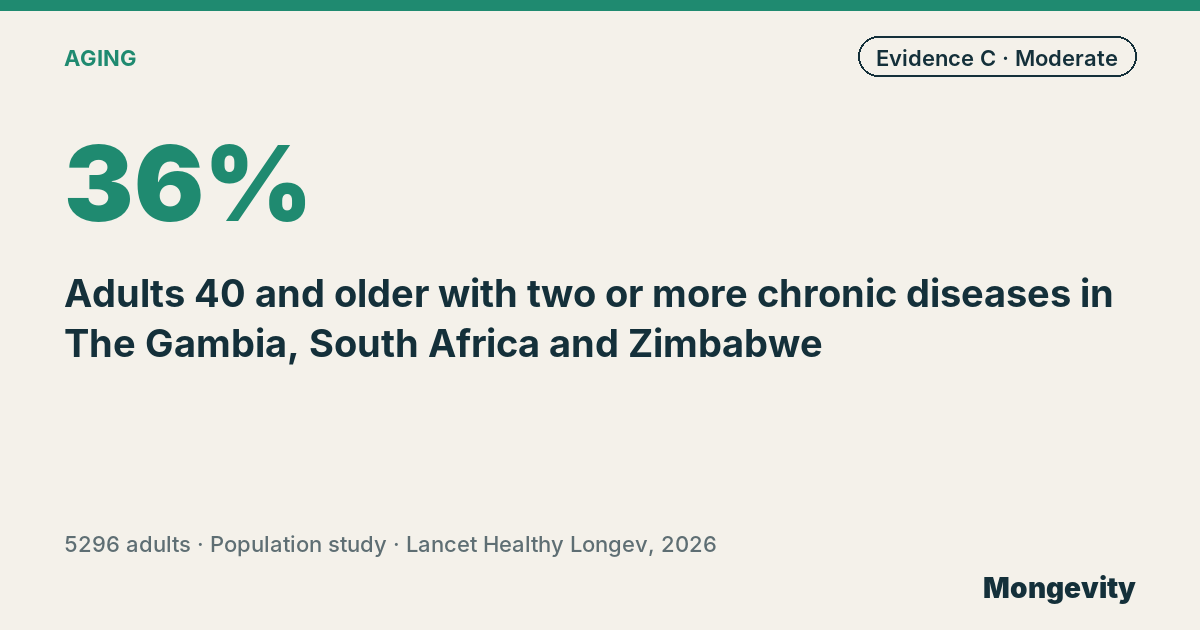
Multimorbidity, two or more chronic diseases, affected 36% of 5296 adults aged 40 and older in The Gambia, South Africa and Zimbabwe, ranging from 6.6% in rural Gambia to 62.0% in urban South Africa, in a study published Oct. 26, 2026, in The Lancet Healthy Longevity. Healthy aging in Africa depends a lot on where people live.
As people live longer around the world, more of them live with several chronic diseases at once, which is called multimorbidity. Most research on it comes from wealthy countries.
Overall, 36% of adults aged 40 and older had at least two chronic conditions, with huge differences between places.
What did the study look at?
Researchers recruited 5296 adults aged 40 or older in rural and urban The Gambia, rural and urban South Africa, and urban Zimbabwe, between 2022 and 2024. They recorded self-reported conditions and medications and measured height, weight, blood pressure, blood glucose, mental health symptoms, HIV status and quality of life. Multimorbidity meant having two or more of 26 chronic conditions.
What did the study find about healthy aging?
Diabetes, high blood pressure, HIV, mood disorders, arthritis and fragility fractures were the most common conditions. People with multimorbidity had lower quality of life. In Zimbabwe and South Africa, clusters linked to heart and metabolic disease (42-57% of the population) and to HIV (25-48%) appeared. Education, wealth, smoking, alcohol and body weight were lowest in The Gambia and highest in South Africa, with a rural-urban gradient.
Why does this matter?
The high levels in urban South Africa may show where other African regions are heading as populations age and urbanize. Health systems built to treat one disease at a time will need to care for people with several at once.
How solid is this evidence?
It’s moderate for describing the situation. Mongevity rates it C on our A-to-E scale. It’s a large population-based study with measurements, not just self-reports, but it’s a snapshot in time, so it can’t show causes, and five sites can’t represent whole countries.
What does this mean for you?
Wherever you live, getting blood pressure, blood sugar and weight checked regularly helps catch chronic diseases early, before they pile up. If you take several medicines, ask your doctor to review them together.
How do I explain this at dinner?
Scientists visited towns and cities in three African countries and found that more than a third of older adults had two or more long-term illnesses, especially in cities. A good question for the table: why might city life change our health?
In one sentence: multimorbidity affected 36% of adults 40 and older across three African countries, rising sharply in urban South Africa.
Questions and answers
- What is multimorbidity?
- Having two or more chronic diseases at the same time.
- How common was it in this study?
- 36% overall, from 6.6% in rural The Gambia to 62.0% in urban South Africa.
- Which conditions were most common?
- Diabetes, high blood pressure, HIV, mood disorders, arthritis and fragility fractures.