Leg movements during sleep, often overlooked, were linked to depression and insomnia
Sleep healthPart of a story we are following · 13 articles · See every update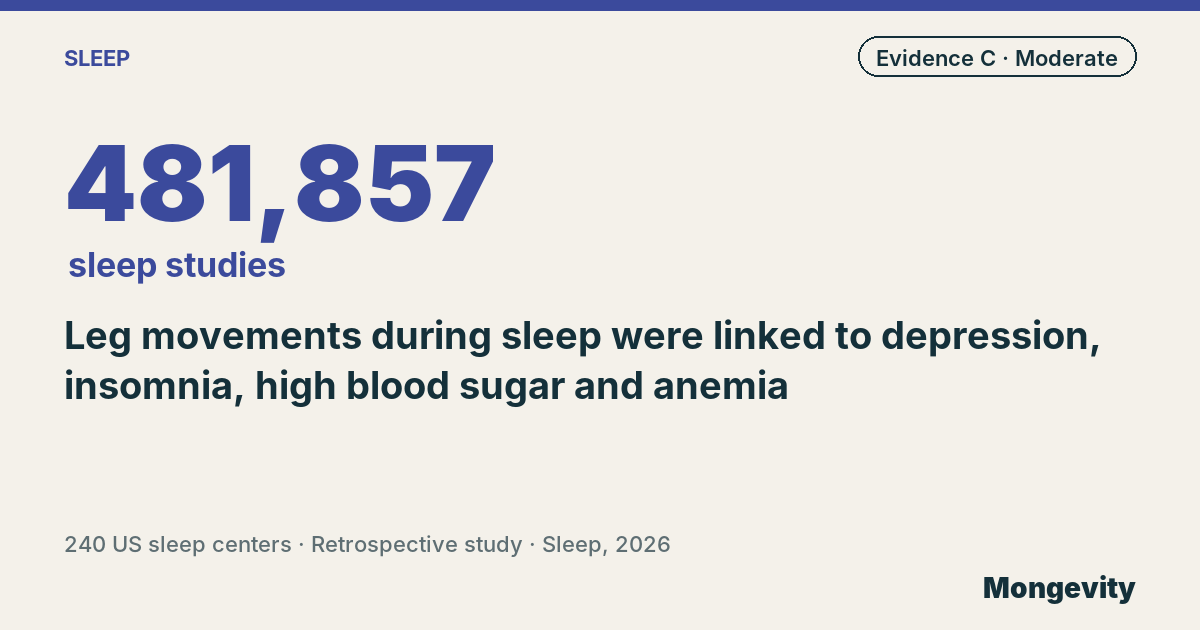
Periodic leg movements during sleep were linked to depression, insomnia, high blood sugar and anemia in 481,857 US adults who had overnight sleep studies, in a study published Oct. 15, 2026, in Sleep. These movements may be undercounted in people with sleep apnea.
Many people move their legs repeatedly during sleep at regular intervals, without knowing it. These periodic limb movements are usually noted on sleep studies but rarely get much attention.
What did the study look at?
Researchers analyzed 481,857 adults who had an overnight sleep study (polysomnography) and filled out a health questionnaire at 240 sleep centers in 30 US states. They measured the periodic limb movement index, the number of leg movements per hour of sleep, and looked for links with sleep apnea, demographics and health conditions.
What did the study find about sleep?
- The average was 10.3 leg movements per hour.
- More leg movements were linked to diagnosed depression, worse insomnia scores, high blood sugar and anemia.
- They were also linked to more awakenings and lower sleep efficiency.
- Leg movements were highest in White patients and lower in Hispanic, Asian and Black patients.
- Surprisingly, more sleep apnea went with fewer recorded leg movements, which suggests they may be undercounted when apnea is present.
Why does this matter?
Periodic leg movements may matter more than doctors think, across mood, metabolism and sleep. If current scoring rules miss many of them in people with sleep apnea, some patients may not be getting a full picture of what disturbs their sleep.
How solid is this evidence?
It’s moderate. Mongevity rates it C on our A-to-E scale. The data set is enormous, but it’s retrospective and cross-sectional: it shows associations, not causes. Some conditions were self-reported, and the people studied were referred for sleep testing, not the general population.
What does this mean for you?
If a bed partner notices you kicking during sleep, or you feel tired despite enough sleep, mention it to your doctor. Leg movements during sleep can be linked to low iron, so a simple blood test may be worthwhile. Restless legs at night are also worth reporting.
How do I explain this at dinner?
Some people kick their legs again and again while they sleep without noticing. Scientists looked at almost half a million sleep studies and found these kicks were linked to feeling down, sleeping badly and low iron in the blood. A good question for the table: has anyone ever told you that you move a lot when you sleep?
In one sentence: periodic leg movements during sleep, often overlooked, were linked to depression, insomnia, high blood sugar and anemia in nearly half a million sleep studies.
Questions and answers
- What are periodic limb movements during sleep?
- Repeated leg movements during sleep at regular intervals, that people usually don't notice.
- Are they harmful?
- In this study they were linked to depression, insomnia, high blood sugar, anemia and more broken sleep, but the study can't prove cause.
- What should I do if I have them?
- Mention them to your doctor; checking iron levels may be useful.