TrenibotulinumtoxinE, then onabotulinumtoxinA 30 days later: no new safety concerns
Aesthetic treatments: what worksPart of a story we are following · 3 articles · See every update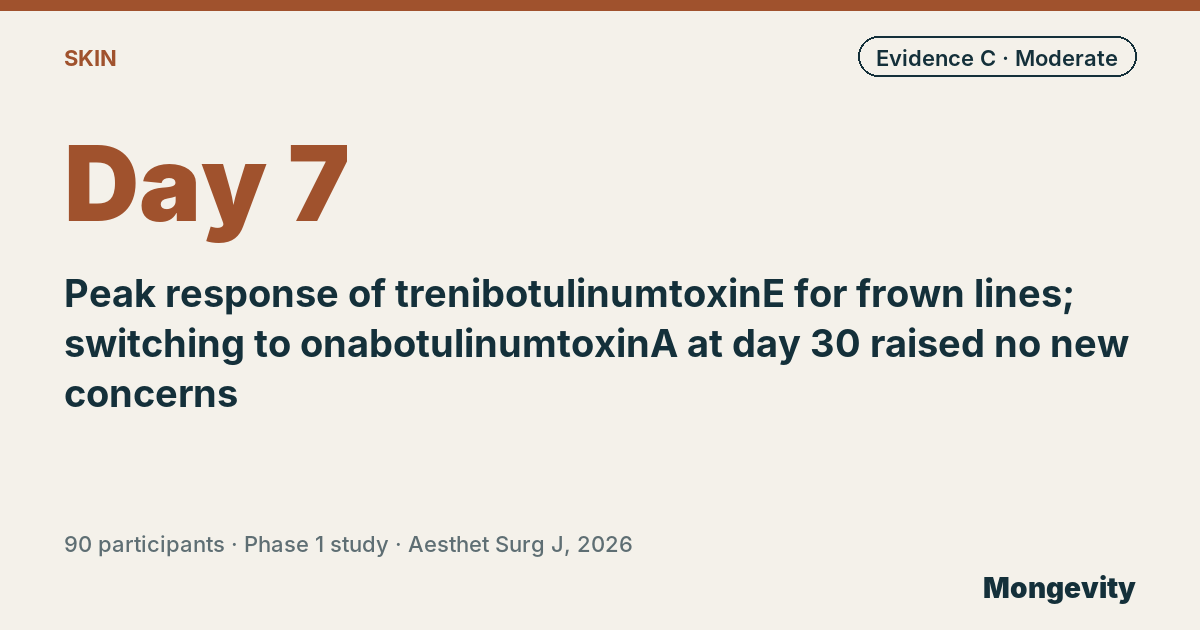
Giving trenibotulinumtoxinE, a fast-acting type E toxin, and then onabotulinumtoxinA 30 days later for frown lines raised no new safety concerns and no antibodies against either toxin, in a phase 1 study published Oct. 27, 2026, in Aesthetic Surgery Journal. It supports trying the short-acting toxin before a longer one among aesthetic treatments.
Botulinum toxin type A, known by brand names such as Botox, is the most common treatment for the vertical frown lines between the eyebrows. Some people hesitate to try it because they’re unsure about the result and the effect lasts for months. TrenibotulinumtoxinE, or trenibotE, is a type E toxin that works differently and acts fast.
The sequence raised no new safety concerns.
What are glabellar lines?
They’re the vertical lines between the eyebrows that deepen when you frown. Botulinum toxins relax the small muscles that pull the skin together there.
What did the study test?
90 participants with moderate to severe frown lines received either a placebo or trenibotE 700 U on day 1. On day 30, 85 of them received onabotulinumtoxinA 20 U, and everyone was followed through day 150. Investigators and participants rated the lines with a standard wrinkle scale while frowning as hard as possible.
What did the study find about aesthetic treatments?
| Finding | Result |
|---|---|
| Response at day 60 (30 days after type A) | similar whether people first got placebo or trenibotE |
| Peak response with trenibotE | day 7 |
| Peak response with onabotulinumtoxinA | day 60 |
| Antibodies against either toxin | none detected |
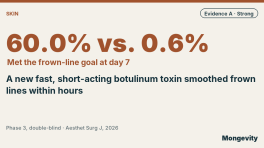
Peak response rates were similar for trenibotE at day 7 and onabotulinumtoxinA at day 60. Most side effects were mild, not serious and not related to the treatment.
Why does this matter?
A fast-acting toxin could let people “try” a result before committing to a longer-lasting product. The study also checked that getting the type E toxin first didn’t make the type A toxin work worse or trigger antibodies, a concern with repeated treatments.
How solid is this evidence?
It’s moderate. Mongevity rates it C on our A-to-E scale. It was a small phase 1 study focused on safety. It didn’t compare long-term results and doesn’t tell us how long the type E effect lasts or whether this strategy improves satisfaction.
What does this mean for you?
If you’re considering treatment for frown lines, ask a licensed physician which products are approved where you live, how long each lasts and what the risks are. Avoid unlicensed providers; botulinum toxins should be injected only by trained professionals.
How do I explain this at dinner?
Some medicines relax the tiny muscles that make frown lines. Scientists tested starting with a quick-acting one and switching to the usual one a month later, and it was safe. A good question for the table: why might someone want to try something for a short time before committing?
In one sentence: starting with a fast-acting type E botulinum toxin and switching to the usual type A toxin 30 days later raised no new safety concerns in a small phase 1 study.
Questions and answers
- What is trenibotulinumtoxinE?
- A botulinum toxin type E that acts faster than the usual type A toxins used for wrinkles.
- Is it safe to switch from type E to type A?
- In this small study, giving onabotulinumtoxinA 30 days after trenibotE raised no new safety concerns and no antibodies against either toxin.
- Does trenibotE work as well as type A?
- Peak response rates were similar: trenibotE at day 7 and onabotulinumtoxinA at day 60.