Coin-shaped eczema: about half of patients reacted to a contact allergen like nickel
EczemaPart of a story we are following · 3 articles · See every update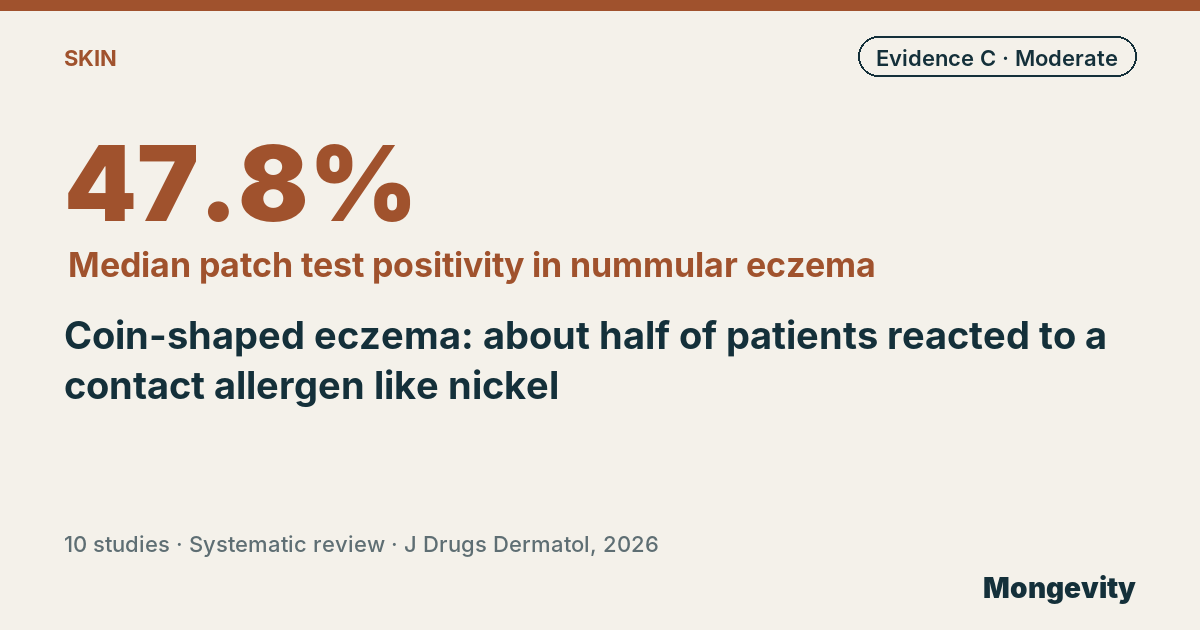
A median of 47.8% of people with nummular eczema, which causes coin-shaped itchy patches, tested positive for at least one contact allergen, according to a systematic review of 10 observational studies published in October 2026 in Journal of Drugs in Dermatology. Nickel, chromate, cobalt and fragrances were among the most common triggers of this eczema.
Nummular eczema causes itchy, coin-shaped patches of inflamed skin, often on the legs, arms or trunk. It can be stubborn and recur for years. Allergies to substances that touch the skin, found by patch testing, may trigger or worsen it.
What did the study look at?
Researchers searched three databases in April 2026 for studies that used patch testing in people with nummular eczema. Of 287 studies identified, 10 observational studies met the criteria. Patch testing places small amounts of common allergens on the skin, usually the back, for a few days to see which cause a reaction.
What did the study find about eczema?
- The median share of patients with at least one positive patch test was 47.8%, ranging from 26.7% to 56.0% across studies.
- The most frequent allergens included nickel, potassium dichromate (found in leather and cement), cobalt, fragrance mix, the antibiotic neomycin, colophony (a resin), formaldehyde, paraphenylenediamine (in hair dyes) and rubber chemicals.
- Among studies that reported it, a median of 33.5% of patients also had current or past allergic contact dermatitis.
Why does this matter?
If a contact allergen is part of the problem, avoiding it can help control eczema and reduce the need for medicines. This review supports patch testing for people with severe or hard-to-treat nummular eczema.
How solid is this evidence?
It’s limited. Mongevity rates it C on our A-to-E scale: a systematic review, but of observational studies with different patch test series and methods. A positive test doesn’t always mean the allergen causes the eczema, and the review couldn’t establish cause and effect.
What are the open questions?
Studies with standard patch testing and follow-up of avoidance strategies are needed to know whether allergens cause, worsen or simply accompany nummular eczema.
What does this mean for you?
If you have coin-shaped eczema that keeps coming back despite treatment, ask a dermatologist about patch testing. Meanwhile, simple steps can help: fragrance-free products, daily moisturizing and noticing whether jewelry, belt buckles, leather or new products seem to trigger flares.
How do I explain this at dinner?
Some people get itchy round patches of eczema that look like coins. Pooling studies, about half of them were allergic to something that touches their skin, like nickel in jewelry or fragrances. A good question for the table: what touches our skin every day without us noticing?
In one sentence: contact allergen sensitization was common in nummular eczema, with a median patch test positivity of 47.8%, supporting patch testing in severe or treatment-resistant cases.
Questions and answers
- What is nummular eczema?
- A type of eczema with itchy, coin-shaped patches, often on the legs, arms or trunk.
- How common were contact allergies?
- A median of 47.8% of patients had at least one positive patch test.
- Which allergens were common?
- Nickel, chromate, cobalt, fragrances, neomycin, colophony, formaldehyde, hair dye chemicals and rubber chemicals.
- Should I get patch tested?
- Ask a dermatologist if your eczema is severe or doesn't respond to treatment.