In adults with eczema, targeted drugs meant fewer hospital and emergency visits
EczemaPart of a story we are following · 3 articles · See every update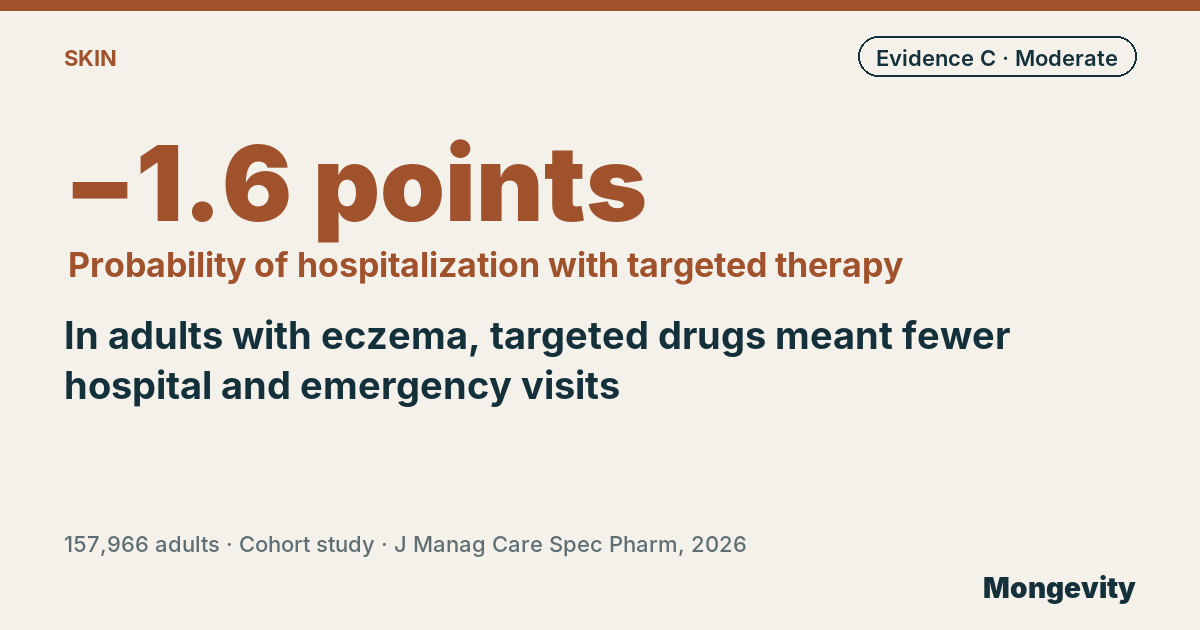
Targeted therapies, almost always dupilumab, were linked to a 1.6 percentage point lower probability of hospitalization and a 1.7 point lower probability of emergency visits in 157,966 US adults with eczema, in a study published in November 2026 in Journal of Managed Care and Specialty Pharmacy. The drugs raised total spending because of their price.
Atopic dermatitis, the most common form of eczema, causes itchy, inflamed skin and can disrupt sleep, work and mood. New targeted therapies, such as the injection dupilumab and pills called JAK inhibitors, work well in trials but are expensive.
What did the study look at?
Researchers used US commercial insurance claims from 2012 to 2023 on adults aged 18 or older with atopic dermatitis. They compared changes over time in people who received a targeted therapy with those who didn’t, using a method called difference-in-differences. 157,966 adults were included, with a mean age of 41.6 years. 9,320 (6%) received a targeted therapy, 99% of them dupilumab.
What did the study find about eczema?
- Targeted therapy was linked to a 1.6 percentage point lower probability of any hospitalization in a year.
- It was linked to a 1.7 percentage point lower probability of any emergency department visit.
- Total health care spending rose by $24,901 per year, entirely due to drug costs ($26,061), while hospital and outpatient spending fell.
- Patients’ out-of-pocket costs rose by $95 per year.
Why does this matter?
Severe eczema can lead to infections, flares that need urgent care and hospital stays. This study suggests that targeted therapies reduce those episodes in real life, a benefit beyond clearer skin. It also shows the high price, which shapes access for many people.
How solid is this evidence?
It’s moderate. Mongevity rates it C on our A-to-E scale: a large observational study with a method that compares changes over time. Limits: people who get targeted therapy may differ from those who don’t, the data cover commercially insured adults in the US, and most results reflect dupilumab only.
What are the open questions?
It’s unclear whether the newer JAK inhibitors and other biologics show the same pattern, and whether lower prices would change the cost balance.
What does this mean for you?
If you live with moderate to severe eczema that isn’t controlled with creams and moisturizers, ask a dermatologist about targeted therapies. Keep up basic skin care, such as daily moisturizing and gentle cleansers, which help with any treatment.
How do I explain this at dinner?
People with bad eczema who got newer targeted drugs ended up less often in the hospital or the emergency room. The drugs are expensive, so total costs rose, but patients paid only a little more out of pocket. A good question for the table: how do we weigh the price of a treatment against the trouble it prevents?
In one sentence: in adults with atopic dermatitis, targeted therapy use was linked to fewer hospitalizations and emergency visits but higher overall health care spending, driven by drug costs.
Questions and answers
- What are targeted therapies for eczema?
- Medicines such as dupilumab and JAK inhibitors that block specific immune signals.
- Did they reduce hospital visits?
- Yes: 1.6 points lower probability of hospitalization and 1.7 points lower of emergency visits.
- What about costs?
- Total spending rose by $24,901 per year due to drug costs; out-of-pocket rose by $95.
- Who was studied?
- 157,966 US adults with commercial insurance and atopic dermatitis.