A lip filler matched an approved one, with half of responders still improved at 48 weeks
Aesthetic treatments: what worksPart of a story we are following · 3 articles · See every update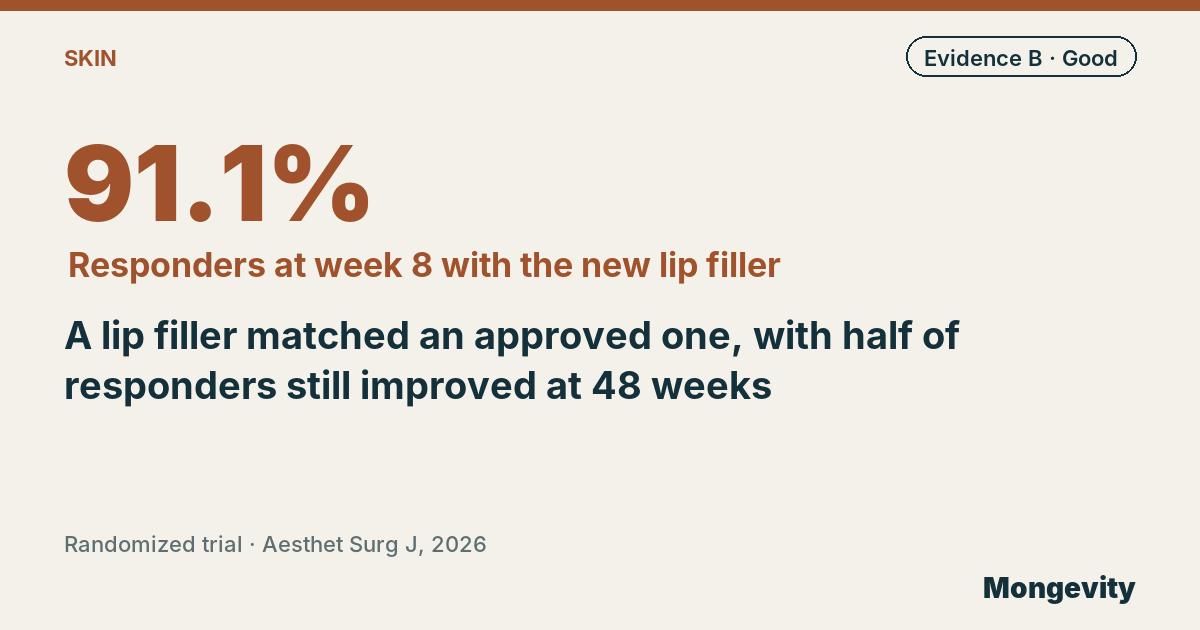
A hyaluronic acid lip filler with lidocaine improved lip fullness in 91.1% of treated people at 8 weeks and was not inferior to an approved filler, in a randomized trial at US centers published Oct. 15, 2026, in Aesthetic Surgery Journal. About half of responders kept the improvement through week 48, useful for expectations about aesthetic treatments.
Lip augmentation with hyaluronic acid fillers is one of the most common cosmetic procedures. Hyaluronic acid is a substance naturally present in the skin; as a gel, it adds volume and is gradually absorbed. New products must show they are safe and at least as effective as approved ones.
What did the trial test?
Adults with thin or medium lips, across a range of skin types, were assigned by chance, 3 to 1, to one of the two fillers at several centers. A touch-up was allowed at week 4, and retreatment was offered at week 48 to those who got the new filler. An evaluator who didn’t know which filler was used rated lip fullness with a standard scale. Side effects were tracked for up to 60 weeks.
What did the study find about aesthetic treatments?
- At week 8, 91.1% (144 of 158) of people treated with the new filler responded, well above the 50% success threshold set in advance.
- The improvement was not inferior to the approved filler.
- Among responders, 51.1% (70 of 137) kept the improvement through week 48, in an analysis done after the fact.
- No severe or serious treatment-related side effects were reported.
Why does this matter?
People considering lip fillers want to know how well they work, how long they last and how safe they are. This trial gives clear numbers for one product and shows that results tend to fade within a year for about half of people, which matters for expectations and costs.
How solid is this evidence?
It’s good for the main question. Mongevity rates it B on our A-to-E scale: a multicenter randomized trial with a blinded evaluator. Limits: the comparison was designed to show the new filler is not worse, not better; participants knew they were treated; the durability result came from an analysis done later; and such trials are usually funded by the manufacturer.
What are the open questions?
Longer follow-up and direct comparisons of durability and satisfaction between products would help people choose.
What does this mean for you?
If you’re considering lip fillers, choose a qualified, licensed professional, ask about the product, expected duration, risks and what happens if you’re not happy with the result. Hyaluronic acid fillers can usually be dissolved if needed. Mongevity does not recommend specific brands or products.
How do I explain this at dinner?
A new lip filler was compared with an approved one in a trial with an evaluator who didn’t know which was used. Nine in ten people got fuller lips at two months, and about half kept the result almost a year later. A good question for the table: what would you want to know before any cosmetic treatment?
In one sentence: Belotero Intense with lidocaine was safe and effective for lip augmentation and non-inferior to Restylane Silk with lidocaine, with about half of responders maintaining improvement through week 48.
Questions and answers
- What is a hyaluronic acid filler?
- A gel of a substance naturally present in the skin that adds volume and is gradually absorbed.
- How well did it work?
- 91.1% of people treated responded at week 8.
- How long did it last?
- 51.1% of responders kept the improvement through week 48.
- Was it safe?
- No severe or serious treatment-related side effects were reported.