People with hidradenitis suppurativa started GLP-1 drugs earlier and more often
Skin diseasesPart of a story we are following · 5 articles · See every update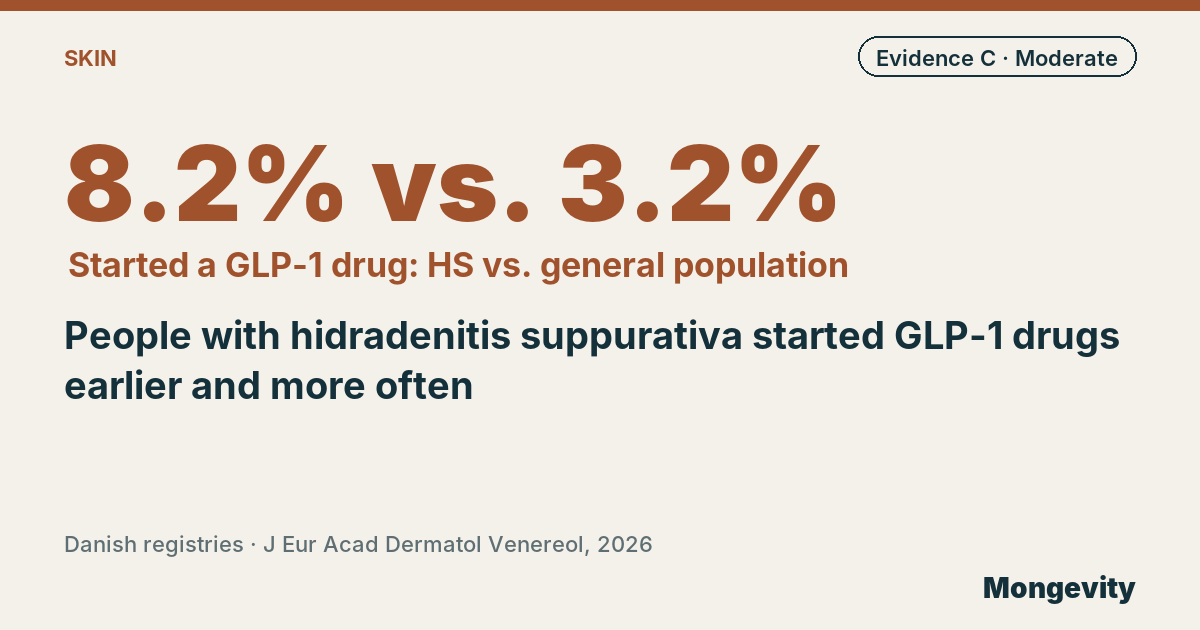
People with hidradenitis suppurativa in Denmark started GLP-1 drugs more often than people with psoriasis or controls, 8.2% vs. 5.7% and 3.2%, in a nationwide study published Oct. 3, 2026, in Journal of the European Academy of Dermatology and Venereology. Treatments for this skin disease fell afterward, but similarly in non-users.
Hidradenitis suppurativa, or HS, is a chronic inflammatory skin disease that causes painful lumps and draining tunnels in skin folds. It affects around 1% of adults and is strongly linked to obesity, diabetes and heart disease. GLP-1 drugs, used for diabetes and weight loss, have anti-inflammatory effects, and some reports suggest they ease HS.
What did the study do?
Using nationwide Danish health registries from 2000 to 2022, researchers compared 12,581 adults with HS with 9824 people with psoriasis and 12,581 people from the general population, matched by age and sex. They looked at GLP-1 use, other illnesses and changes in health care and HS treatments in the 2 years before and after starting a GLP-1 drug.
What did the study find about skin disease?
| HS | Psoriasis | General population | |
|---|---|---|---|
| Started a GLP-1 drug | 8.2% | 5.7% | 3.2% |
| Mean years to starting | 8.88 | 10.1 | 10.2 |
- People with HS who started GLP-1 drugs had a high burden of metabolic, heart and mental health conditions.
- After starting a GLP-1 drug, people with HS used fewer HS surgeries and systemic medicines, such as antibiotics.
- But similar declines were seen in matched people with HS who didn’t start GLP-1 drugs, and the differences weren’t statistically significant.
Why does this matter?
The results show that people with HS often need treatment for metabolic problems, and earlier than others. But they don’t confirm that GLP-1 drugs themselves improve HS, since non-users also improved over time.
How solid is this evidence?
It’s moderate. Mongevity rates it C on our A-to-E scale: a large nationwide registry study with matched comparisons, but observational, with no direct measure of HS severity. The decline in treatments in both groups may reflect the natural course of the disease or changes in care.
What are the open questions?
Randomized trials are needed to test whether GLP-1 drugs reduce HS flares, pain and the need for surgery.
What does this mean for you?
If you have HS and excess weight, diabetes or high blood pressure, managing them matters for your overall health, and possibly for your skin. Ask your doctors whether a GLP-1 drug is appropriate for your metabolic health; don’t expect it to replace HS treatment.
How do I explain this at dinner?
People with a painful skin disease called HS started weight-loss and diabetes drugs earlier and more often than others. Their skin treatments dropped afterward, but so did those of people who didn’t take the drugs. A good question for the table: why might skin and weight be connected?
In one sentence: people with hidradenitis suppurativa used GLP-1 drugs earlier and more often, but this study couldn’t show that the drugs themselves improved HS.
Questions and answers
- What is hidradenitis suppurativa?
- A chronic inflammatory skin disease with painful lumps and draining tunnels in skin folds.
- How often did people with HS start GLP-1 drugs?
- 8.2%, vs. 5.7% with psoriasis and 3.2% of the general population.
- Do GLP-1 drugs improve HS?
- Not shown here: HS treatments fell similarly in people who didn't take them.