Newer kidney tests flagged changes in some healthy-looking older dogs
Senior dogsPart of a story we are following · 6 articles · See every update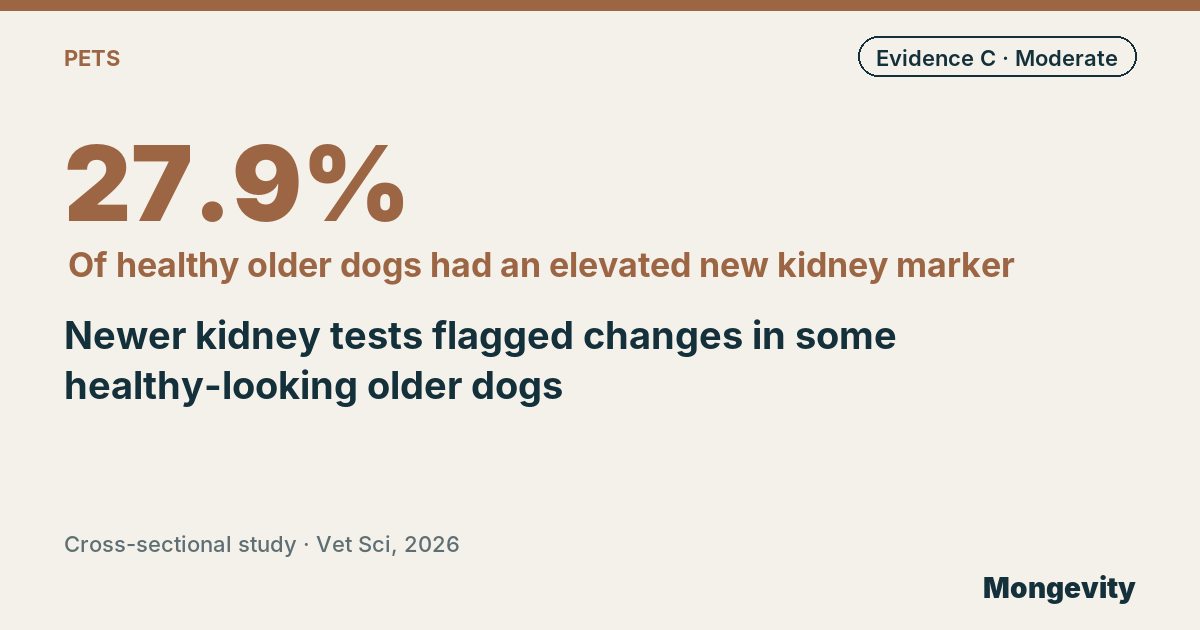
Newer kidney tests, mostly cystatin C, were elevated in 27.9% of 61 healthy older dogs despite normal creatinine and urea, in a study published Aug. 28, 2026, in Veterinary Sciences. For senior dogs, these markers may flag kidney changes earlier.
Kidney disease is common in older dogs, but standard blood tests, creatinine, urea and SDMA, often catch it only when much function is already lost. Creatinine also depends on muscle mass, which falls with age.
What did the study do?
Researchers studied sixty-one neutered older dogs without clinical disease or other lab abnormalities. They measured serum cystatin C, a kidney marker less affected by muscle mass, and the urinary NAG index, a sign of damage to kidney tubules. Dogs were grouped as controls, subclinical (normal creatinine but at least one elevated new marker) or with azotemic chronic kidney disease (creatinine above 1.5 mg/dL).
What did the study find about senior dogs?
- 17 of 61 dogs, 27.9%, had at least one elevated new marker despite normal creatinine.
- All 17 also had normal urea, suggesting changes before standard tests turn abnormal.
- These changes were identified mainly by cystatin C.
- The NAG index was elevated in 6 of 17 (35.3%) subclinical dogs, and SDMA in none.
Why does this matter?
If confirmed, cystatin C and the NAG index could help vets spot early kidney changes in older dogs, when diet and monitoring might slow progression. They could also help avoid missing kidney problems in thin, older dogs whose low muscle mass makes creatinine look falsely reassuring.
How solid is this evidence?
It’s limited. Mongevity rates it C on our A-to-E scale: a small cross-sectional study, and, as the authors note, cystatin C partly decided group membership and no direct measure of kidney filtration was done. The findings describe a pattern rather than prove the tests’ accuracy.
What are the open questions?
Prospective studies are needed to see whether dogs with elevated markers actually develop kidney disease, and whether early action changes outcomes.
What does this mean for you?
If your dog is 8 or older, ask your vet about a yearly senior check with blood and urine tests. Make sure fresh water is always available, and report increased thirst or urination, weight loss or appetite changes.
How do I explain this at dinner?
Standard tests often miss early kidney problems in older dogs. Newer tests flagged changes in 27.9% of healthy-looking older dogs whose usual results were normal. A good question for the table: what health checks does an older pet need?
In one sentence: newer markers, mainly cystatin C, flagged altered kidney biochemistry in 27.9% of healthy older dogs with normal standard tests, a finding that needs validation.
Questions and answers
- What is cystatin C?
- A blood marker of kidney filtration that is less affected by muscle mass than creatinine.
- What did the study find?
- 27.9% of healthy older dogs had at least one elevated new marker despite normal creatinine.
- Should my dog get these tests?
- Ask your vet; the tests are promising but need validation.