After weight training, plant and animal proteins ranked similarly for muscle building
Exercise and recoveryPart of a story we are following · 3 articles · See every update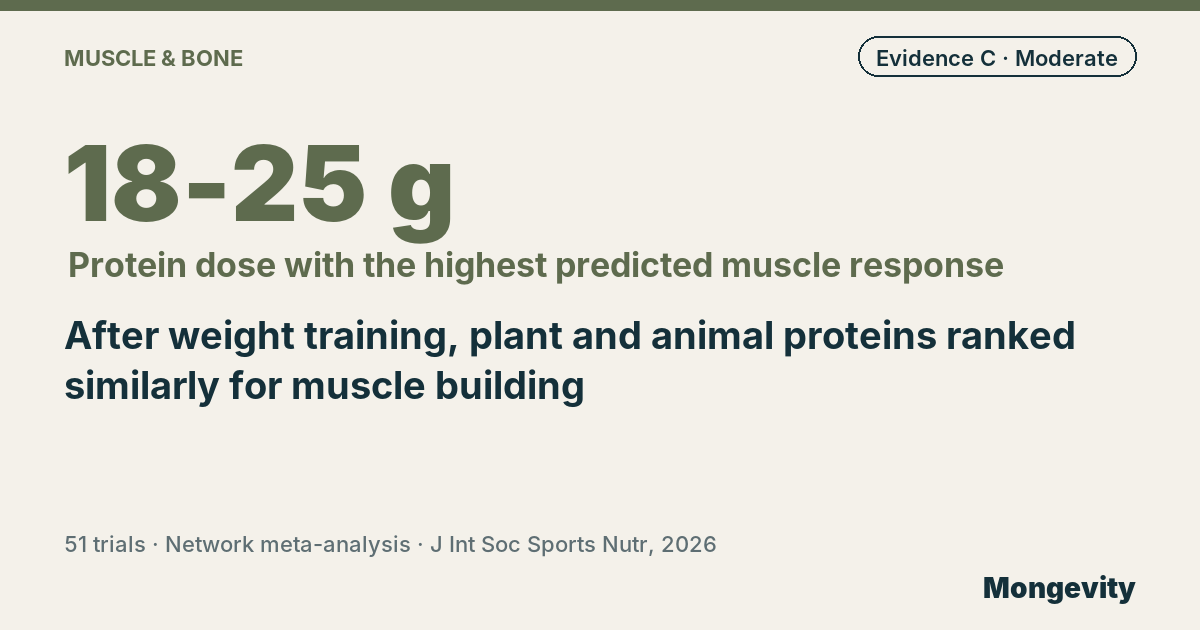
Whey, egg, pea and mycoprotein ranked similarly for boosting muscle protein synthesis after resistance exercise, with the best predicted responses at 18 to 25 g, in a network meta-analysis of 51 trials published Oct. 12, 2026, in Journal of the International Society of Sports Nutrition. For exercise recovery, plant proteins can work about as well as animal ones.
After strength training, muscles build new protein to repair and grow, and eating protein boosts that process, called muscle protein synthesis. Whey from milk is the classic choice, but many people eat plant proteins.
What did the study look at?
Researchers searched several databases for studies in healthy adults who did a bout of resistance exercise followed by a single dose of protein. Muscle samples were taken before and after to measure the hourly rate of muscle protein synthesis with tracer methods. 51 trials qualified. They used network meta-analyses, including one looking at the effect of different doses.
What did the study find about exercise recovery?
- Native whey, pea protein, whole egg, mycoprotein (a fungus-based protein) and whey ranked highest for boosting muscle protein synthesis, in that order.
- Only whey protein showed a statistically significant effect (mean difference 0.02% per hour).
- Certainty of evidence was low to moderate.
- The dose analysis predicted the highest responses with doses of 18 to 25 g for native whey, whole egg, pea and mycoprotein.
Why does this matter?
Plant-based eaters and people who don’t tolerate dairy often worry they can’t build muscle as well. This review suggests that good plant proteins such as pea or mycoprotein can rank close to animal proteins after training, at a moderate dose. That’s useful for athletes and for older adults trying to preserve muscle.
How solid is this evidence?
It’s limited. Mongevity rates it C on our A-to-E scale: a network meta-analysis of trials with direct muscle measurements, but certainty was low to moderate, several sources were tested in few studies, and the outcome was a short-term lab measure, not muscle growth over months.
What are the open questions?
Long-term trials are needed to see whether these short-term differences translate into more muscle and strength, especially in older adults, who respond less to protein.
What does this mean for you?
After strength exercise, a meal or snack with about 18 to 25 g of good-quality protein, from dairy, eggs, legumes such as peas, or other sources, supports recovery. What you eat over the whole day matters more than the exact source. Mongevity does not recommend specific brands or products.
How do I explain this at dinner?
Scientists pooled dozens of studies that measured how fast muscles build protein after lifting weights and a protein snack. Whey, eggs, peas and a fungus protein all ranked close, with 18 to 25 g as a sweet spot. A good question for the table: what’s your go-to food after exercise?
In one sentence: after resistance training, animal (whey, whole egg) and plant (pea, mycoprotein) proteins ranked similarly for acute muscle protein synthesis, with only whey reaching statistical significance.
Questions and answers
- What is muscle protein synthesis?
- The process by which muscles build new protein to repair and grow.
- Which proteins ranked highest?
- Native whey, pea, whole egg, mycoprotein and whey, in that order.
- How much protein?
- The best predicted responses came with 18 to 25 g.
- Are plant proteins enough?
- Pea and mycoprotein ranked close to animal proteins in this short-term measure.