Weak grip and high uric acid were linked to higher mortality in older adults
Muscle strength with agePart of a story we are following · 3 articles · See every update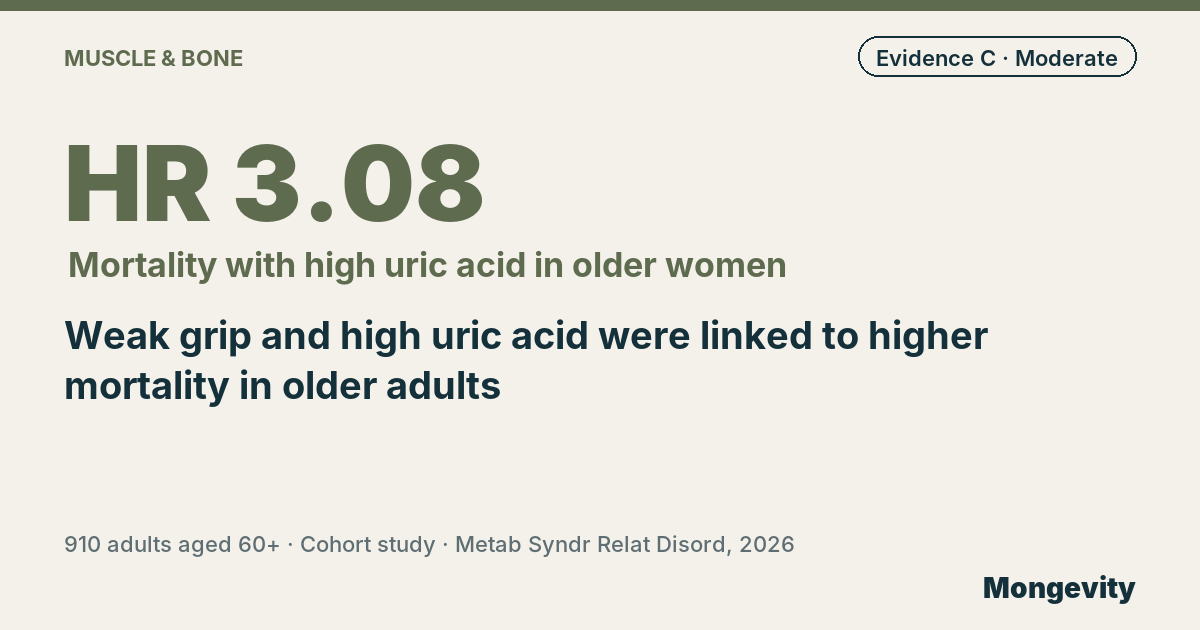
Low handgrip strength (hazard ratio 1.91) and the highest uric acid levels (1.86) were each linked to higher mortality in 910 adults aged 60 or older at a university hospital, in a study published Sept. 15, 2026, in Metabolic Syndrome and Related Disorders, though the links weakened after adjustment. In women, high uric acid stayed an independent predictor, and keeping muscle strength remains key.
Handgrip strength is a simple test that reflects overall muscle strength, and weak grip is a well-known warning sign of poor health in older adults. Uric acid, a waste product that can cause gout, has a more debated role.
What did the study look at?
Researchers reviewed records of 910 adults aged 60 or older seen at a university hospital between 2020 and 2024, excluding people with conditions or medicines that could distort the results. They measured handgrip strength and muscle mass, defined sarcopenia with European criteria, and grouped uric acid levels into quarters. The mean age was 71 years, and 66.9% were women.
What did the study find about muscle strength?
- Low handgrip strength was linked to higher mortality (hazard ratio 1.91) in initial analyses.
- The highest quarter of uric acid was also linked to higher mortality (hazard ratio 1.86).
- Both were linked to worse metabolic markers.
- After adjusting for other factors, these links weakened.
- In women, high uric acid remained an independent predictor of death (hazard ratio 3.08).
Why does this matter?
Grip strength is cheap and fast to measure, and uric acid is part of many routine blood tests. Looking at both, and considering sex differences, could help doctors identify older adults at higher risk who might benefit from closer follow-up, exercise and attention to metabolic health.
How solid is this evidence?
It’s limited. Mongevity rates it C on our A-to-E scale: a retrospective cohort at one hospital. Limits: the main links weakened after adjustment, the number of deaths was not reported in the abstract, and hospital patients may differ from the general population.
What are the open questions?
Larger studies in the community could clarify whether uric acid is truly a risk factor in older women or a marker of other problems, and whether improving grip strength changes outcomes.
What does this mean for you?
Keeping your hands and whole body strong matters as you age: carry groceries, use resistance bands or squeeze a soft ball. If a blood test shows high uric acid, ask your doctor what it means for you, especially if you’re an older woman.
How do I explain this at dinner?
Doctors measured how hard older adults could squeeze a device and checked a blood marker called uric acid. Weak grip and high uric acid were both linked to dying sooner, and in women, high uric acid stood out even after other factors were considered. A good question for the table: how strong is your handshake?
In one sentence: in older adults, low handgrip strength and high uric acid were associated with increased mortality, with uric acid remaining an independent predictor in women.
Questions and answers
- Why measure grip strength?
- It's a simple test that reflects overall muscle strength and health in older adults.
- Was weak grip linked to death?
- Yes, in initial analyses (hazard ratio 1.91), but the link weakened after adjustment.
- And uric acid?
- The highest levels were linked to mortality (hazard ratio 1.86), and in women stayed independent (3.08).
- What can I do?
- Keep muscles strong with regular strength exercise and discuss high uric acid with your doctor.