A daily cup’s worth of blueberries raised blood flow in one brain area of older adults
Food and the brainPart of a story we are following · 3 articles · See every update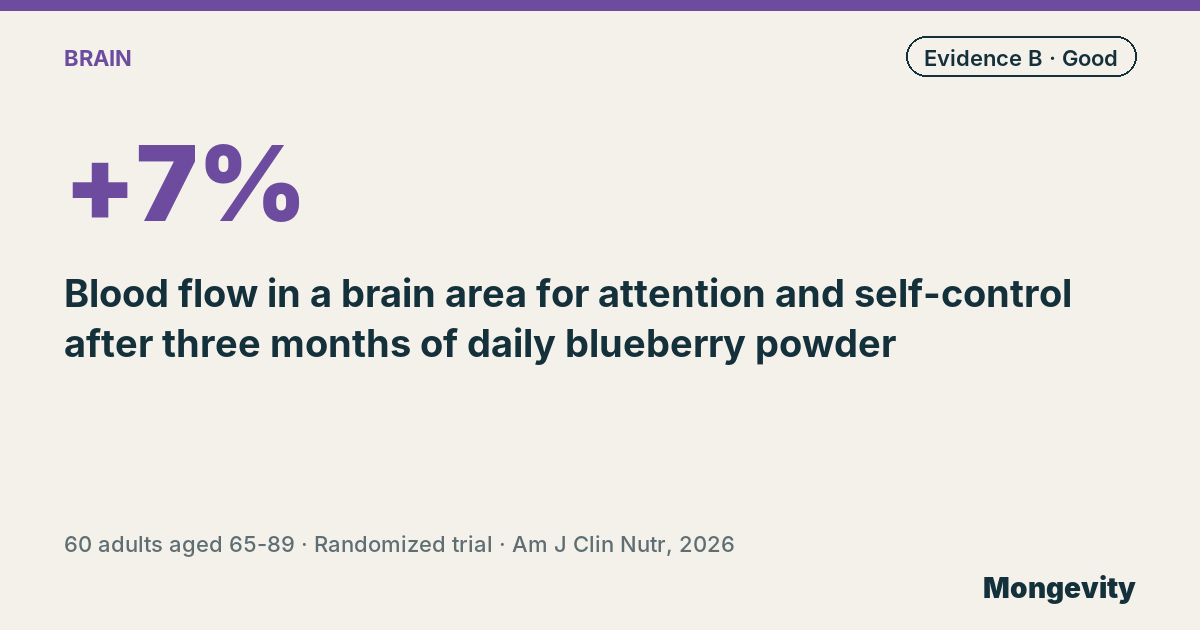
Older adults who took blueberry powder for three months had more blood flow in a brain area linked to self-control than those on placebo, in a randomized trial published Oct. 28, 2026, in American Journal of Clinical Nutrition. A brain antioxidant didn’t change, so the effects of diet on the brain remain modest.
Blueberries are often called brain food because they’re rich in polyphenols, plant compounds with antioxidant effects. But does eating them actually change anything in the aging brain?
Older adults who took blueberry powder, equal to about one cup of fresh blueberries a day, for three months had more blood flow in the anterior cingulate cortex than those who took a placebo powder. The brain’s main antioxidant, glutathione, didn’t change.
Why measure blood flow and glutathione?
With age, blood flow to parts of the brain drops and the brain’s antioxidant defenses weaken. Both are linked to memory problems and a higher risk of dementia. The researchers wanted to know whether blueberries help mainly by boosting antioxidants, as is often claimed, or by improving blood vessels.
What did the trial test?
Adults aged 65 to 89 who rarely ate berries took freeze-dried whole blueberry powder or a matching placebo powder every day for three months. Neither participants nor researchers knew who got which. MRI scans measured glutathione and blood flow in several brain regions before and after. Sixty people finished, and more than 92% of doses were taken in both groups.
What did the study find about diet and the brain?
| After three months | Blueberry vs. placebo |
|---|---|
| Brain glutathione | no difference |
| Blood flow, anterior cingulate cortex | higher with blueberry |
Within the blueberry group, blood flow rose 7% in the anterior cingulate cortex, 7% in the caudate and 6% in the putamen, areas involved in attention, self-control and movement. Nothing changed in the placebo group. The authors conclude blueberries likely act on blood vessels more than on the brain’s antioxidant levels.
Why does this matter?
It’s a step toward understanding how a common food might affect the brain, measured directly in people rather than in cells or mice. It also challenges the simple idea that berries work because they’re antioxidants.
How solid is this evidence?
It’s good, but limited. Mongevity rates it B on our A-to-E scale. The trial was randomized, double-blind and placebo-controlled. But it was small, lasted three months and measured blood flow, not memory or dementia. More blood flow in one area doesn’t prove better thinking.
What does this mean for you?
Blueberries are a healthy food, and adding a cup a day is low risk for most people. Don’t expect them to prevent dementia on their own; the habits with the most support remain physical activity, good sleep, staying social and controlling blood pressure.
How do I explain this at dinner?
Scientists gave older people blueberry powder for a few months and took pictures of their brains. One part involved in paying attention got a little more blood. A good question for the table: what else do you think helps your brain get what it needs?
In one sentence: three months of blueberry powder raised blood flow in a brain area tied to self-control in older adults, but didn’t change the brain’s main antioxidant.
Questions and answers
- Do blueberries help the brain?
- In this trial, three months of blueberry powder raised blood flow in a brain area tied to attention and self-control. Effects on memory weren't measured.
- Do blueberries work as antioxidants in the brain?
- The trial didn't find a change in brain glutathione, the main antioxidant. The effect looked more related to blood vessels.
- How much was used?
- Freeze-dried powder equal to about one cup of fresh blueberries a day.