After Achilles tendon surgery, smoking and delays were linked to more complications
Tendon painPart of a story we are following · 3 articles · See every update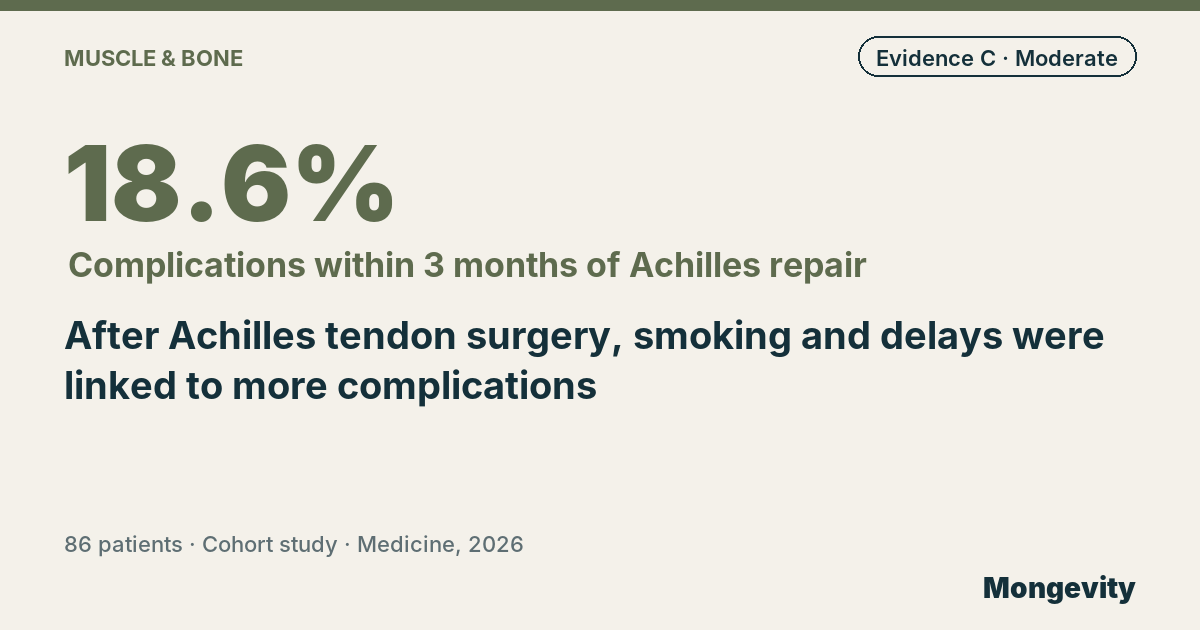
Complications followed 18.6% of surgeries for a ruptured Achilles tendon, mostly wound problems, in a study of 86 patients at a single hospital, published Oct. 23, 2026, in Medicine. Smoking and a longer wait for surgery were linked to higher risk.
The Achilles tendon, which connects the calf to the heel, can tear during sport or a sudden push-off, often in middle-aged people. Surgery is a common treatment, but the skin over the tendon is thin and heals slowly.
What did the study look at?
Researchers reviewed records of patients at one hospital who had surgery for an acute Achilles tendon rupture between 2021 and 2024. They looked at any complication within 3 months, and at the extra care needed: hospital days, dressing changes, outpatient visits, readmissions and reoperations. 86 patients were included.
What did the study find about tendon pain?
- 16 patients (18.6%) had a complication.
- Most were wound problems: delayed wound healing in 6 (7.0%) and superficial infection in 4 (4.7%); 1 needed surgery for a deep infection.
- People with complications needed longer hospital stays, more dressing changes, more visits and more readmissions and reoperations.
- A history of smoking was linked to complications (odds ratio 3.21).
- Each increase in the time from injury to surgery was linked to higher risk (odds ratio 1.36).
- Higher body mass index was more common in those with complications.
Why does this matter?
Wound problems can delay rehab and return to normal life. Smoking is a well-known enemy of healing, and this study adds tendon surgery to the list. Getting surgery done promptly also seems to matter.
How solid is this evidence?
It’s limited. Mongevity rates it C on our A-to-E scale: a retrospective cohort at a single center, with a small number of patients and complications. Limits: estimates are imprecise, records may miss some details, and the study didn’t compare surgery with non-surgical treatment.
What are the open questions?
Larger studies could confirm the risk factors and test whether quitting smoking before surgery, or faster access to surgery, reduces complications.
What does this mean for you?
If you feel a sudden snap at the back of your ankle, seek care promptly. If surgery is recommended and you smoke, stopping, even for a few weeks around the operation, helps wounds heal. Follow wound care instructions and report redness, discharge or opening of the wound.
How do I explain this at dinner?
When people tear the big tendon at the back of the ankle and get it repaired, nearly one in five has a complication, mostly with the wound. Smokers and those who waited longer for surgery had more trouble. A good question for the table: what helps a wound heal faster?
In one sentence: after Achilles tendon repair, complications were relatively common and mostly wound-related, and smoking history and a longer interval from injury to surgery were linked to higher risk.
Questions and answers
- How common were complications?
- 18.6% of patients had one within 3 months.
- What kind?
- Mostly wound problems, such as delayed healing and superficial infection.
- What raised the risk?
- Smoking history (odds ratio 3.21) and a longer time from injury to surgery.
- What can I do?
- Seek care promptly after a tear and stop smoking around surgery.