A triple-hormone injection lowered blood sugar more than semaglutide in a phase 2 trial
GLP-1 drugs (Ozempic, Wegovy, Mounjaro)Part of a story we are following · 4 articles · See every update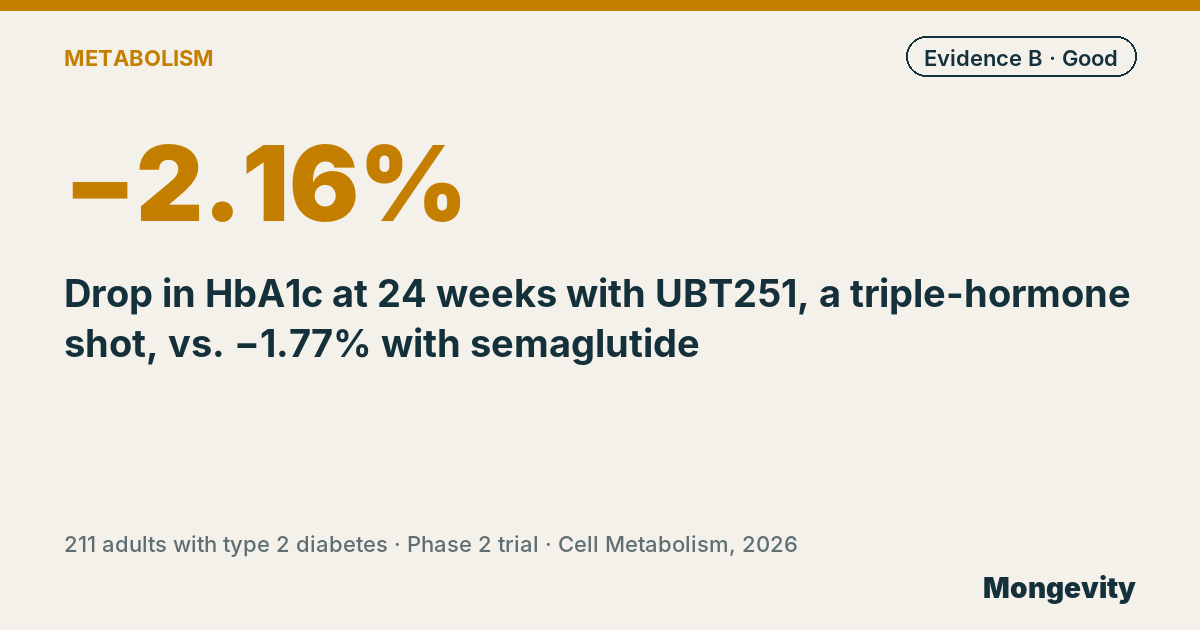
UBT251, a weekly shot that acts on three gut hormones, lowered HbA1c by up to 2.16% at 24 weeks in adults with type 2 diabetes, vs. 1.77% with semaglutide and 0.66% with placebo, in a phase 2 trial in China published Oct. 26, 2026, in Cell Metabolism. It could become a next step beyond current GLP-1 drugs.
The first wave of GLP-1 drugs copied one gut hormone. Tirzepatide added a second. Now several companies are testing drugs that act on three at once: GLP-1, GIP and glucagon.
After 24 weeks, it lowered HbA1c, the average blood sugar of the past few months, by up to 2.16%, more than the 1.77% seen with semaglutide.
What is a triple agonist?
GLP-1 and GIP are gut hormones that help the body release insulin after meals and make you feel full. Glucagon usually raises blood sugar, but in these drugs it’s used in a balanced way to increase energy use and help burn fat, especially in the liver. A drug that activates all three receptors aims to improve blood sugar and weight at the same time.
What did the trial test?
211 adults with type 2 diabetes were assigned by chance to a weekly injection of UBT251 at one of four dose schedules, to semaglutide 1 mg, or to placebo, for 24 weeks.
What did the study find about GLP-1 drugs?
| At 24 weeks | Change in HbA1c |
|---|---|
| UBT251, depending on dose | -1.98% to -2.16% |
| Semaglutide 1 mg | -1.77% |
| Placebo | -0.66% |
UBT251 also lowered fasting blood sugar, blood sugar two hours after meals and waist size compared with placebo. Weight loss was greater than with both placebo and semaglutide. The most common side effects were stomach problems.
Why does this matter?
For many people with type 2 diabetes, losing weight and controlling blood sugar go together. Drugs that do both well could mean fewer medicines and better long-term health. This trial adds to the evidence that hitting three hormones may do a little more than hitting one.
How solid is this evidence?
It’s good, but early. Mongevity rates it B on our A-to-E scale. The trial was randomized and included both placebo and an active comparator, which is a strength. But it was a phase 2 study of 24 weeks, all participants were in China, and it was run by the company developing the drug, which has filed a patent based in part on these results. The authors call for phase 3 trials.
What does this mean for you?
UBT251 isn’t available outside clinical trials. If you have type 2 diabetes, the drugs already approved where you live, including GLP-1 drugs, are the ones to discuss with your doctor. Ask what your current HbA1c is and what target makes sense for you.
How do I explain this at dinner?
Your gut sends little chemical messages after you eat that tell your body how to handle sugar. Some new medicines copy one of those messages; this one copies three at once. A good question for the table: why might three messages work better than one?
In one sentence: a weekly shot that acts on three gut hormones lowered blood sugar more than semaglutide in a 24-week trial, but it still needs larger, longer studies.
Questions and answers
- What is UBT251?
- An experimental weekly injection that activates three hormone receptors: GLP-1, GIP and glucagon.
- Did it work better than semaglutide?
- In this trial, HbA1c dropped 1.98% to 2.16% with UBT251 and 1.77% with semaglutide, and weight loss was greater with UBT251.
- What are the side effects?
- Mostly stomach problems, as with other drugs of this family.
- Can I get it?
- No, it's only available in clinical trials. Phase 3 studies are still needed.