A GLP-1/GIP drug helped adults with type 1 diabetes lose weight in a 16-week trial
GLP-1 drugs (Ozempic, Wegovy, Mounjaro)Part of a story we are following · 4 articles · See every update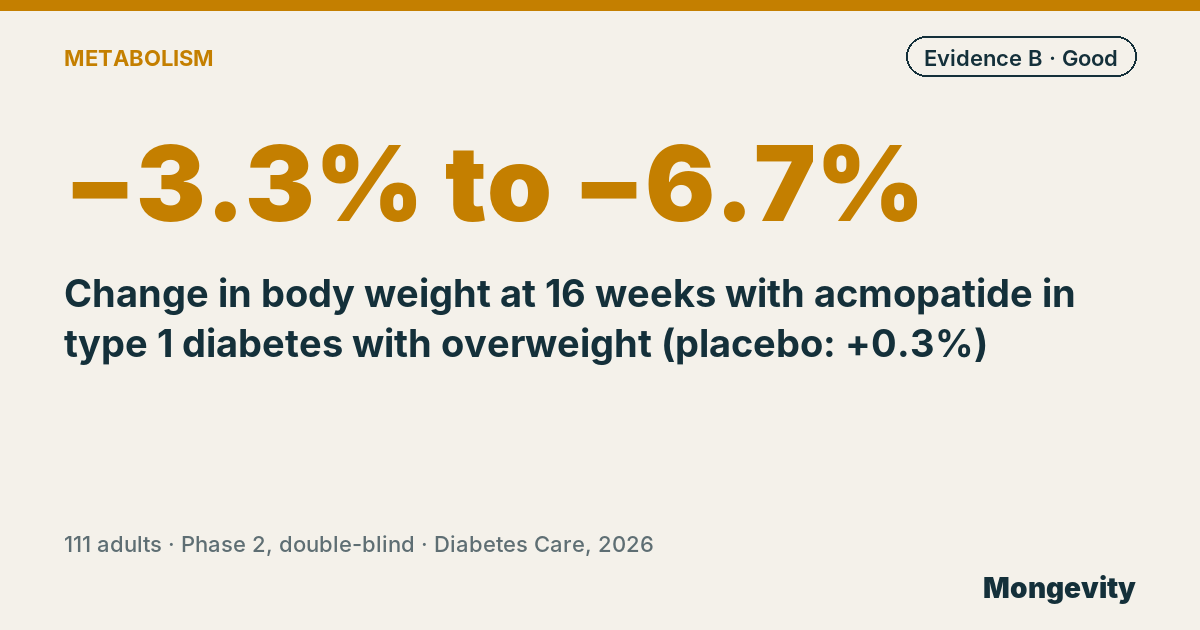
Adults with type 1 diabetes and overweight or obesity lost 3.3% to 6.7% of their body weight in 16 weeks on acmopatide, a GLP-1/GIP drug, vs. a 0.3% gain on placebo, in a phase 2 trial published Oct. 28, 2026, in Diabetes Care. It is one of the first tests of GLP-1 drugs built for people with type 1 diabetes.
GLP-1 drugs are widely used in type 2 diabetes and obesity, but people with type 1 diabetes, whose bodies don’t make insulin, increasingly also struggle with weight. Using these drugs in type 1 diabetes raises safety questions, such as ketoacidosis or dangerous drops in blood sugar.
It lowered weight and modestly improved blood sugar, with no ketoacidosis or severe low blood sugar.
What did the trial test?
111 adults with type 1 diabetes, an HbA1c between 7.0% and 10.0% and a body mass index of 27 or higher were assigned by chance to acmopatide at 1.8, 4.1 or 6.6 mg a day, or to placebo, for 16 weeks. Neither participants nor researchers knew who got what.
What did the study find about GLP-1 drugs?
| At 16 weeks | Acmopatide | Placebo |
|---|---|---|
| Change in body weight | -3.3% to -6.7% | +0.3% |
| Change in HbA1c | -0.4% to -0.6% | -0.3% |
| HbA1c below 7.0% (4.1 mg dose) | 55.6% | 33.3% |
Daily insulin doses fell compared with placebo at the two higher doses, and systolic blood pressure dropped. Side effects were mostly stomach problems. There were no cases of diabetic ketoacidosis or severe hypoglycemia.
Why does this matter?
More people with type 1 diabetes now live with overweight or obesity, which raises their heart risk. Drugs approved for type 2 diabetes aren’t routinely used in type 1, so trials like this one are needed to know whether they’re safe and helpful.
How solid is this evidence?
It’s good, but early. Mongevity rates it B on our A-to-E scale. The trial was randomized, double-blind and placebo-controlled, but small and only 16 weeks long. The improvement in HbA1c was small and only nominally significant for one dose. Longer and larger trials are needed.
What does this mean for you?
If you have type 1 diabetes and are struggling with weight, ask your endocrinologist what options exist and whether trials are available. Never start a GLP-1 drug on your own: insulin doses may need adjusting to avoid low blood sugar.
How do I explain this at dinner?
People with type 1 diabetes need insulin because their bodies don’t make it. Some also gain weight, and a new medicine helped them lose some without dangerous drops in sugar. A good question for the table: why do medicines need to be tested in different groups of people?
In one sentence: a daily GLP-1/GIP shot helped adults with type 1 diabetes and overweight lose weight over 16 weeks, without ketoacidosis or severe low blood sugar.
Questions and answers
- Can people with type 1 diabetes use GLP-1 drugs?
- Not routinely yet. In this trial, acmopatide was tested in type 1 diabetes with overweight and caused no ketoacidosis or severe hypoglycemia.
- How much weight did people lose?
- Between 3.3% and 6.7% of body weight in 16 weeks, vs. a 0.3% gain with placebo.
- Did it lower blood sugar?
- Modestly: HbA1c fell 0.4% to 0.6% vs. 0.3% with placebo.