In schizophrenia with diabetes, a GLP-1 drug was linked to fewer psychiatric admissions
GLP-1 drugs (Ozempic, Wegovy, Mounjaro)Part of a story we are following · 4 articles · See every update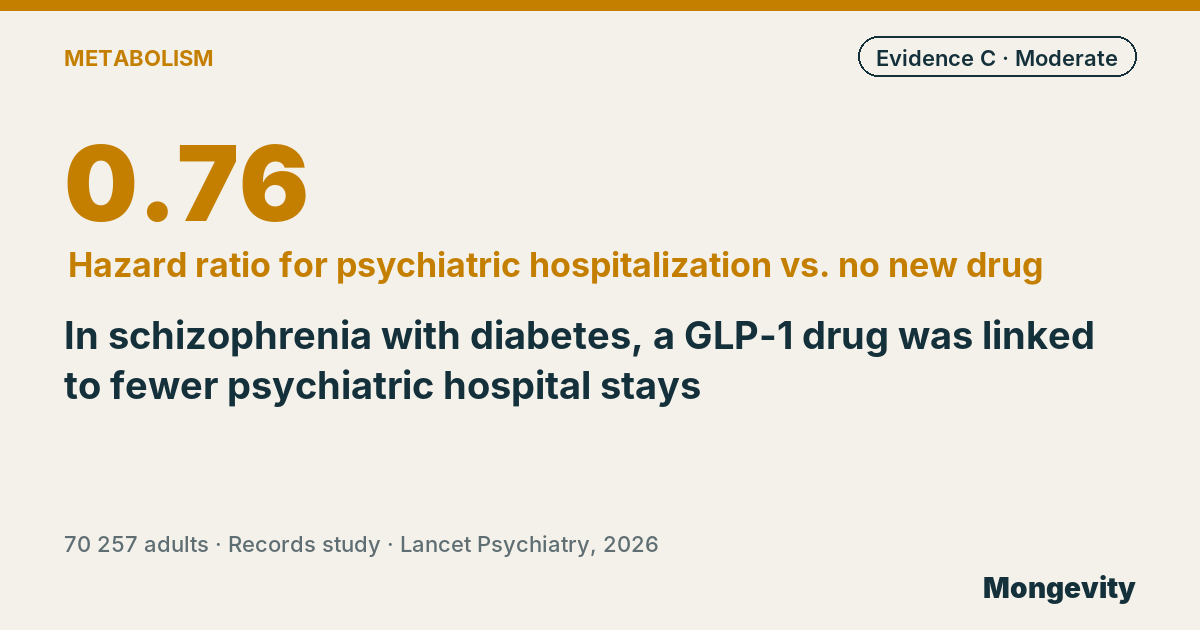
Starting a GLP-1 drug was linked to fewer psychiatric hospitalizations (hazard ratio 0.76) in 70 257 US adults with schizophrenia and type 2 diabetes, in a records study published in November 2026 in The Lancet Psychiatry. GLP-1 drugs may help more than blood sugar in this group.
People with schizophrenia often have high rates of obesity and type 2 diabetes, partly because of antipsychotic medicines. GLP-1 receptor agonists, such as semaglutide, lower blood sugar and weight, and there’s interest in whether they also affect the brain.
What did the study do?
Researchers used US electronic health records from 2018 onward to identify 70 257 adults with schizophrenia and type 2 diabetes. They compared people who started a GLP-1 drug (9093) with those who started other diabetes drugs, DPP-4 inhibitors (4968) or SGLT2 inhibitors (5328), and with those who started none of these. They balanced the groups on many characteristics and followed people for up to 2 years.
What did the study find about GLP-1 drugs?
| GLP-1 start vs. | Psychiatric hospitalization (hazard ratio) | Psychiatric emergency visit (hazard ratio) |
|---|---|---|
| No new drug | 0.76 | 0.71 |
| DPP-4 inhibitor | 0.82 | 0.87 |
| SGLT2 inhibitor | 0.83 | 0.80 |
Comparing with other diabetes drugs helps reduce the chance that the result simply reflects who gets treated.
Why does this matter?
If GLP-1 drugs, already prescribed for diabetes and weight, also lower psychiatric crises, that would be a welcome extra benefit in a group with high needs. It also opens questions about how these drugs act on the brain.
How solid is this evidence?
It’s moderate. Mongevity rates it C on our A-to-E scale: a large records study with careful weighting and active comparison groups, but observational. The authors note potential residual confounding and selection bias. It doesn’t show that GLP-1 drugs treat schizophrenia.
What are the open questions?
Randomized trials and studies of how these drugs act in the brain are needed before GLP-1 drugs could be considered for psychiatric purposes.
What does this mean for you?
If you or someone close to you has schizophrenia and type 2 diabetes or excess weight, ask the medical team about metabolic care, including whether a GLP-1 drug is appropriate. Don’t change psychiatric medicines without the prescriber.
How do I explain this at dinner?
Diabetes and weight drugs like semaglutide might do more than lower sugar. In people with schizophrenia and diabetes, those who started one had fewer psychiatric hospital stays, though the study can’t prove the drug caused it. A good question for the table: how connected are body and mind?
In one sentence: in adults with schizophrenia and type 2 diabetes, starting a GLP-1 drug was linked to fewer psychiatric hospitalizations and emergency visits, a finding that needs trials.
Questions and answers
- What are GLP-1 drugs?
- Diabetes and weight medicines, such as semaglutide, that mimic a gut hormone.
- What was the link with psychiatric care?
- Starting a GLP-1 drug was linked to fewer psychiatric hospitalizations (hazard ratio 0.76 vs. no new drug).
- Do they treat schizophrenia?
- Not proven: randomized trials are needed.