One in three adults with lab-confirmed diabetes missed a diagnosis, treatment or both
Tools for living with diabetesPart of a story we are following · 3 articles · See every update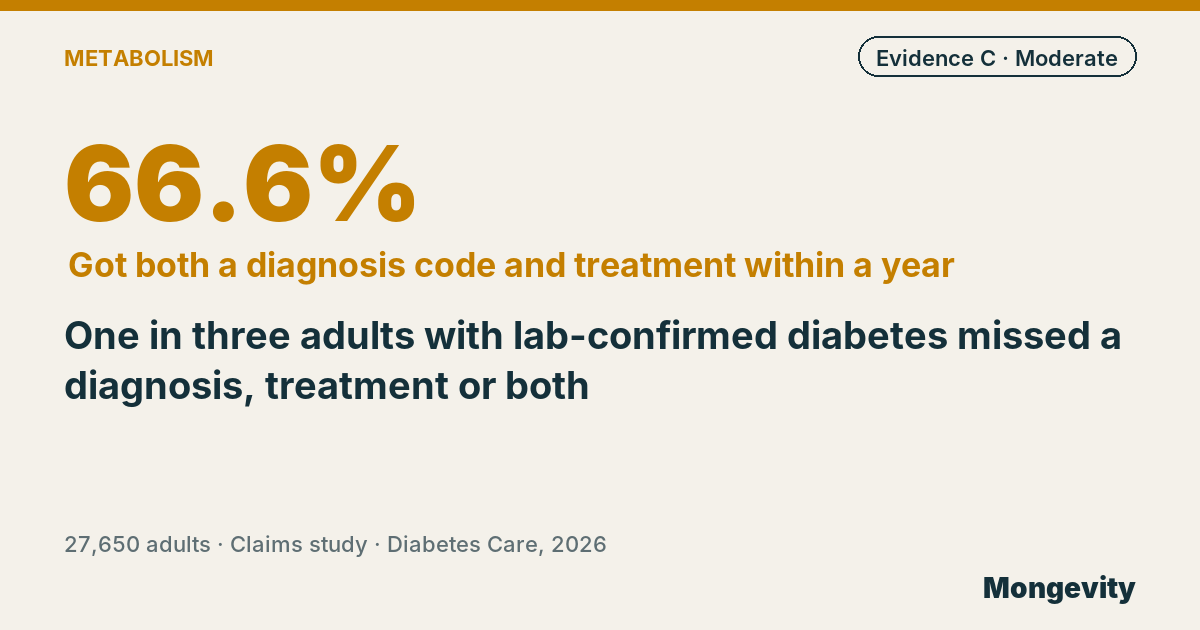
Only 66.6% of 27,650 US adults with laboratory-confirmed diabetes received both a diagnosis code and treatment within a year, and 9.6% received neither, in a national claims study published Oct. 5, 2026, in Diabetes Care. Gaps in diabetes care start before treatment does.
A blood test can show diabetes, but that’s only the first step. To get care, the result has to be recognized, recorded as a diagnosis and followed by treatment.
What did the study do?
Researchers used US commercial and Medicare insurance claims from 2017 to 2023 linked to lab results. They found 27,650 adults whose lab tests confirmed diabetes and who had no prior diabetes or prediabetes diagnosis. They then followed them for a year to see whether they received a type 2 diabetes diagnosis code and started medicines.
What did the study find about diabetes care?
- Diagnosis and treatment 66.6%
- Diagnosis only 19.7%
- Treatment only 4.1%
- Neither 9.6%
Higher A1c levels, compared with 6.5-6.9%, were linked to higher chances of both diagnosis and treatment. People with more other health conditions were less likely to get either.
Why does this matter?
Missed or delayed diagnoses mean missed chances to prevent complications. People with only mildly high A1c, and those juggling several conditions, seem most likely to fall through the cracks.
How solid is this evidence?
It’s moderate. Mongevity rates it C on our A-to-E scale: a large national data set linking labs with claims, but claims may miss care that wasn’t billed, such as lifestyle counseling, and a diagnosis code isn’t the same as a conversation with the patient. Not every mildly high result needs medicines right away.
What are the open questions?
It would help to know why gaps happen, whether results aren’t seen, aren’t acted on or patients don’t follow up, and which reminders or systems close them.
What does this mean for you?
If you’ve had a blood test, ask for your A1c or fasting glucose result and what it means. A result of 6.5% or higher on A1c usually indicates diabetes and should lead to a follow-up plan. If you have several health conditions, ask your doctor to review your blood sugar too.
How do I explain this at dinner?
In a large US study, a third of adults whose blood tests showed diabetes didn’t get either a diagnosis or treatment within a year. People with milder results or many other illnesses were most often missed. A good question for the table: do you know your last A1c?
In one sentence: a third of adults with lab-confirmed diabetes lacked a recorded diagnosis, treatment or both within a year, especially with milder results or more comorbidities.
Questions and answers
- What was the gap?
- Only 66.6% of adults with lab-confirmed diabetes got both a diagnosis code and treatment within a year.
- Who was most often missed?
- People with milder A1c results and those with more other health conditions.
- What A1c suggests diabetes?
- 6.5% or higher usually indicates diabetes.