Antidepressants differ in their effect on a heart rhythm measure, a large analysis finds
Depression treatmentsPart of a story we are following · 3 articles · See every update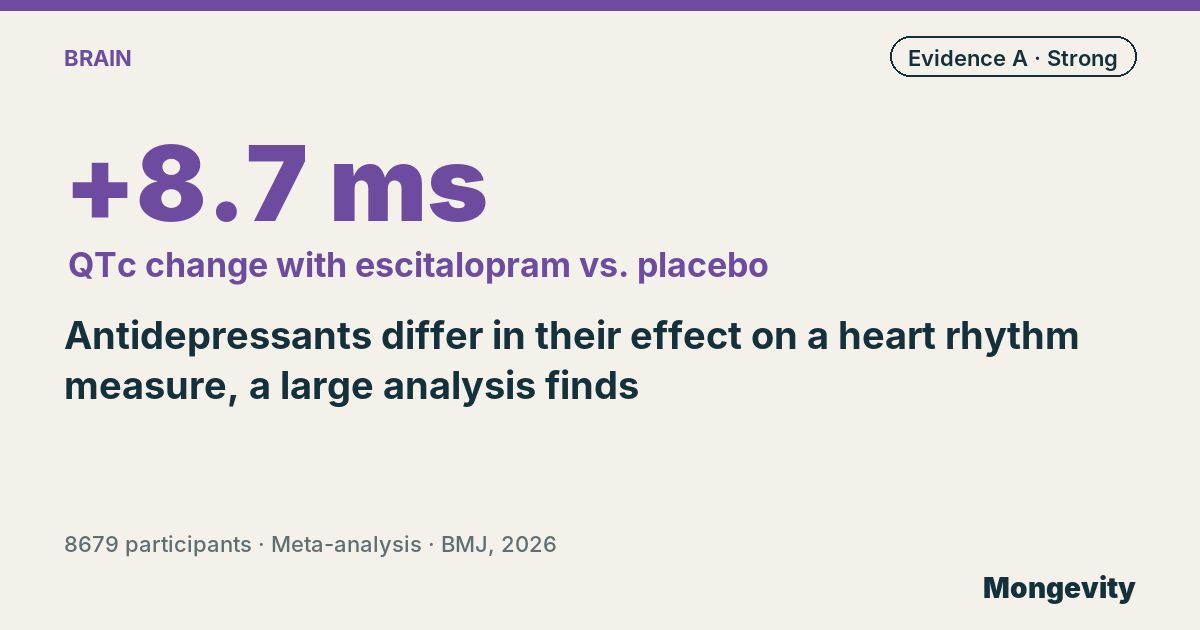
Escitalopram lengthened the QTc interval, a heart rhythm measure, by 8.7 milliseconds and amitriptyline by 5.3 milliseconds vs. placebo, in an analysis of 8679 adults from double-blind trials published Sept. 23, 2026, in The BMJ. Antidepressants were not linked to more early major heart events, reassuring news for depression treatment.
Some antidepressants can lengthen the QT interval, a part of the electrocardiogram that reflects how long the heart takes to recharge between beats. A very long QT can, rarely, trigger dangerous rhythms.
What did the study look at?
Researchers identified 130 double-blind randomized trials of adults with major depression. Of these, 35 (27%) shared individual-level data on 8679 participants, covering placebo and 10 antidepressants: amitriptyline, bupropion, duloxetine, escitalopram, fluoxetine, mirtazapine, paroxetine, trazodone, venlafaxine and vortioxetine. They looked at changes in the corrected QT interval (QTc) during the first eight weeks, considering age, sex, weight, potassium levels and kidney function. They also pooled 139 trials to look at major heart events early in treatment.
What did the study find about depression treatment?
- Compared with placebo, escitalopram increased QTc by 8.7 milliseconds and amitriptyline by 5.3 milliseconds.
- When personal risk factors were considered, amitriptyline and escitalopram were most often linked to the largest increases.
- Venlafaxine and vortioxetine were often linked to the smallest.
- Effects varied a lot between people, especially for escitalopram, fluoxetine and mirtazapine.
- Antidepressants were not linked to more early major heart events or non-suicidal deaths than placebo (risk difference 0.01%).
Why does this matter?
Depression is common and treatable, and fear of side effects can keep people from starting medicine. This study is reassuring about serious heart events early in treatment, while showing that the QTc effect differs by drug and by person. That helps doctors choose, especially for people with heart disease, low potassium or other risk factors.
How solid is this evidence?
It’s strong. Mongevity rates it A on our A-to-E scale: a meta-analysis built on individual participant data from double-blind randomized trials. Limits: individual data were available for only part of the trials, follow-up was eight weeks, and the trials included few people at high heart risk.
What are the open questions?
Longer-term heart safety, and effects in older adults or people with heart disease taking several medicines, need more study.
What does this mean for you?
If you take or are starting an antidepressant and have heart disease, fainting episodes, a family history of sudden death or take other medicines that affect heart rhythm, tell your doctor. An electrocardiogram may help choose the safest option. Don’t stop an antidepressant on your own.
How do I explain this at dinner?
Researchers pooled data from thousands of people in antidepressant trials and measured a heart rhythm signal. Some drugs, like escitalopram, stretched it a bit more than others, but none raised the risk of serious heart problems in the first weeks. A good question for the table: do you know which of your medicines interact with each other?
In one sentence: antidepressants differ in how much they lengthen the QTc interval, with escitalopram and amitriptyline showing the largest increases, but they were not linked to more early major heart events.
Questions and answers
- What is the QTc interval?
- A measure on the electrocardiogram of how long the heart takes to recharge between beats, corrected for heart rate.
- Which antidepressants raised it most?
- Escitalopram (8.7 milliseconds) and amitriptyline (5.3 milliseconds) vs. placebo.
- Did antidepressants cause more heart events?
- No increase in early major heart events or non-suicidal deaths was found vs. placebo.
- Should I stop my antidepressant?
- No. Talk with your doctor if you have heart risk factors.