A low-carb diet with almonds steadied night-time blood sugar in type 2 diabetes
Food and blood sugarPart of a story we are following · 3 articles · See every update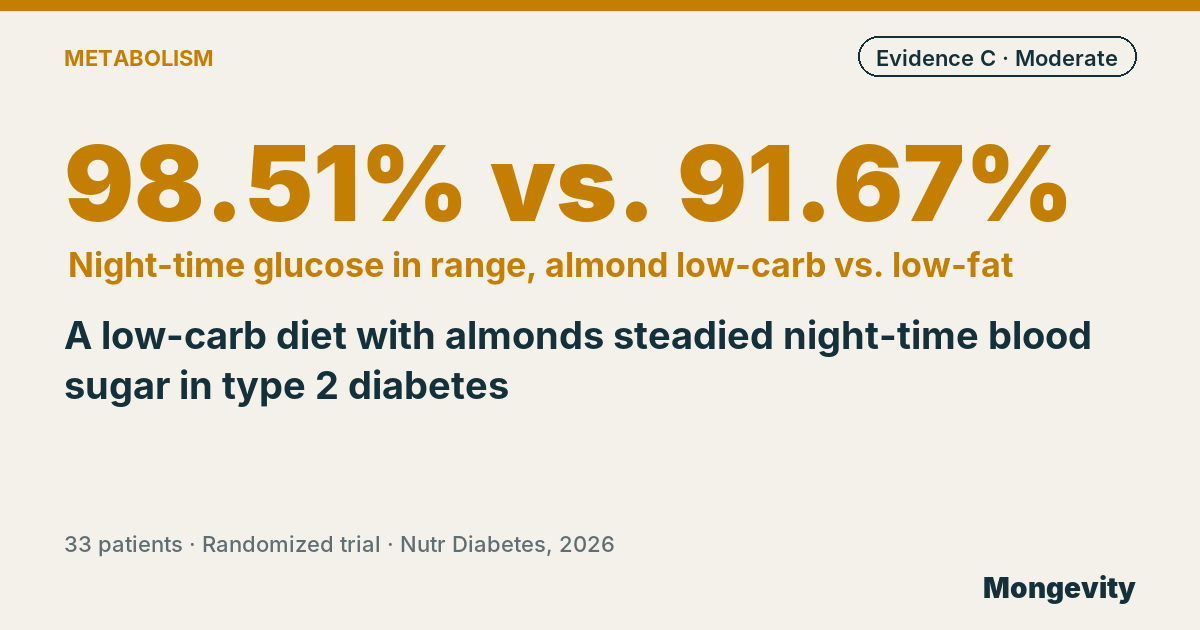
A low-carbohydrate diet with almonds kept night-time blood sugar in range 98.51% of the time, vs. 91.67% with a low-fat diet, in a randomized trial of 33 hospitalized patients with type 2 diabetes in China, published in July 2026 in Nutrition and Diabetes. Steadier blood sugar overnight may mean fewer silent highs and lows.
Continuous glucose monitors show how blood sugar moves hour by hour, including at night, when highs and lows often go unnoticed. Diet strongly shapes these patterns.
What did the trial test?
33 hospitalized patients with type 2 diabetes who were using continuous glucose monitors in a hospital in China were assigned by chance to a low-fat diet or a low-carbohydrate diet that included almonds. Researchers compared measures such as time in range (the share of time blood sugar stays in the target zone), time in a tighter range, time above range and variability.
What did the study find about blood sugar?
- At night, time in range was 98.51% with the almond low-carb diet vs. 91.67% with the low-fat diet.
- Time in tight range at night was 94.14% vs. 77.58%.
- Night-time blood sugar swings were smaller: a standard deviation of 15.57 vs. 23.62 mg/dL.
- After adjusting for age, sex and diabetes duration, the almond low-carb diet was still linked to more time in range at night (6.65 percentage points more) and in tight range.
Why does this matter?
Stable blood sugar overnight may mean fewer symptoms, better sleep and less strain on blood vessels over time. Swapping some carbohydrates for nuts such as almonds is a simple, practical change that fits many eating patterns.
How solid is this evidence?
It’s limited. Mongevity rates it C on our A-to-E scale: a randomized trial, but very small, short, in hospitalized patients with controlled meals and at one center. Results at home, over months, may be different, and the trial can’t separate the effect of almonds from that of fewer carbohydrates.
What are the open questions?
Larger, longer trials in daily life are needed to see whether these night-time improvements last and translate into better HbA1c and fewer complications.
What does this mean for you?
If you have type 2 diabetes, discuss with your care team whether reducing refined carbohydrates at dinner and adding a small portion of nuts could work for you. If you use a glucose sensor, check your night-time readings to see how different dinners affect you. Adjust medicines only with medical advice, since lower carbs can cause lows.
How do I explain this at dinner?
Patients with diabetes wore sensors that track blood sugar day and night. Those who ate fewer carbs and some almonds had steadier sugar overnight than those on a low-fat diet. A good question for the table: what could replace the bread or rice at tonight’s dinner?
In one sentence: in hospitalized patients with type 2 diabetes, an almond-based low-carbohydrate diet improved night-time glucose control on continuous monitoring compared with a low-fat diet.
Questions and answers
- What is time in range?
- The share of time blood sugar stays in the target zone, measured by a continuous glucose monitor.
- How did the almond low-carb diet do at night?
- 98.51% of time in range vs. 91.67% with the low-fat diet.
- Is it the almonds or the low carbs?
- The trial can't separate the two.
- Should I change my medicines?
- Only with medical advice; fewer carbs can cause low blood sugar.