Near the poles, long summer daylight was linked to shorter sleep and more severe seizures
Sleep healthPart of a story we are following · 13 articles · See every update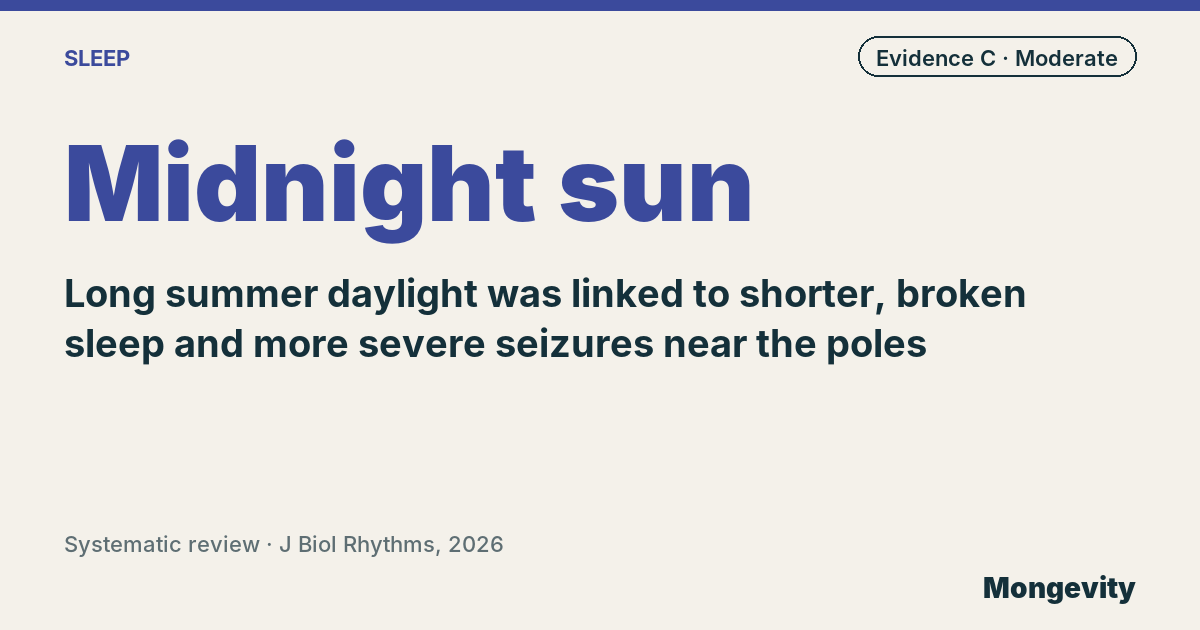
In Arctic and Antarctic regions, status epilepticus rose as summer days lengthened, and both extreme light and extreme darkness were linked to shorter, more broken sleep, according to a review published Oct. 28, 2026, in Journal of Biological Rhythms. Light shapes sleep and brain health.
Sleep and seizures influence each other: poor sleep can trigger seizures, and seizures disturb sleep. The main signal that sets our body clock is sunlight. Near the poles, sunlight swings to extremes, from the midnight sun in summer to midday darkness in winter, making these regions natural laboratories.
What did the review include?
The authors screened 2337 studies on status epilepticus, a prolonged and dangerous seizure, light exposure and sleep in people in the Arctic or Antarctic. After filtering, 5 studies on status epilepticus and 36 on sleep were included.
What did the study find about sleep?
- Status epilepticus increased as days got longer going into summer at high latitudes.
- More sunlight going into summer shifted people’s body clocks earlier, while less sunlight going into winter shifted them later; in extreme cases, the body clock drifted freely.
- Both very bright and very dark periods were linked to more fragmented and shorter sleep.
The authors propose that bright summer light advances the body clock, shortening and breaking up sleep, which in turn may trigger more seizures.
Why does this matter?
About 1 in 10 people will have a seizure in their lifetime. Although the data come from polar regions, the idea that light patterns affect sleep and seizure risk applies everywhere, including to people who travel, work shifts or live with lots of artificial light at night.
How solid is this evidence?
It’s moderate. Mongevity rates it C on our A-to-E scale. It’s a systematic review, but very few studies addressed seizures directly, and the proposed chain from light to sleep to seizures is a hypothesis, not a proven cause.
What does this mean for you?
If you or someone close to you has epilepsy, protecting sleep is part of seizure control. Keep regular sleep times, use blackout curtains when days are very long, and get daylight in the morning. Talk to the neurologist before travel across time zones.
How do I explain this at dinner?
Near the North and South Poles, summer has sun even at midnight and winter has darkness at noon. Scientists found that very long sunny days made sleep shorter and were linked to more severe seizures. A good question for the table: how does light in the room affect how you sleep?
In one sentence: in polar regions, extreme light patterns were linked to shorter, broken sleep and more severe seizures, a reminder that protecting sleep matters for people with epilepsy.
Questions and answers
- Can light affect seizures?
- In polar regions, status epilepticus increased as summer days lengthened, possibly through effects on sleep.
- How does extreme light or darkness affect sleep?
- Both were linked to shorter and more fragmented sleep in people living near the poles.
- What can people with epilepsy do?
- Protect sleep: keep regular sleep times, darken the bedroom during long days and get morning daylight.