In older adults with a cough in Argentina, whooping cough was rare; viruses were common
Infections and vaccines after 50Part of a story we are following · 9 articles · See every update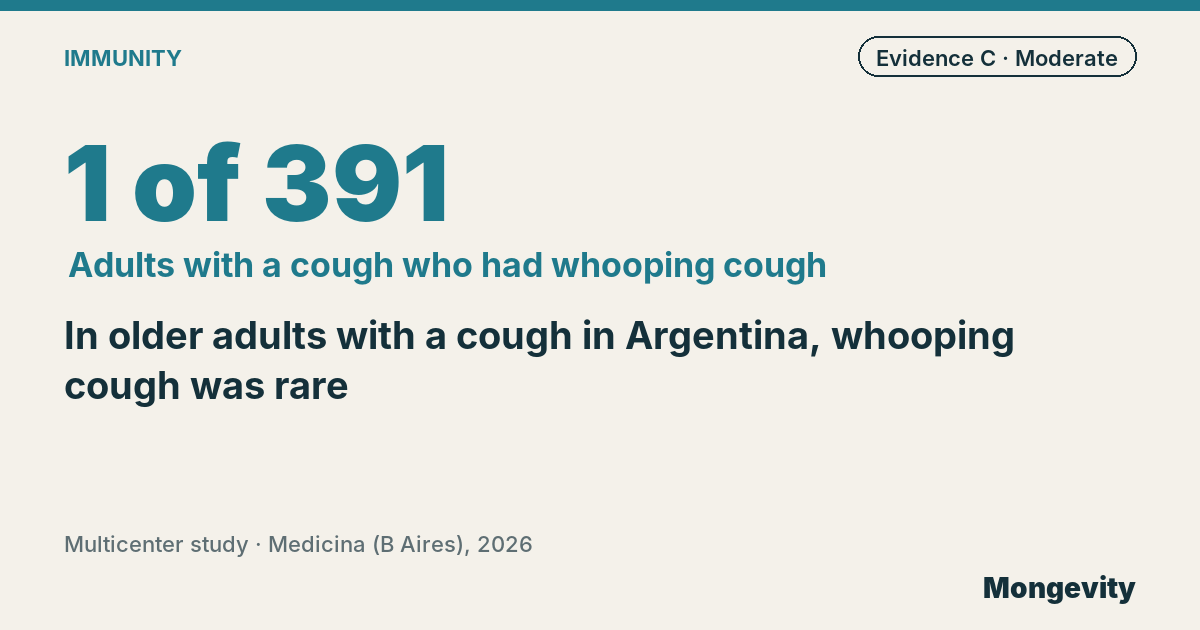
Whooping cough bacteria turned up in only 1 of 391 adults with a recent cough in a multicenter study in Argentina, published in 2026 in Medicina (Buenos Aires), while viruses were common. Many coughs in older adults come from other infections.
Whooping cough, or pertussis, is caused by the bacterium Bordetella pertussis. Since childhood vaccination became universal, cases have shifted toward adolescents and adults, who may have complications and can pass the infection to babies. Reported rates in adults range from 2% to 32% worldwide.
What did the study do?
Between August 2023 and August 2024, at four hospitals in Argentina, researchers tested adults aged 50 or older who came to outpatient clinics with a cough lasting 3 to 28 days. They took nose and throat swabs and analyzed them with a test that detects many respiratory germs at once, and followed participants by phone at 7 and 30 days.
What did the study find about infections?
- 391 people were included.
- A germ was found in 65% of swabs, more often when the cough had lasted less than 7 days (75% vs. 56%).
- Whooping cough was found in just 1 person (0.3%).
- Researchers identified 284 viruses and 8 bacteria, including 34 coinfections (13%).
- 5.6% were hospitalized, and having other illnesses at the start was strongly linked to hospitalization (odds ratio 5.86).
Why does this matter?
In this period and setting, whooping cough was rare among older adults with a cough, and viruses were the main cause. Pertussis circulates in cycles, though, so it may be more common in other years. The finding that people with other illnesses were more likely to be hospitalized supports extra attention for them.
How solid is this evidence?
It’s moderate. Mongevity rates it C on our A-to-E scale: a prospective multicenter study with modern testing, but it covered one year, four hospitals and only adults 50 and older, so it may miss outbreaks and other groups.
What are the open questions?
Studies over several years and regions would show how often pertussis really circulates among adults and when vaccination campaigns matter most.
What does this mean for you?
If you’re 50 or older, ask about vaccines for respiratory infections, including the adult pertussis booster, especially if you’ll be around babies. See a doctor if a cough lasts more than a few weeks, comes in violent fits or you have other illnesses that make infections risky.
How do I explain this at dinner?
Researchers in Argentina tested hundreds of older adults with a cough. Whooping cough turned up in just one person; most coughs were caused by viruses. People with other health problems were more likely to end up in the hospital. A good question for the table: are your vaccines up to date?
In one sentence: in older adults with a recent cough in Argentina, whooping cough was rare and viruses predominated, with complications mainly in people with other illnesses.
Questions and answers
- What is whooping cough?
- An infection caused by Bordetella pertussis that causes severe coughing fits.
- How common was it in this study?
- It was found in 1 of 391 adults with a cough (0.3%).
- Who was hospitalized more?
- People with other illnesses at the start (odds ratio 5.86).