Most typhoid cases in the US resisted a common antibiotic, and most came from travel
Infections and vaccines after 50Part of a story we are following · 9 articles · See every update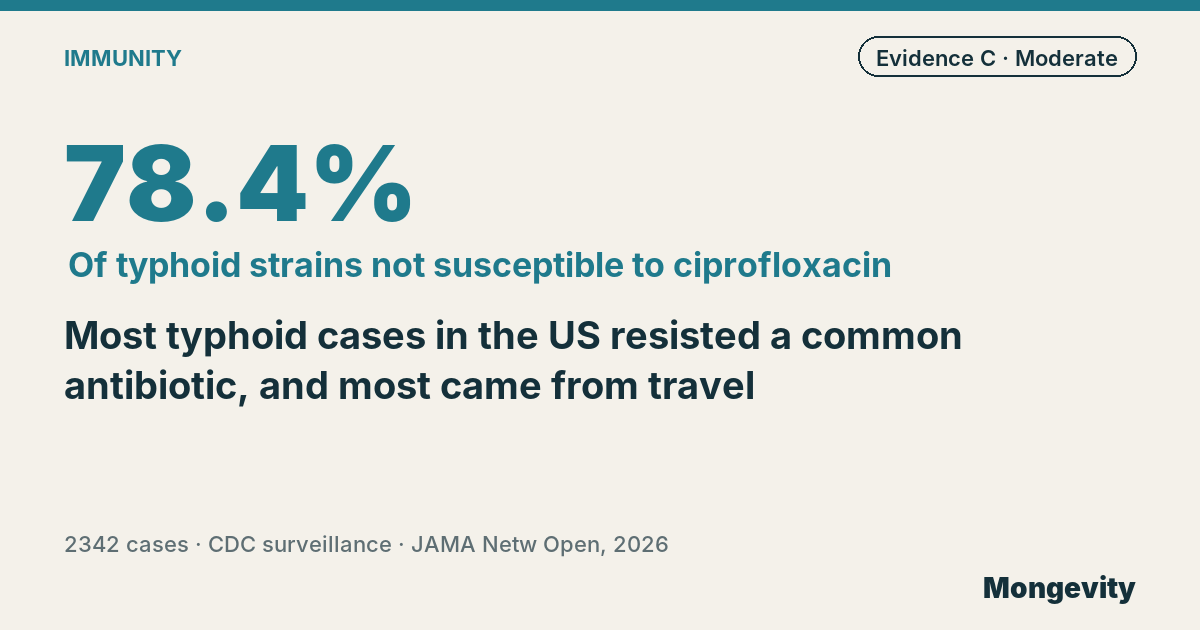
Most typhoid and paratyphoid infections diagnosed in the US from 2016 to 2020 were not susceptible to ciprofloxacin, and 81.9% of patients had traveled or lived abroad, in a CDC study published Oct. 1, 2026, in JAMA Network Open. Travelers face hard-to-treat infections.
Typhoid and paratyphoid fever, together called enteric fever, are infections caused by Salmonella bacteria spread through contaminated food and water. They’re rare in the US but common in parts of South Asia, Africa and Latin America. In 2016, an extensively drug-resistant strain of typhoid emerged.
What did the study do?
Using national CDC surveillance and lab data, researchers analyzed 2342 culture-confirmed cases of enteric fever in the US from 2016 to 2020. Of these, 76.2% were typhoid and the rest paratyphoid. The median patient age was 25 years.
What did the study find about infections?
- 81.9% of patients had traveled or lived abroad within 30 days before getting sick.
- Most typhoid strains, 78.4%, and most paratyphoid A strains, 94.2%, were not susceptible to ciprofloxacin, a common antibiotic.
- Among typhoid strains, resistance exceeded 15% for ampicillin, chloramphenicol and trimethoprim-sulfamethoxazole.
- Resistance to ceftriaxone, an important IV antibiotic, was 5.5% in typhoid.
- Only 1 typhoid strain (0.1%) resisted azithromycin.
| Ciprofloxacin | 78.4% |
|---|---|
| Ceftriaxone | 5.5% |
| Azithromycin | 0.1% |
Why does this matter?
Doctors often start antibiotics before lab results come back. These data show that ciprofloxacin should be avoided as a first choice for most travel-related enteric fever, and that ceftriaxone-resistant typhoid has reached the US. Treatment should follow susceptibility tests.
How solid is this evidence?
It’s moderate. Mongevity rates it C on our A-to-E scale: high-quality national surveillance data, but descriptive, covering only cases that were confirmed and reported, through 2020. Resistance may have changed since.
What does this mean for you?
If you’re traveling to an area where typhoid is common, ask a travel clinic about the typhoid vaccine at least a couple of weeks before the trip. Drink safe water, eat food that’s cooked and hot, and wash your hands often. If you get a fever during or after the trip, see a doctor and mention where you traveled.
Why does travel history matter so much?
Because most cases were linked to travel, telling your doctor where you’ve been helps them think of typhoid early and choose the right tests and antibiotics.
How do I explain this at dinner?
Typhoid is rare in the US, but most cases come from travel, and most of the bacteria now resist a common antibiotic. A vaccine and careful food and water habits help prevent it. A good question for the table: what health steps do you take before a trip?
In one sentence: most typhoid and paratyphoid infections in the US from 2016 to 2020 were travel-related and not susceptible to ciprofloxacin, so treatment should follow lab tests.
Questions and answers
- What is enteric fever?
- Typhoid and paratyphoid fever, infections caused by Salmonella spread through contaminated food and water.
- How common is resistance?
- 78.4% of typhoid strains were not susceptible to ciprofloxacin, and 5.5% resisted ceftriaxone.
- How can I prevent it?
- Get the typhoid vaccine before travel to high-risk areas, and follow safe food and water habits.