For mild memory problems, moderate exercise doses worked best for thinking skills
Exercise and the brainPart of a story we are following · 3 articles · See every update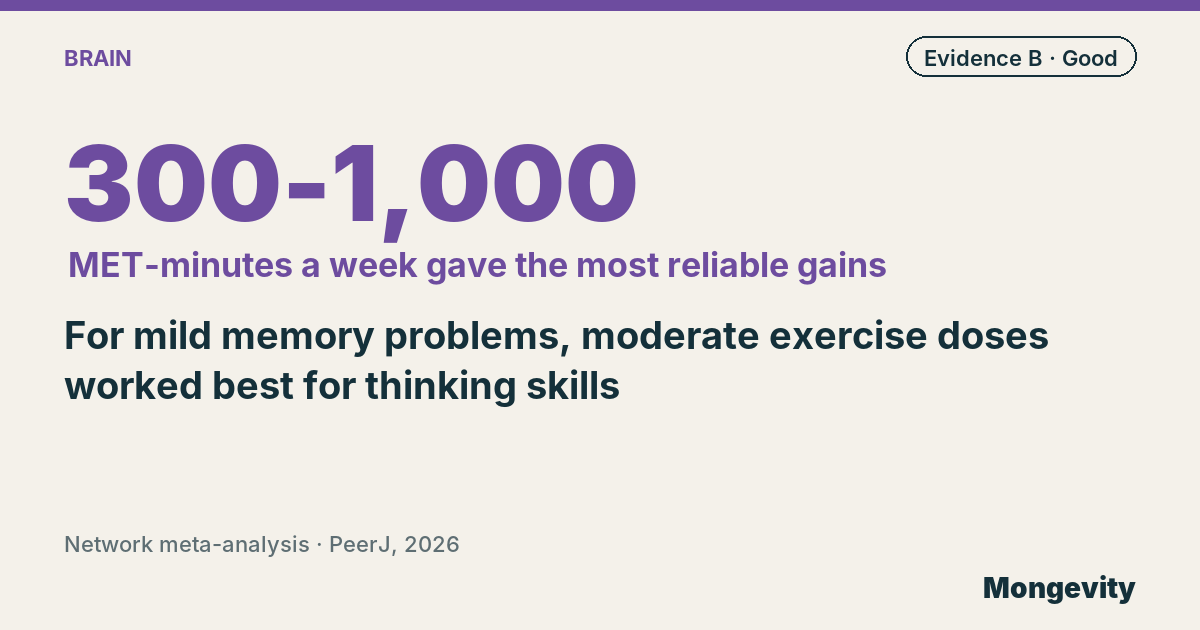
Moderate exercise doses, about 300 to 1,000 MET-minutes a week, gave the most reliable gains in executive function in older adults with mild cognitive impairment, in a network meta-analysis of thirty-eight randomized trials published Oct. 20, 2026, in PeerJ. More exercise wasn’t always better for the brain.
Mild cognitive impairment, or MCI, means having memory or thinking problems that are noticeable but don’t yet interfere much with daily life. Exercise is one of the most studied ways to protect thinking skills, but how much, and what kind, is best?
What did the study do?
Researchers searched four databases up to 10 November 2025 for randomized trials of repeated exercise programs in adults aged 60 or older with MCI. They focused on executive function, the mental skills used to plan, switch tasks and control impulses: working memory, cognitive flexibility and inhibitory control. Exercise dose was standardized as MET-minutes per week, a measure combining intensity and time. Thirty-eight studies were included.
What did the study find about exercise and the brain?
- Benefits rose with dose, but not in a straight line.
- Moderate doses, about 300 to 1,000 MET-minutes a week, were linked to the most reliable gains in all three skills.
- Higher doses showed plateaus or even small declines.
- Exercise combined with cognitive training gave the most consistent gains in working memory.
- Comprehensive physical training and walking-based aerobic exercise gave more stable effects on flexibility and inhibitory control.
What does a MET-minute measure?
A MET-minute combines how hard and how long you exercise: more intense activities count more per minute. A moderate weekly dose can come from regular brisk walking spread across the week, which fits general activity advice for older adults.
Why does this matter?
More isn’t always better. For older adults with MCI, a moderate, sustainable amount of exercise may give the most benefit for thinking, and the best type may depend on which skill needs most help.
How solid is this evidence?
It’s good. Mongevity rates it B on our A-to-E scale: a network meta-analysis of randomized trials, but the certainty of evidence ranged from low to moderate, trials varied in design and some comparisons rely on indirect evidence.
What does this mean for you?
If you or a relative have MCI, aim for regular, moderate exercise: for example, brisk walks most days, plus activities that challenge the mind, such as dance routines or exercise games. Talk to a doctor before starting if you have heart problems or balance issues.
How do I explain this at dinner?
For older adults with mild memory problems, a review of thirty-eight trials found that a moderate amount of exercise, not too little and not too much, gave the best boost to planning and focus. Mixing exercise with brain games helped memory the most. A good question for the table: what’s your favorite way to move?
In one sentence: in older adults with mild cognitive impairment, moderate exercise doses gave the most reliable gains in executive function, with the best type depending on the skill.
Questions and answers
- What is mild cognitive impairment?
- Noticeable memory or thinking problems that don't yet greatly affect daily life.
- How much exercise is best?
- Moderate doses, about 300 to 1,000 MET-minutes a week, gave the most reliable gains.
- What type of exercise?
- Exercise with cognitive training helped working memory most; walking and comprehensive training helped flexibility and focus.