Exercise was linked to fewer pneumonia deaths in people with dementia
Exercise and the brainPart of a story we are following · 3 articles · See every update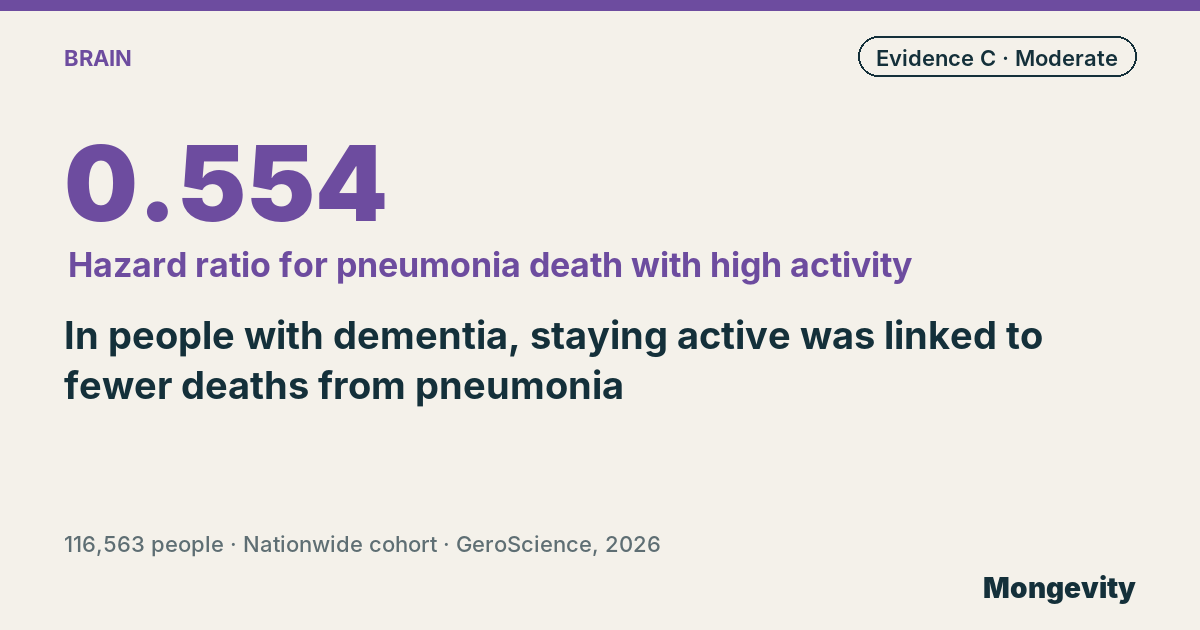
Aerobic exercise was linked to lower death rates in 116,563 people with cognitive impairment in Korea, especially from pneumonia (hazard ratio 0.554 with high activity), in a nationwide study published Oct. 24, 2026, in GeroScience. Even modest activity counted, adding to what is known about exercise and the brain.
People with dementia often die from infections such as pneumonia, not only from heart disease or the dementia itself. Exercise is known to help the heart and the brain, but could it also protect against these deaths?
What did the study do?
Researchers used a nationwide Korean registry of 116,563 people with clinically confirmed mild cognitive impairment or dementia between 2016 and 2021. They linked it to health check-ups, where people reported their aerobic activity, such as walking, cycling or swimming, and to death records. They followed people for a mean of 3.4 years.
What did the study find about exercise and the brain?
Compared with being inactive, any level of aerobic activity was linked to lower death from any cause:
| Activity level | Hazard ratio, death from any cause |
|---|---|
| Low | 0.728 |
| Moderate | 0.704 |
| High | 0.636 |
High activity was linked to lower death from pneumonia (0.554) and from COVID-19 (0.520), numerically stronger than for heart disease (0.613) and stroke (0.630). Pneumonia deaths were lower at every activity level.
Why does this matter?
Even modest activity seemed to matter. Staying active may help preserve breathing strength, swallowing, immunity and general fitness, all of which protect against pneumonia. For families and caregivers, it’s an encouraging sign that small, achievable goals could be worthwhile.
How solid is this evidence?
It’s moderate. Mongevity rates it C on our A-to-E scale: a very large registry with careful statistics, but observational, with activity reported once. People who can stay active may simply be healthier to begin with, and the authors say the results don’t prove cause.
What are the open questions?
Trials are needed to test whether activity programs for people with cognitive impairment actually reduce pneumonia deaths, and which types and amounts work best. Repeated, objective measures of activity would also help.
What does this mean for you?
If you care for someone with memory problems, look for safe ways to keep them moving: short walks, chair exercises or dancing to music they like. Combine it with other pneumonia protections, such as vaccines and good oral hygiene.
How do I explain this at dinner?
In people with memory loss, being even a little active was linked to fewer deaths, especially from pneumonia. A short daily walk might help protect the lungs as well as the heart. A good question for the table: what activity could an older relative enjoy?
In one sentence: in people with cognitive impairment, aerobic activity, even at modest levels, was linked to lower mortality, especially from pneumonia.
Questions and answers
- Is exercise linked to fewer deaths in dementia?
- Yes: all activity levels were linked to lower death from any cause vs. inactivity.
- Why pneumonia?
- High activity was linked to lower pneumonia mortality (hazard ratio 0.554), possibly through better fitness and immunity.
- Does this prove exercise protects?
- No: people who stay active may be healthier to begin with; trials are needed.