Starting a glucose sensor was linked to slower kidney decline in people with diabetes
Chronic kidney diseasePart of a story we are following · 3 articles · See every update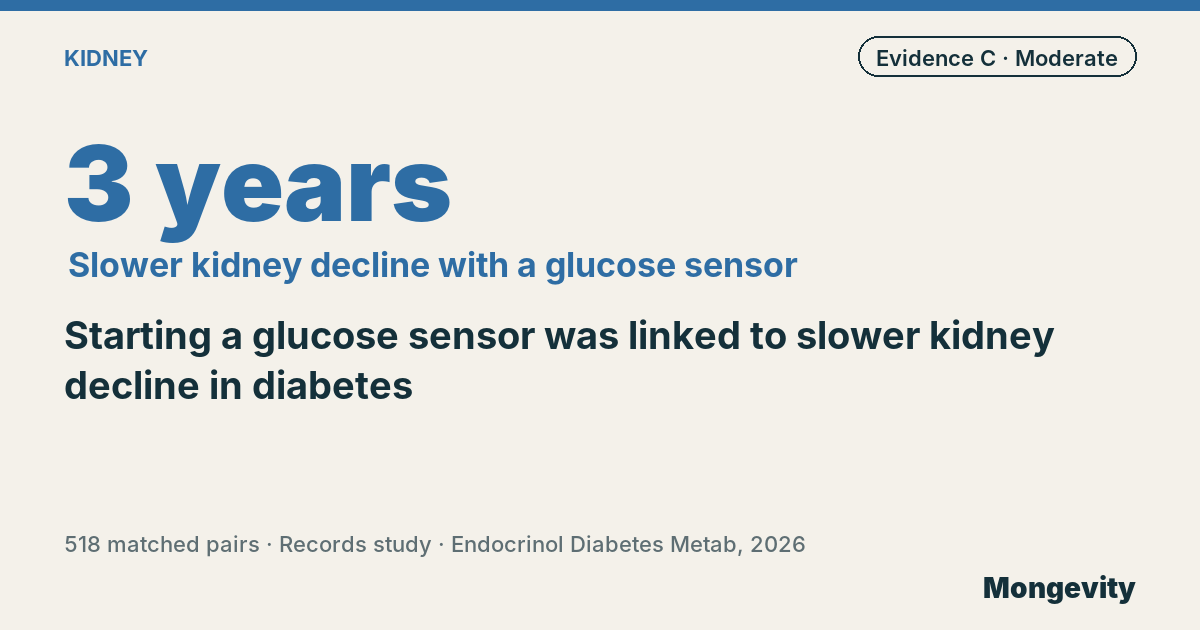
Adults with diabetes on insulin who started real-time continuous glucose monitoring had a slower drop in kidney function over 3 years than non-users, in a US matched records study published in November 2026 in Endocrinology, Diabetes & Metabolism. It links better glucose tools to slowing chronic kidney disease.
Diabetes is the leading cause of chronic kidney disease. Keeping blood sugar in range helps protect the kidneys, and continuous glucose monitors, small sensors that track sugar around the clock, can make that easier.
What did the study do?
Researchers used de-identified electronic health records from a large US data network. They included adults with type 1 or type 2 diabetes who were treated with insulin and had mildly to severely reduced kidney function. They matched people who started a real-time continuous glucose monitor with similar people who didn’t use one, and compared changes over 3 years.
What did the study find about chronic kidney disease?
- In 518 matched pairs, starting a real-time monitor was linked to a significantly slower decline in kidney function, measured by eGFR.
- In 461 matched pairs, monitor users also had a significantly greater drop in A1c, a measure of average blood sugar.
- In 138 matched pairs with urine data, there was no significant difference in protein leakage in the urine.
Why does this matter?
If better glucose control with a sensor helps protect kidney function, it would strengthen the case for wider use of monitors in people with diabetes and early kidney disease.
How solid is this evidence?
It’s moderate. Mongevity rates it C on our A-to-E scale: a matched real-world study, but observational and retrospective. People who start a monitor may differ in ways records don’t capture, such as motivation or access to care. The abstract doesn’t report the size of the differences, and the study was limited to people using insulin.
What are the open questions?
A randomized trial is needed to confirm whether monitors truly slow kidney decline, and whether the benefit extends to people with diabetes who don’t use insulin.
What does this mean for you?
If you have diabetes, ask your doctor to check your kidney function once a year with a blood test (eGFR) and a urine test for protein. If you use insulin, ask whether a continuous glucose monitor could help you keep your sugar in range.
How do I explain this at dinner?
People with diabetes who started wearing a sensor that shows their sugar all day had kidneys that declined more slowly over three years than people without one. It’s an encouraging link, not proof. A good question for the table: when did you last have your kidneys checked?
In one sentence: starting a real-time glucose monitor was linked to slower kidney decline and better blood sugar in adults with diabetes on insulin, a finding trials need to confirm.
Questions and answers
- Can a glucose sensor help the kidneys?
- In this study, starting one was linked to slower kidney function decline over 3 years.
- Did blood sugar improve?
- Yes: monitor users had a significantly greater drop in A1c.
- Is this proven?
- No: it's an observational study; randomized trials are needed.