On dialysis, weaker hip bones and more years of treatment were linked to physical decline
Living with dialysisPart of a story we are following · 4 articles · See every update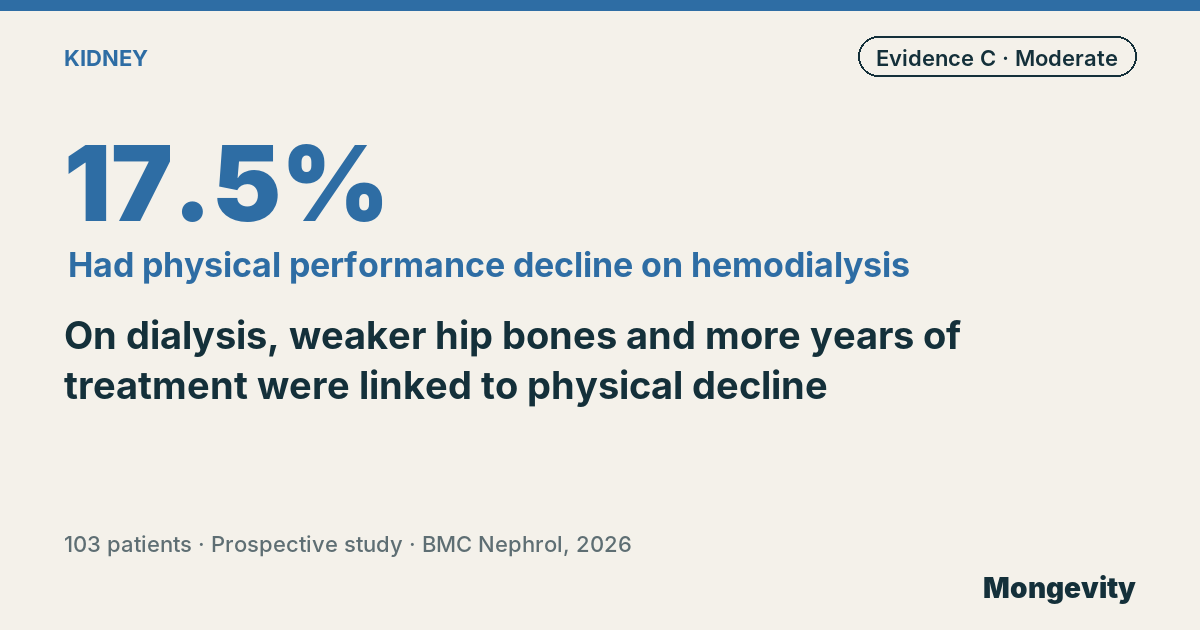
Physical performance declined in 17.5% of 103 people on hemodialysis over about 18.6 months, and lower hip bone density and longer time on dialysis were linked to decline, in a hospital study published Oct. 22, 2026, in BMC Nephrology. Bones and muscles both matter on dialysis.
People on long-term hemodialysis often lose strength, balance and walking ability, which raises the risk of falls, hospital stays and loss of independence. Spotting who is most at risk could help target rehabilitation early.
What did the study do?
Researchers followed 103 people receiving maintenance hemodialysis. At the start, they measured physical performance with the Short Physical Performance Battery, a set of tests of balance, walking speed and standing up from a chair, plus a 60-second sit-to-stand test, handgrip strength, bone density by DEXA scan and blood tests. They then checked who had a meaningful drop in physical performance.
What did the study find about dialysis?
- 18 people, 17.5%, had a decline in physical performance over a mean of 18.6 months.
- Those who declined were older, had lower total and hip bone density and did worse on the 60-second sit-to-stand test at the start.
- In the final analysis, lower hip bone density (odds ratio 0.997 per unit) and longer time on dialysis (odds ratio 1.009 per unit) were independently linked to decline.
Why does this matter?
Bone density and time on dialysis are easy to know. They could help care teams decide who needs closer follow-up of physical function, exercise programs or bone treatment.
How solid is this evidence?
It’s limited. Mongevity rates it C on our A-to-E scale: a prospective study with standardized tests, but small, from a single setting, with few people declining and wide confidence intervals. Links don’t prove that improving bone density would prevent decline.
What are the open questions?
Larger studies are needed to confirm these predictors, and trials to test whether exercise during dialysis or bone treatments slow physical decline.
Why does exercise during dialysis matter?
Dialysis sessions take hours several times a week. Some centers offer pedaling or strength exercises during the session, a way to use that time to protect muscles and mobility.
What does this mean for you?
If you or someone close to you is on hemodialysis, ask the care team about regular checks of strength and balance, a bone density scan and whether an exercise program, including exercise during dialysis, is available.
How do I explain this at dinner?
People on dialysis for years can slowly lose strength and mobility. In a small study, those with weaker hip bones and more years on dialysis were more likely to decline. A good question for the table: how can people stay strong during a long treatment?
In one sentence: in people on hemodialysis, lower hip bone density and longer time on dialysis were linked to physical performance decline, suggesting who may need closer follow-up.
Questions and answers
- How common was physical decline?
- 17.5% of people on hemodialysis declined over a mean of 18.6 months.
- What predicted decline?
- Lower hip bone density and longer time on dialysis.
- What can help?
- Regular checks of strength and balance, exercise programs and attention to bone health.