Music during dialysis may ease fatigue, low mood and pain, a Cochrane review finds
Living with dialysisPart of a story we are following · 4 articles · See every update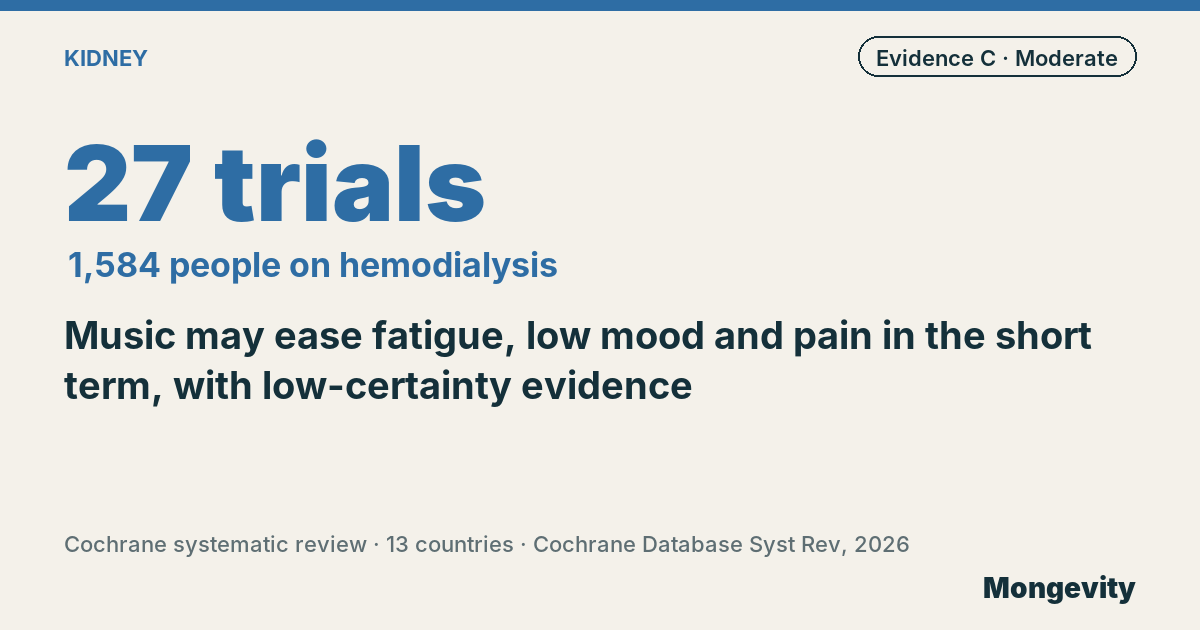
Music-based interventions may reduce fatigue, depressive symptoms and pain in the short term in people on hemodialysis, according to a Cochrane review of 27 randomized trials with 1,584 people from countries in Asia and Europe, published Oct. 26, 2026, in Cochrane Database of Systematic Reviews. The certainty is low, but music is a low-risk comfort during dialysis.
People on hemodialysis spend several hours, several times a week, connected to a machine that cleans their blood. Many live with fatigue, anxiety, low mood and pain, which affect their daily life. Music is cheap, safe and easy to offer during those sessions. But does it help?
Music-based interventions may reduce fatigue, depressive symptoms and pain in the short term, but the evidence is of low certainty.
What counts as a music-based intervention?
It ranges from listening to selected music with headphones during dialysis to sessions guided by a music therapist. The comparison groups received usual care, no intervention, headphones without music or white noise, or videos.
What did the review include?
The authors found 27 randomized trials with 1,584 participants from 13 countries and territories in Asia, Europe, North America and South America; 24 of them, with 1,467 participants, could be combined. They looked at effects up to four weeks, from four weeks to six months, and beyond six months.
What did the study find about dialysis?
| Outcome | Short term (up to four weeks) | Certainty |
|---|---|---|
| Fatigue | may be reduced | low |
| Depressive symptoms | may be reduced | low |
| Pain | may be reduced | low |
| Blood pressure | very uncertain | very low |
Depressive symptoms may also improve in the medium term. No trial measured these outcomes beyond six months.
Why does this matter?
Symptoms like fatigue and pain matter a lot to people on dialysis, and few treatments for them are free of side effects. Music is an easy option to add to the hours spent in the chair, and this review suggests it may help.
How solid is this evidence?
It’s moderate. Mongevity rates it C on our A-to-E scale. A Cochrane review is a rigorous method, but the trials it found were mostly small, results varied a lot between them, and the authors rated the certainty as low or very low. They call for larger, longer trials.
What does this mean for you?
If you or someone close to you is on hemodialysis, trying music during sessions is low risk and may make the time easier. Ask the dialysis unit whether headphones are allowed. Music doesn’t replace medical treatment for pain, depression or fatigue, so mention those symptoms to the care team.
How do I explain this at dinner?
Some people need a machine to clean their blood for hours at a time. Scientists checked whether listening to music during that time helps, and it seems to make people feel a bit less tired, sad and sore. A good question for the table: what song makes you feel better on a hard day?
In one sentence: music during hemodialysis may ease fatigue, low mood and pain in the short term, according to a Cochrane review, though the evidence is still uncertain.
Questions and answers
- Does music help people on hemodialysis?
- It may reduce fatigue, depressive symptoms and pain in the short term, according to a Cochrane review, but with low-certainty evidence.
- Does music lower blood pressure during dialysis?
- The evidence is very uncertain.
- How long do the effects last?
- Short- and medium-term effects were studied; no trial looked beyond six months.