Smokers had higher odds of drug-resistant infections, mostly tuberculosis, a review finds
Infections and vaccines after 50Part of a story we are following · 9 articles · See every update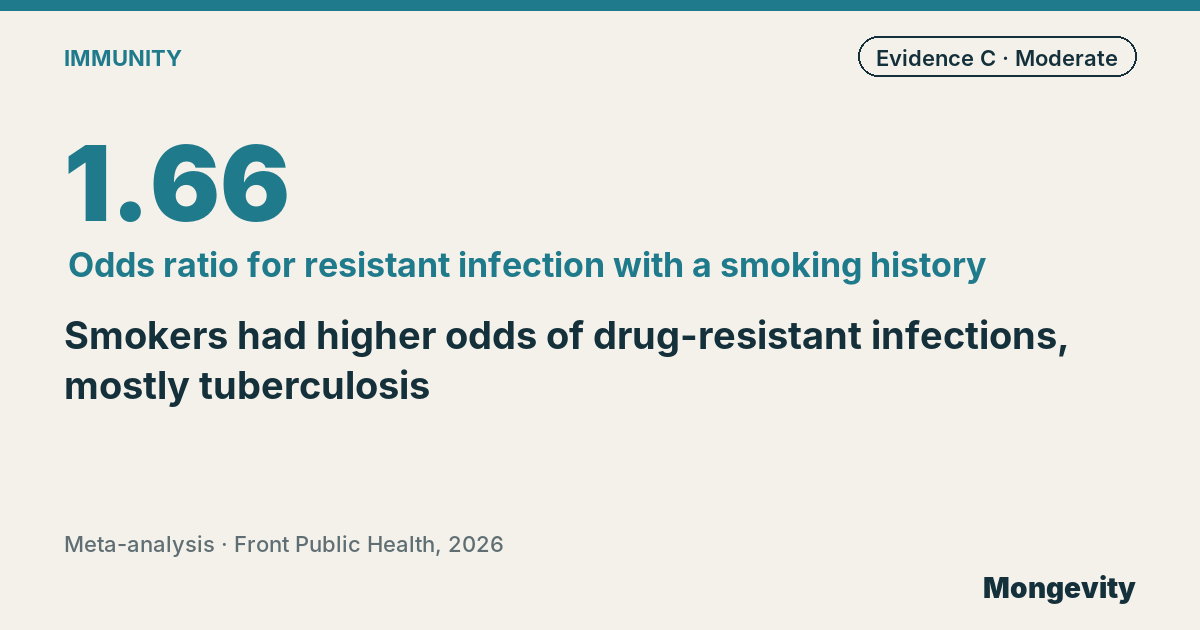
A history of smoking was linked to higher odds of antibiotic-resistant infection (odds ratio 1.66), with most evidence from drug-resistant tuberculosis, according to a meta-analysis of forty-three studies published Oct. 7, 2026, in Frontiers in Public Health. Quitting smoking may also lower the risk of hard-to-treat infections.
Antibiotic resistance is one of the biggest threats to global health: infections that no longer respond to standard drugs are harder to treat and more dangerous. Most efforts focus on how antibiotics are used. But could personal habits matter too? Smoking damages the lungs’ defenses and the immune system.
What did the study do?
Researchers searched four databases up to 20 April 2026 for observational studies that measured the link between smoking, current or ever, and antibiotic-resistant bacterial infection. They included forty-three studies with more than 35,000 participants. Most of them, 39 of 43, studied drug-resistant tuberculosis.
What did the study find about infections?
| Comparison | Odds ratio for resistant infection |
|---|---|
| Any smoking history vs. never | 1.66 |
| Current smoking | 1.90 |
| Ever smoking | 1.48 |
| Tuberculosis resistance | 1.58 |
| Other resistant infections | 3.02 |
The link remained when only adjusted estimates were used (1.99) and after excluding influential studies (1.70). There was no sign of bias from small studies.
Why does this matter?
If smoking raises the risk of resistant infections, quitting could help fight antibiotic resistance, especially in tuberculosis programs, where smoking is common. It adds one more reason to support tobacco control, alongside the better-known benefits for the heart, lungs and cancer risk.
How solid is this evidence?
It’s moderate. Mongevity rates it C on our A-to-E scale: a systematic review with meta-analysis and sensitivity checks, but of observational studies with very high variation between them. The evidence is mostly about tuberculosis; for other bacteria it’s sparse, and residual confounding limits conclusions about cause.
What are the open questions?
Researchers need more studies on common resistant infections beyond tuberculosis, and on whether quitting lowers the risk.
What does this mean for you?
Quitting smoking protects your lungs and your immune defenses, and may lower your risk of hard-to-treat infections. If you smoke and have a lasting cough, weight loss or night sweats, see a doctor. Use antibiotics only when prescribed, and finish them as directed.
How do I explain this at dinner?
Smokers in many studies were more likely to have infections that resist antibiotics, especially tuberculosis. Smoking weakens the lungs’ defenses, which may give tough bacteria an edge. A good question for the table: what are the less obvious harms of smoking?
In one sentence: a history of smoking was linked to higher odds of antibiotic-resistant infection, mostly in tuberculosis, adding a reason to support quitting.
Questions and answers
- Is smoking linked to antibiotic resistance?
- In this meta-analysis, a smoking history had an odds ratio of 1.66 for resistant infection.
- Which infections were studied?
- Mostly drug-resistant tuberculosis (39 of 43 studies).
- Does quitting help?
- It's plausible but not yet shown directly for resistant infections.