Nearly 30% of adults admitted exaggerating or inventing symptoms to get antibiotics
Infections and vaccines after 50Part of a story we are following · 9 articles · See every update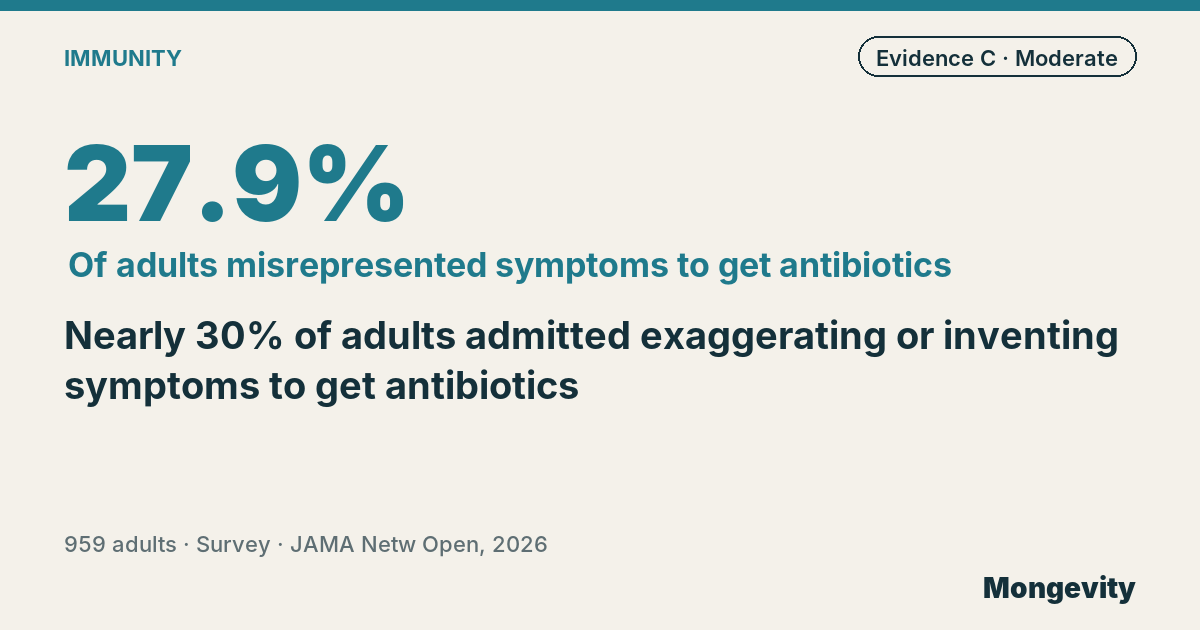
In a national US survey published Oct. 1, 2026, in JAMA Network Open, 27.9% of adults said they had misrepresented symptoms to a clinician to get antibiotics, most often for cold-like symptoms. Unneeded antibiotics fuel resistant infections.
Antibiotics don’t work against viruses, which cause most colds, sore throats and coughs. Using them when they aren’t needed causes side effects and fuels antibiotic resistance. Doctors try to prescribe only when they help, but patients sometimes push back.
What did the study do?
Researchers surveyed 959 US adults online in early 2026. They asked whether people had ever exaggerated existing symptoms, such as saying a cough had lasted 2 weeks when it had lasted 1 week, or invented symptoms, such as claiming a fever they didn’t have, to get antibiotics.
What did the study find about infections?
- 27.9% said they had misrepresented symptoms at some point to get antibiotics.
- Among them, 40.3% only exaggerated, 7.1% only invented and 52.6% did both.
- Cold-like symptoms, such as cough and sore throat, were the most often misrepresented, in 65.7%.
- The most common reasons were feeling very sick, believing antibiotics work, needing to get back to responsibilities and wanting control over treatment.
| Linked to more misrepresentation | Odds ratio |
|---|---|
| Age 18 to 33 vs. 65 or older | 3.20 |
| Feeling clinicians don’t take symptoms seriously | 2.19 |
| Believing antibiotic resistance is a hoax | 1.98 |
| Needing help reading health materials | 2.40 |
Disliking antibiotics and knowing more about them were linked to less misrepresentation.
- Exaggerated only 40.3%
- Invented only 7.1%
- Both 52.6%
Why does this matter?
When doctors base decisions on inaccurate symptoms, people may get antibiotics that won’t help them and may harm them. The findings point to two fixes: better public understanding of antibiotics, and clinicians who make patients feel heard.
How solid is this evidence?
It’s moderate. Mongevity rates it C on our A-to-E scale: a national survey with useful detail, but people chose to take part, answers are self-reported and it can’t show how often misrepresentation led to prescriptions.
What does this mean for you?
Describe your symptoms honestly, including how long they’ve lasted. If you’re worried or need to get back to work, say so: your doctor can suggest relief for symptoms, a note or a plan for when to come back. Ask, “Is this likely viral or bacterial?”
How do I explain this at dinner?
Nearly 30% of adults in a US survey admitted stretching the truth to get antibiotics, usually for colds, which antibiotics can’t cure. Often they felt their doctor wasn’t taking them seriously. A good question for the table: what would make you feel heard at the doctor?
In one sentence: 27.9% of US adults surveyed said they had misrepresented symptoms to get antibiotics, most often for colds, a habit linked to feeling unheard and to misconceptions.
Questions and answers
- Do antibiotics help colds?
- No: most colds are caused by viruses, and antibiotics don't work against viruses.
- How common is exaggerating symptoms?
- 27.9% of adults in this survey said they had misrepresented symptoms to get antibiotics.
- Why do people do it?
- Common reasons were feeling very sick, believing antibiotics work and needing to get back to responsibilities.