A daily handful of almonds raised flu vaccine antibodies, but not protection rates
Infections and vaccines after 50Part of a story we are following · 9 articles · See every update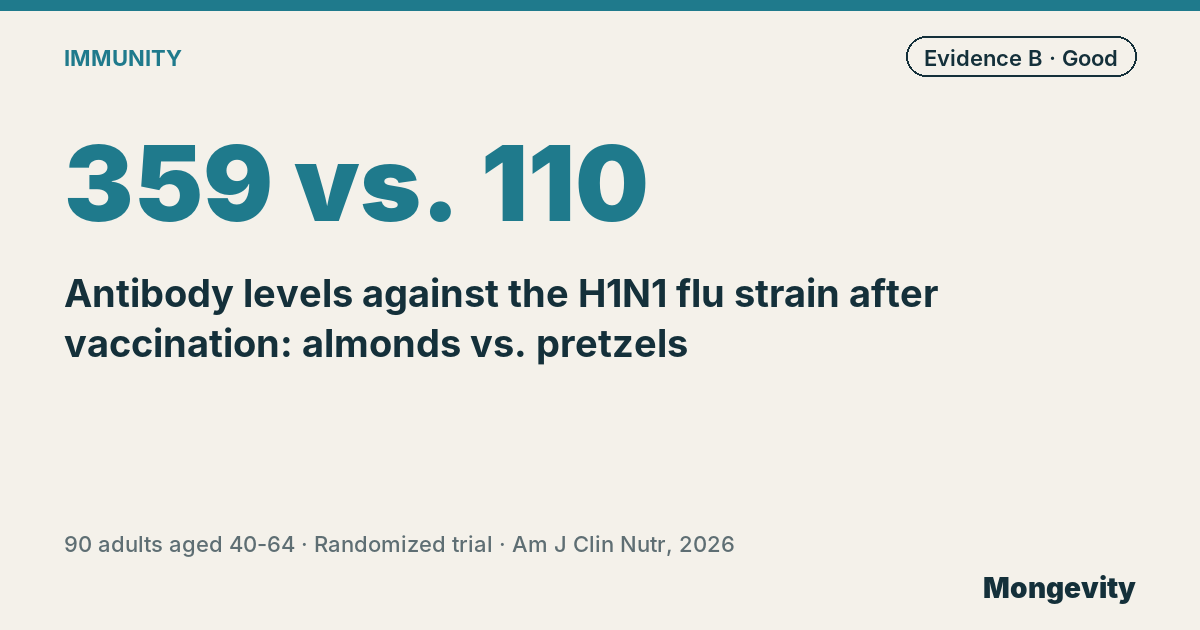
Healthy adults in California who ate 56 g of almonds a day had higher antibody levels against one flu strain after vaccination than those who ate pretzels, in a randomized trial published Oct. 26, 2026, in American Journal of Clinical Nutrition. Seroconversion, the standard measure of vaccine response against these infections, was similar: 93% vs. 95%.
Some nutrients can strengthen the immune response to vaccines, but whole foods had never been tested this way in a randomized trial. Almonds contain fiber, vitamin E and other nutrients that may support immunity, in part through gut bacteria.
Almonds raised antibody levels against some strains, but they didn’t change the share of people who responded to the vaccine, which was already very high.
What did the trial test?
Ninety healthy adults aged 40 to 64 ate either 56 g of almonds a day or a snack of pretzels with the same calories, for 8 weeks. At week 4 they got the seasonal flu vaccine. Researchers measured antibodies before and after vaccination and also looked at gut bacteria.
What did the study find about infections?
| Almonds | 359 |
|---|---|
| Pretzels | 110 |
Seroconversion, the standard measure of whether the vaccine “took”, was high and similar in both groups. But people who ate almonds had higher antibody levels against the H1N1 strain and a bigger rise against H1N1 and B/Yamagata. A gut bacterium called Roseburia hominis was more abundant in the almond group.
Why does this matter?
Flu vaccines work less well as people age. If simple foods can boost the response, that could help older adults. This trial is a first step: it shows a measurable effect on antibodies in middle-aged adults whose vaccine response was already strong.
How solid is this evidence?
It’s good, but limited. Mongevity rates it B on our A-to-E scale. The trial was randomized with a matched control snack. But it was small, the main outcome (seroconversion) showed no difference, and the antibody results were secondary. Some authors received funding from the Almond Board of California.
What does this mean for you?
The best way to be protected against flu is to get the vaccine. Almonds are a healthy snack for most people, but they don’t replace the shot and aren’t proven to make you less likely to get sick. If you have a nut allergy, avoid them.
How do I explain this at dinner?
A vaccine teaches the body to make antibodies, little guards against a virus. People who ate almonds every day made more guards against one type of flu, though almost everyone’s vaccine worked either way. A good question for the table: what helps your body get ready to fight a germ?
In one sentence: eating almonds daily raised antibody levels to some flu strains after vaccination, but didn’t change how many people responded to a vaccine that already worked well.
Questions and answers
- Do almonds make the flu vaccine work better?
- They raised antibody levels to one strain, but didn't change seroconversion, the main measure of vaccine response (93% vs. 95%).
- How many almonds were used?
- 56 g a day, about a handful or two, for 8 weeks.
- Can almonds replace the flu vaccine?
- No. The vaccine is what protects you; almonds were studied only as a possible addition.