Diabetes risk was higher after surgical menopause, especially before 45
MenopausePart of a story we are following · 11 articles · See every update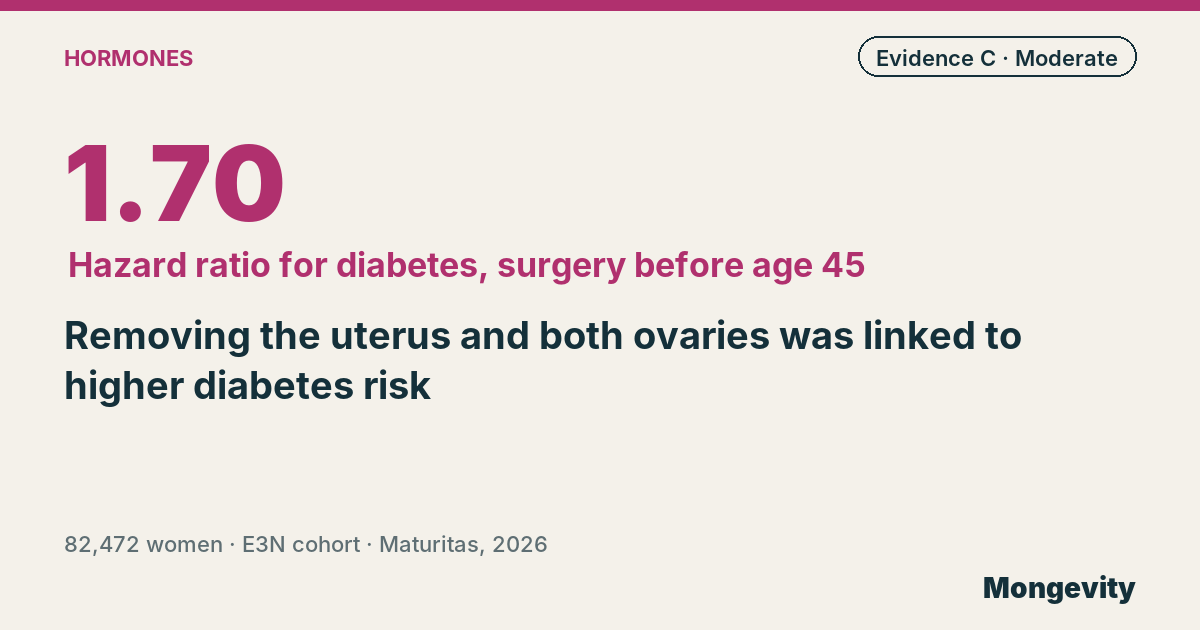
Hysterectomy with removal of both ovaries, which causes surgical menopause, was linked to a higher risk of type 2 diabetes (hazard ratio 1.23), especially before age 45 (1.70), in a French study of 82,472 women followed for a median 16 years, published Oct. 23, 2026, in Maturitas. The timing of menopause seems to matter for metabolism.
Hysterectomy, the surgical removal of the uterus, is one of the most common surgeries in women, and it’s sometimes combined with removal of both ovaries, called bilateral oophorectomy. Removing the ovaries brings on menopause right away. Could that affect metabolism?
What did the study do?
Researchers followed 82,472 French women from the E3N-Generations cohort who didn’t have diabetes in 1992, until 2008, a median of 16 years. They tracked who had a hysterectomy, an oophorectomy or both, and who developed type 2 diabetes, adjusting for lifestyle, metabolic and reproductive factors.
What did the study find about menopause?
During follow-up, 2318 women developed type 2 diabetes.
Removal of both ovaries without hysterectomy wasn’t linked to diabetes risk. The association depended significantly on age at surgery.
Why does this matter?
The results fit with other evidence that early loss of ovarian hormones can affect metabolism and heart health. When ovaries are removed early, extra attention to blood sugar may be warranted.
How solid is this evidence?
It’s moderate. Mongevity rates it C on our A-to-E scale: a large cohort with long follow-up and careful adjustment, but observational, and most women were French teachers’ insurance members, which may limit how widely it applies. Hormone therapy use wasn’t the focus.
What are the open questions?
It’s still unclear whether hormone therapy after early surgery lowers this risk, and why removing the ovaries alone wasn’t linked to diabetes in this study.
What does this mean for you?
If you had a hysterectomy with removal of both ovaries, especially before 45, ask your doctor to check your blood sugar regularly. Staying active, keeping a healthy weight and eating well help lower diabetes risk at any age, with or without surgery. If you’re planning surgery, ask whether keeping the ovaries is an option.
How do I explain this at dinner?
Women who had their uterus and both ovaries removed, especially before 45, were more likely to develop type 2 diabetes later, perhaps because losing ovarian hormones early affects metabolism. A good question for the table: what questions should you ask before a common surgery?
In one sentence: hysterectomy with removal of both ovaries was linked to a higher risk of type 2 diabetes, especially when done before age 45.
Questions and answers
- Is hysterectomy linked to diabetes?
- Hysterectomy alone wasn't clearly linked; with removal of both ovaries, the hazard ratio was 1.23.
- Does age at surgery matter?
- Yes: before age 45 the hazard ratio was 1.70.
- What can I do?
- Have your blood sugar checked regularly and keep healthy habits; if surgery is planned, ask about keeping the ovaries.