Hidden excess cortisol may explain some hard-to-control diabetes and blood pressure
Cortisol and metabolismPart of a story we are following · 4 articles · See every update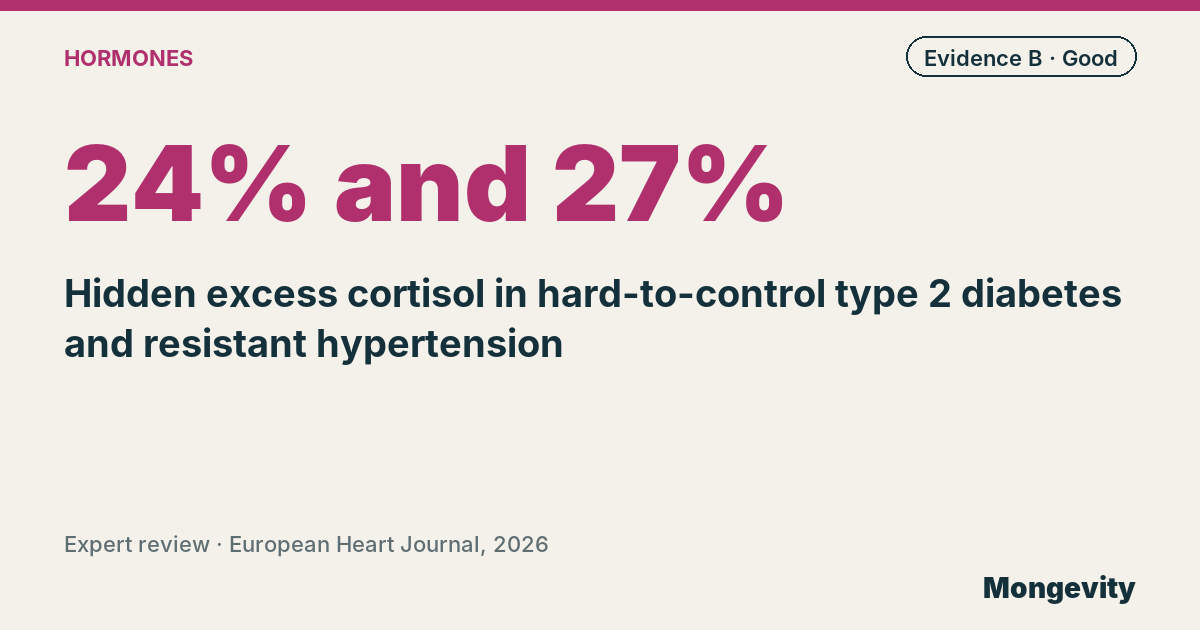
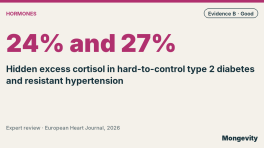
Hypercortisolism was found in 24% of people with difficult-to-control type 2 diabetes in one study and 27% of those with resistant hypertension in another, according to a review published Oct. 28, 2026, in European Heart Journal. Hidden excess cortisol may be more common than doctors suspect.
Some people take several medicines and still can’t get their blood sugar or blood pressure under control. Doctors often blame missed doses or the need for more drugs.
What is hypercortisolism?
Cortisol is a stress hormone made by the adrenal glands. When the body makes too much, it can raise blood sugar, blood pressure and salt retention, and damage blood vessels. The severe form is called Cushing syndrome, but a milder form, called mild autonomous cortisol secretion, is more common and often unnoticed.
What does the review say?
- The mild form is linked to a 2.5-fold higher risk of cardiovascular death and to more high blood pressure, type 2 diabetes and kidney problems.
- In recent studies, hypercortisolism was found in 24% of patients with difficult-to-control type 2 diabetes (CATALYST) and in 27% of patients with resistant hypertension (MOMENTUM).
- The overnight 1 mg dexamethasone suppression test is the preferred screening test.
- Treatments include drugs that block cortisol production or its effects, and surgery when a removable cause, such as an adrenal tumor, is found.
Why does this matter for cortisol?
If a treatable hormone problem lies behind stubborn diabetes or blood pressure, finding it could improve control and lower heart and kidney risk. The authors call for clinical trials and standard testing thresholds.
How solid is this evidence?
It’s good as a summary. Mongevity rates it B on our A-to-E scale. It’s an expert review that pulls together prospective studies and mechanisms, not a new trial. The prevalence figures come from selected patients, not the general population, and trials showing that treating mild hypercortisolism improves heart outcomes are still needed.
What does this mean for you?
If you take three or more medicines for blood pressure, or your diabetes stays uncontrolled despite treatment, ask your doctor whether testing for excess cortisol makes sense. Don’t stop any medicine on your own.
How do I explain this at dinner?
Sometimes blood pressure or sugar stays high no matter how many pills someone takes. Doctors think a hidden extra dose of a stress hormone may be part of the reason in some people, and there’s a simple test for it. A good question for the table: what do you do when a problem doesn’t go away with the usual fix?
In one sentence: hidden excess cortisol may lie behind some cases of hard-to-control diabetes and high blood pressure, and a simple overnight test can screen for it.
Questions and answers
- What is mild autonomous cortisol secretion?
- A milder, often unnoticed form of cortisol excess that is linked to more high blood pressure, diabetes and cardiovascular death.
- How common is it in hard-to-treat patients?
- In recent studies, 24% of people with difficult-to-control type 2 diabetes and 27% with resistant hypertension.
- How is it tested?
- The overnight 1 mg dexamethasone suppression test is the preferred screening test.