Worse hearing was linked to higher mortality, and hearing aid users fared better
Hearing and healthPart of a story we are following · 3 articles · See every update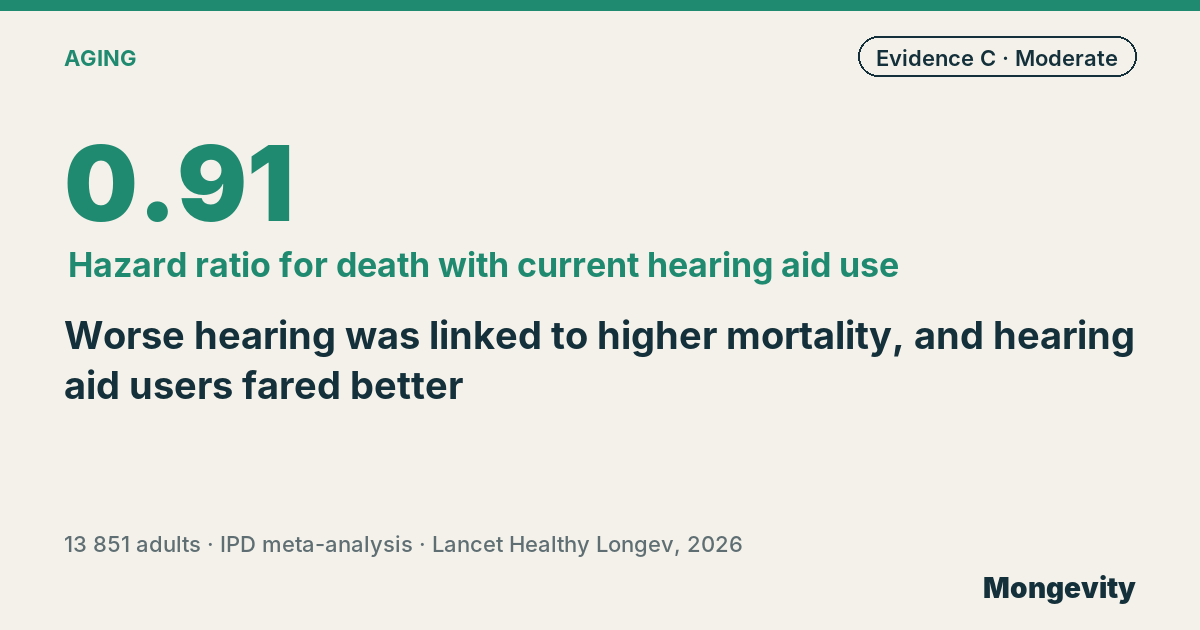
Increasing hearing loss was linked to higher mortality, and current hearing aid use to lower mortality (hazard ratio 0.91), in a pooled analysis of 13 851 adults from Australia, Iceland and the USA published Oct. 13, 2026, in The Lancet Healthy Longevity. Treating hearing loss may matter beyond hearing.
Hearing loss is common with age and is linked to poorer health, depression and cognitive decline. Some studies have also linked it to a shorter life. Do hearing aids change that?
What did the study do?
Researchers combined individual-level data from three population studies in Australia, Iceland and the USA, with 13 851 participants whose hearing was measured with standard tests. They looked at deaths from any cause and from cardiovascular disease, adjusting for age, sex, education, weight, smoking, heart disease, diabetes, high blood pressure, stroke and noise exposure. A separate study of 50 277 adults in Norway was used to check the results.
What did the study find about hearing loss?
| Hearing loss vs. normal hearing | Hazard ratio, death from any cause | Hazard ratio, cardiovascular death |
|---|---|---|
| Mild | 1.19 | 1.18 |
| Moderate | 1.55 | 1.43 |
| Moderately severe or worse | 1.56 | 1.30 |
Current hearing aid use was linked to lower all-cause mortality (hazard ratio 0.91) and lower cardiovascular mortality (0.85). The Norwegian study corroborated these findings.
Why does this matter?
Hearing loss is often seen as a minor inconvenience of aging. These results suggest it’s linked to survival, and that hearing aids might be part of healthy aging, not just a comfort.
How solid is this evidence?
It’s moderate. Mongevity rates it C on our A-to-E scale: a large, multinational analysis with measured hearing and a replication study, but observational. People who use hearing aids may differ in income, health care access or overall health, which can’t be fully adjusted for.
What are the open questions?
Trials are needed to test whether providing hearing aids, or other hearing rehabilitation, actually extends life, and why hearing loss is linked to heart-related deaths.
What does this mean for you?
Get your hearing tested if you often ask people to repeat themselves, turn up the TV or struggle in noisy places. If hearing aids are recommended, wear them regularly. Protect your hearing from loud noise with earplugs at concerts or when using power tools.
How do I explain this at dinner?
In large studies from four countries, the worse people heard, the higher their risk of dying during follow-up. But people who wore hearing aids had a lower risk. A good question for the table: who in your family might need a hearing test?
In one sentence: increasing hearing loss was linked to higher mortality, and current hearing aid use to lower mortality, in a large multinational analysis.
Questions and answers
- Is hearing loss linked to mortality?
- Yes: moderate hearing loss had a hazard ratio of 1.55 for death from any cause.
- Do hearing aids help?
- Current hearing aid use was linked to lower mortality (hazard ratio 0.91), but trials are needed.
- How can I protect my hearing?
- Use ear protection around loud noise and get your hearing tested if you notice problems.