Two targeted pills showed promise against eye melanoma that has spread
Melanoma treatmentPart of a story we are following · 3 articles · See every update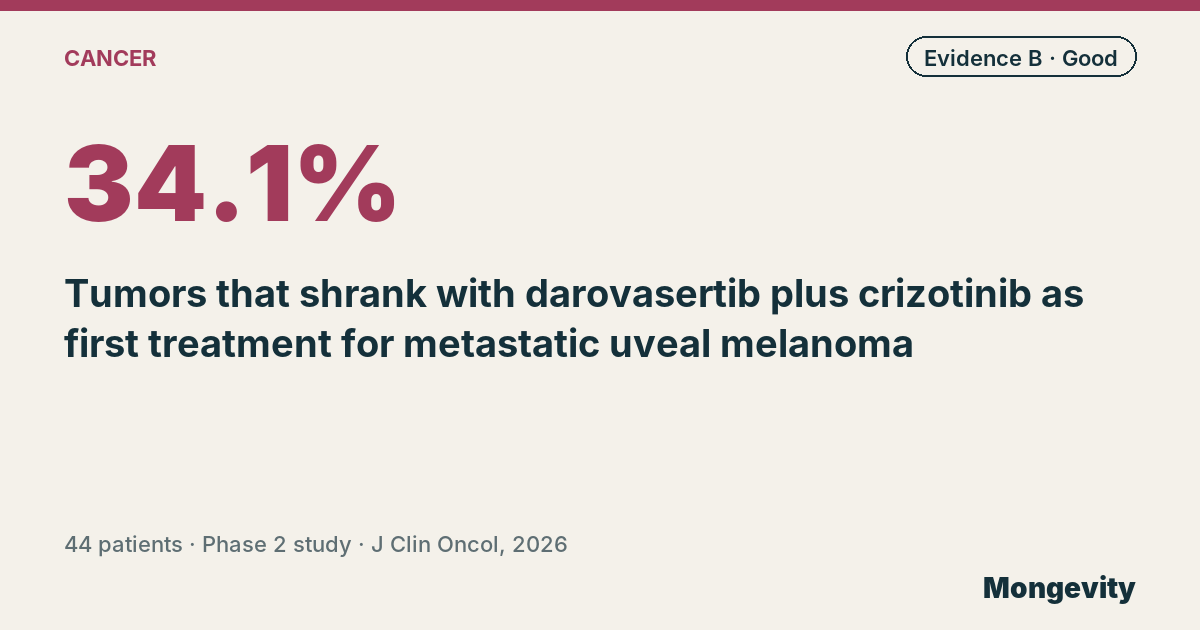
Tumors shrank in 34.1% of 44 previously untreated people with metastatic uveal melanoma on darovasertib plus crizotinib, and median overall survival was 21.1 months, in a phase 2 study published Oct. 28, 2026, in Journal of Clinical Oncology. Eye melanoma that has spread has few good treatments.
Uveal melanoma is a rare cancer that starts inside the eye. It’s different from skin melanoma, and when it spreads, usually to the liver, the outlook is poor and treatments are limited. In 95% of these tumors, mutations in genes called GNAQ or GNA11 switch on a growth signal through a protein called PKC.
What did the study test?
44 people with metastatic uveal melanoma who hadn’t had previous treatment took darovasertib 300 mg and crizotinib 200 mg twice a day. There was no comparison group.
What did the study find about melanoma?
| Outcome | Result |
|---|---|
| Tumors that shrank (response rate) | 34.1% |
| Median duration of response | 9.0 months |
| Disease controlled at 8 weeks | 90.2% |
| Median time without progression | 7.0 months |
| Median overall survival | 21.1 months |
Side effects were very common: diarrhea (95.2%), nausea (84.1%), swelling (61.4%) and vomiting (52.3%). The most common serious problems were blood clots in the lungs (9.1%) and iron deficiency anemia (6.8%). Three people (6.8%) stopped because of side effects.
Why does this matter?
Few drugs work for metastatic uveal melanoma, and the main approved option only fits people with a specific immune type. A targeted, oral combination aimed at the mutation behind most of these tumors could become a first-in-class option.
How solid is this evidence?
It’s good but early. Mongevity rates it B on our A-to-E scale. The results are encouraging for a hard-to-treat cancer, but the study was small, open-label and had no control group, so it can’t show the combination is better than other treatments. A randomized trial is needed. Because so few people have this cancer, studies are small, and each new result moves the field forward.
What does this mean for you?
If you or someone close to you has uveal melanoma that has spread, ask a center experienced in eye melanoma about clinical trials, including targeted combinations like this one. Regular eye exams help find these tumors early.
How do I explain this at dinner?
A rare cancer can start inside the eye. Scientists gave two pills that block the switch most of these tumors use to grow, and in a third of people, the tumors shrank. A good question for the table: why is it harder to find treatments for rare diseases?
In one sentence: two targeted pills showed encouraging results as a first treatment for metastatic uveal melanoma in a small phase 2 study.
Questions and answers
- What is uveal melanoma?
- A rare cancer that starts inside the eye; it's different from skin melanoma.
- How well did the combination work?
- Tumors shrank in 34.1% of 44 people, and median overall survival was 21.1 months.
- What are the side effects?
- Very common stomach problems such as diarrhea (95.2%) and nausea (84.1%); 6.8% stopped treatment due to side effects.