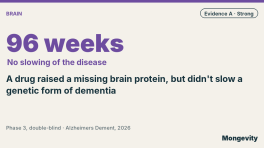
A pill raised progranulin, a protein missing in a genetic dementia, in a first human trial
Other dementiasPart of a story we are following · 3 articles · See every update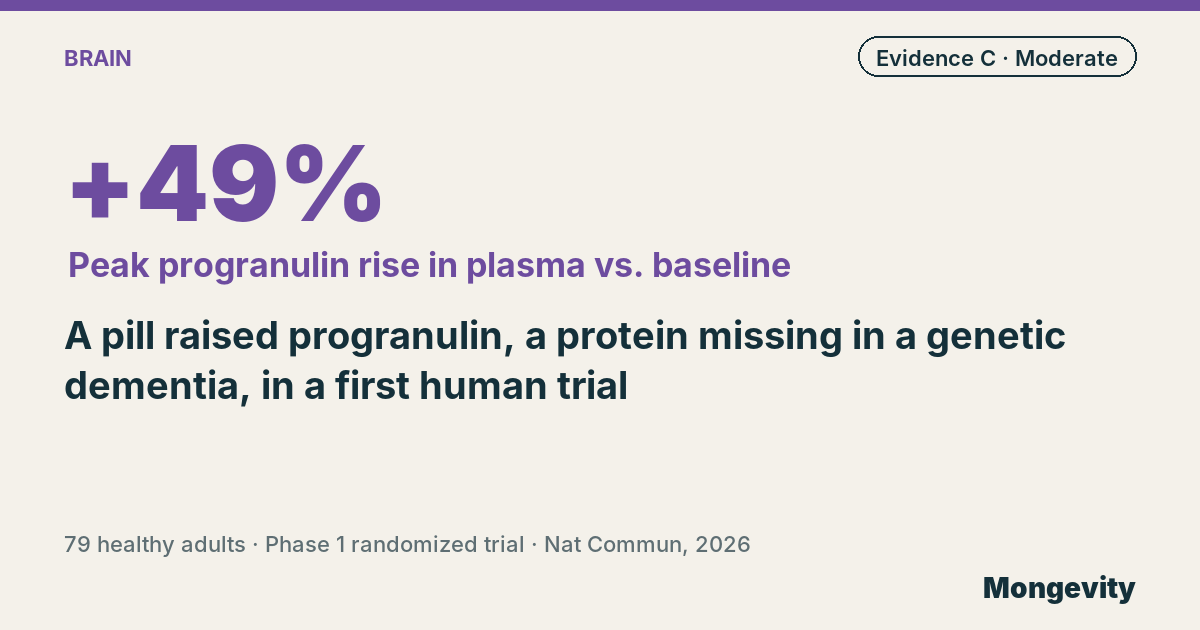
The oral drug VES001 was well tolerated and raised progranulin, a protein too low in one genetic form of frontotemporal dementia, by up to 49% in blood and 18% in spinal fluid, in a first-in-human trial of 79 healthy adults published Sept. 14, 2026, in Nature Communications. Whether it slows dementia is still unknown.
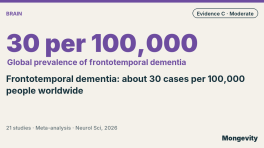
One inherited form of frontotemporal dementia is caused by mutations in the GRN gene, which leave people with too little of a protein called progranulin. Raising progranulin is a logical treatment goal. A receptor called sortilin removes progranulin from circulation, so blocking it could leave more available.
What did the trial test?
79 healthy adults, with a mean age of 28 years, were assigned by chance to VES001 or placebo, without knowing which. Some received a single dose, from 10 to 990 mg; others took it for 7 days, at 180 mg once or twice daily or 450 mg twice daily. The main goals were safety and tolerability; the team also measured how the drug moved through the body and its effect on progranulin.
What did the study find about dementia?
- There were no deaths, serious adverse events or discontinuations due to the drug.
- Headache and fatigue were mild and not related to the dose.
- The drug crossed the blood-brain barrier.
- Twice-daily dosing produced sustained increases in progranulin vs. placebo: a peak of 49% in blood plasma and 18% in cerebrospinal fluid.
Why does this matter?
There is no approved treatment that slows frontotemporal dementia. Showing that a pill can safely raise progranulin in people, including in the fluid around the brain, is a necessary first step before testing whether it slows the disease in GRN mutation carriers.
How solid is this evidence?
It’s early. Mongevity rates it C on our A-to-E scale: a randomized, placebo-controlled trial, but in healthy young adults, with small groups, 7 days of dosing and a protein level as the outcome. It shows the drug works as designed, not that it helps patients. Part of the study was done in rats, which we don’t count toward the rating.
What are the open questions?
The key question is whether raising progranulin with VES001 slows or prevents disease in people with GRN mutations, and whether it stays safe over months or years.
What does this mean for you?
If frontotemporal dementia runs in your family, genetic counseling can clarify whether a GRN mutation is involved. Carriers may be eligible for trials of progranulin-raising drugs. Ask a specialized memory or genetics clinic.
How do I explain this at dinner?
In one inherited dementia, the brain lacks a protective protein called progranulin. Scientists tested a pill that blocks the receptor that removes it, and in healthy volunteers the protein went up in blood and in the fluid around the brain, with mild side effects. A good question for the table: why test a dementia drug in healthy people first?
In one sentence: in a first-in-human trial, the oral sortilin inhibitor VES001 was well tolerated and raised progranulin in plasma and cerebrospinal fluid, supporting its development for GRN-related frontotemporal dementia.
Questions and answers
- What is progranulin?
- A protein that is too low in people with GRN mutations, who develop one form of frontotemporal dementia.
- How does VES001 work?
- It blocks sortilin, a receptor that removes progranulin, so more remains available.
- Did it raise progranulin?
- Yes: a peak of 49% in plasma and 18% in cerebrospinal fluid with twice-daily dosing.
- Does it treat dementia?
- Not shown yet. This trial was in healthy adults and measured safety and protein levels.