Medical cannabis for insomnia: a Cochrane review found little proof it helps sleep
Sleep healthPart of a story we are following · 13 articles · See every update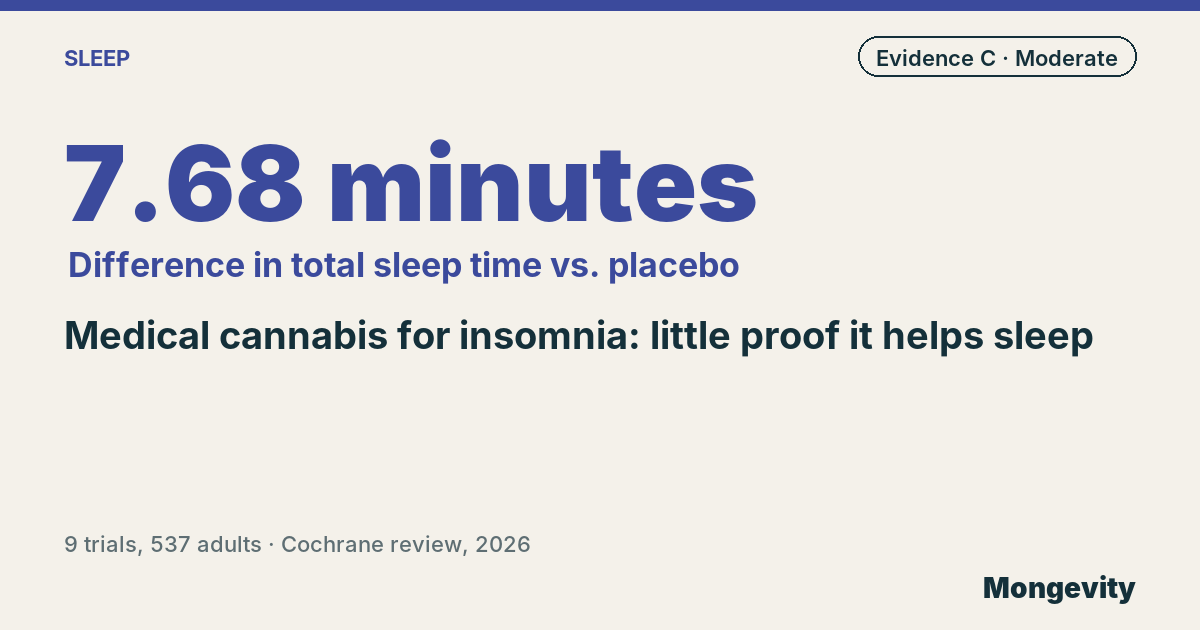
Medical cannabis may have little to no meaningful effect on sleep quality or total sleep time in insomnia, with more side effects, according to a Cochrane review of nine trials with 537 adults published Oct. 13, 2026, in Cochrane Database of Systematic Reviews. The evidence is very uncertain.
Insomnia is very common, and many people look for alternatives to sleeping pills because of their side effects. Medical cannabis is increasingly used for sleep, but guidelines haven’t made clear recommendations because the evidence was uncertain.
What did the review do?
Reviewers searched major databases and trial registries up to 5 April 2025 for randomized trials in adults with insomnia comparing medical cannabis with placebo or other sleep medicines. They found nine studies with 537 participants, aged 18 to 76. Most participants were women. Eight studies compared cannabis with placebo, and one with amitriptyline, an antidepressant. Seven used pharmacy-made preparations rather than licensed medicines.
What did the study find about sleep?
Compared with placebo, medical cannabis:
- May have little to no meaningful effect on sleep quality or satisfaction.
- May have little to no effect on total sleep time, with an average difference of 7.68 minutes.
- May have little to no effect on daytime functioning.
- May improve quality of life, but the evidence is very uncertain.
- May increase side effects, with an odds ratio of 11.25 in 3 studies.
The certainty of the evidence was low to very low, mainly because of risk of bias, inconsistent results between studies and imprecision.
Why does this matter?
Medical cannabis is often presented as a natural sleep aid. This review shows that, so far, good evidence that it improves insomnia is lacking, while side effects seem more common.
How solid is this evidence?
It’s limited. Mongevity rates it C on our A-to-E scale: a high-quality Cochrane review, but the trials it found were few, small, varied and at risk of bias, so the conclusions are very uncertain. Better, larger and longer trials are needed.
What are the open questions?
Researchers still don’t know whether specific products, doses or types of insomnia respond differently, or what the long-term harms might be, including dependence.
What does this mean for you?
If you have chronic insomnia, the best-supported first treatment is cognitive behavioral therapy for insomnia, known as CBT-I, which teaches skills to reset sleep habits. Talk to your doctor before trying cannabis, especially if you take other medicines or drive.
How do I explain this at dinner?
Many people use cannabis to sleep better. A careful review of the trials found little proof it actually improves sleep, and more side effects. A good question for the table: what helps you sleep that doesn’t come in a bottle?
In one sentence: a Cochrane review found that medical cannabis may have little to no meaningful effect on insomnia, may cause more side effects and rests on very uncertain evidence.
Questions and answers
- Does medical cannabis help insomnia?
- This review found it may have little to no meaningful effect on sleep quality or total sleep time.
- Is it safe?
- It may increase side effects (odds ratio 11.25 in 3 studies), but that evidence is low certainty.
- What works for insomnia?
- Cognitive behavioral therapy for insomnia, or CBT-I, is the best-supported first treatment.