Irritable bowel syndrome, a gut-brain disorder, affects 20% of people: what works
The gut-brain connectionPart of a story we are following · 3 articles · See every update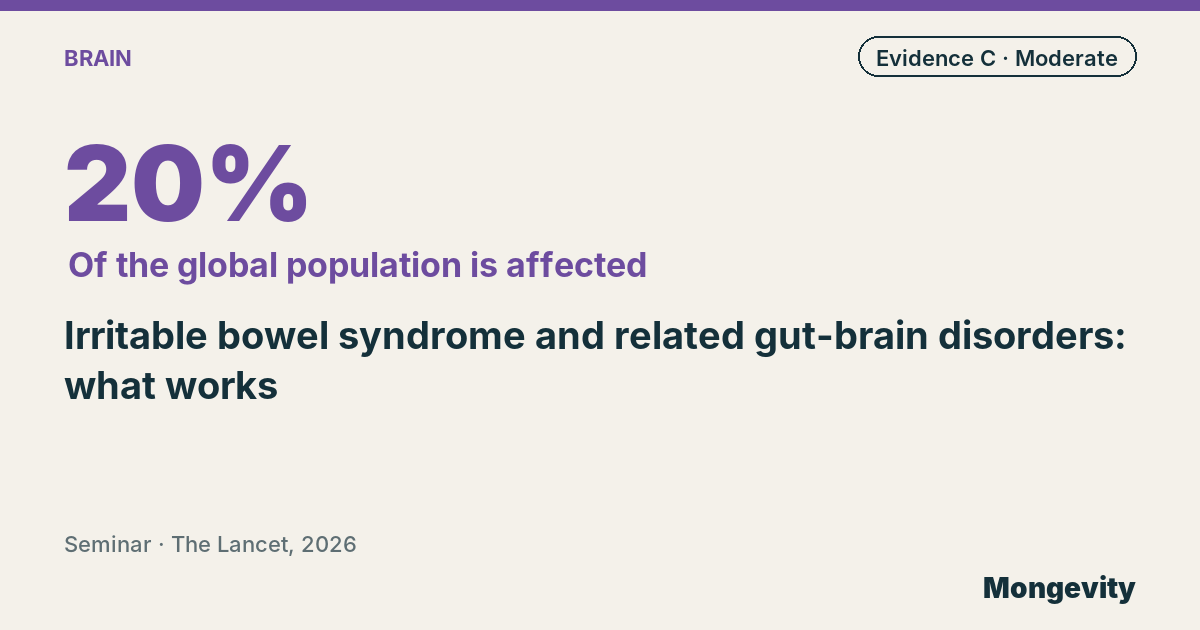
Irritable bowel syndrome and related gut-brain disorders affect 20% of the world’s population, and education, diet, fiber, targeted drugs and psychological therapies can help, according to a review published Oct. 29, 2026, in The Lancet. The gut-brain connection is central to treatment.
Irritable bowel syndrome, chronic constipation and functional diarrhea are common conditions with real symptoms, belly pain, bloating and changes in stool, but no visible damage on standard tests. Doctors now call them disorders of gut-brain interaction.
How common are they?
According to the review, these conditions affect 20% of the global population. They tend to come and go, with flare-ups and calmer periods.
Who is more likely to have them?
Risk factors include being female, being younger, having a history of common mental health conditions such as anxiety or depression, and having had a gut infection, such as food poisoning.
What causes them, and what role does the gut-brain connection play?
The causes aren’t fully understood. The leading explanation is that communication between the gut and the brain goes awry. That can change how the gut moves and make it more sensitive to normal sensations, so ordinary gas or movement can feel painful.
How are they diagnosed?
By combining the person’s history with the absence of alarm symptoms, such as weight loss or rectal bleeding, and a few targeted tests. Alarm symptoms need prompt evaluation for other causes.
What helps?
| Approach | Examples from the review |
|---|---|
| Basics | Clear explanation of the condition, an empathetic doctor |
| Diet and lifestyle | Dietary advice, adjusting fiber |
| Medicines | Drugs aimed at the main symptom: pain, constipation or diarrhea |
| For severe symptoms | Specific medical devices, biofeedback, psychological therapies |
The review notes that an empathetic approach itself improves symptoms and quality of life, reduces health care use and helps people stick to treatment. Most treatments have modest effects, and several new drugs are in development.
How solid is this evidence?
It’s moderate as a source. Mongevity rates it C on our A-to-E scale: a narrative review by experts in a major journal, which summarizes many studies but isn’t a new study or a formal meta-analysis.
What does this mean for you?
If you have recurring belly pain and changes in your bowel habits, see a doctor, especially if you have weight loss, blood in the stool or symptoms that wake you at night. If you’re diagnosed with IBS, a food and symptom diary, fiber adjustments and, if needed, psychological therapy are reasonable steps to discuss.
How do I explain this at dinner?
Many people, 20% worldwide, have a gut that’s extra sensitive because the gut and the brain don’t talk to each other quite right. It’s real, it’s common and it can be managed, though no treatment works perfectly. A good question for the table: have you noticed your stomach reacting to stress?
In one sentence: irritable bowel syndrome and related gut-brain disorders affect 20% of people, and education, diet, targeted drugs and psychological therapies can help, though effects are modest.
Questions and answers
- What is a disorder of gut-brain interaction?
- A condition, such as IBS, with real gut symptoms caused by altered communication between gut and brain rather than visible damage.
- How common is it?
- These conditions affect 20% of the global population, according to the review.
- When should I worry?
- Weight loss or rectal bleeding are alarm symptoms that need prompt medical evaluation.