After radioiodine for an overactive thyroid, cats did best when low thyroid was treated
Senior catsPart of a story we are following · 3 articles · See every update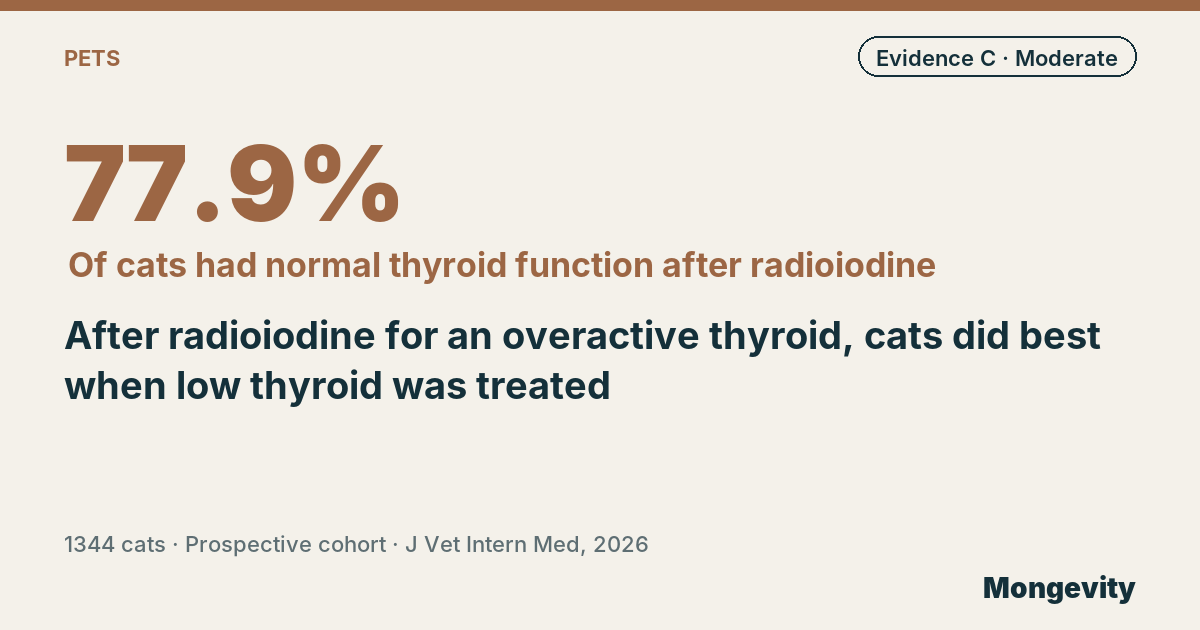
Normal thyroid function returned in 77.9% of 1344 hyperthyroid cats at 6-12 months after radioiodine, and untreated persistent low thyroid was linked to shorter survival, in a study published in September 2026 in Journal of Veterinary Internal Medicine. Follow-up thyroid checks matter for senior cats.
Hyperthyroidism, an overactive thyroid gland, is the most common hormone disorder in older cats. Radioactive iodine cures it in most cats, but some later develop an underactive thyroid, called hypothyroidism.
What did the study do?
Researchers followed 1344 hyperthyroid cats treated with radioiodine for up to 12 years. They classified thyroid and kidney status 6 to 12 months after treatment and rechecked every 6 to 12 months until death, relapse, loss to follow-up or the end of the study.
What did the study find about senior cats?
At 6 to 12 months after treatment:
- Normal 77.9%
- Mildly low 17.9%
- Clearly low 4.2%
| Normal | 49.7 months |
|---|---|
| Mildly low | 44.6 months |
| Clearly low | 36.1 months |
- Among cats with normal function, 89.2% stayed normal, 4.1% developed late hypothyroidism and 6.7% had hyperthyroidism come back.
- Among cats with mildly low function, 42.5% returned to normal on their own.
- Median survival was 49.7 months for cats with normal function, 44.6 for mildly low and 36.1 for clearly low.
- Older age, male sex and higher creatinine, a kidney marker, were linked to shorter survival.
- Untreated persistent hypothyroidism was linked to a higher risk of death, while hypothyroid cats treated with levothyroxine, a thyroid hormone, were not.
Why does this matter?
Radioiodine is very effective, but thyroid function can keep changing for years. Treating persistent low thyroid with hormone replacement appears to help cats live as long as cats that never became hypothyroid.
How solid is this evidence?
It’s moderate. Mongevity rates it C on our A-to-E scale: a very large prospective cohort with long follow-up, but observational. Treatment choices weren’t random, and kidney disease, common in older cats, complicates the picture.
What are the open questions?
Trials could clarify which cats with mildly low thyroid benefit from levothyroxine, and how best to protect kidney function after treatment.
What does this mean for you?
If your cat has been treated with radioiodine, keep up regular thyroid and kidney blood tests for life. If tests show persistent low thyroid, ask your vet whether thyroid hormone replacement is needed.
How do I explain this at dinner?
Older cats often get an overactive thyroid, and radioactive iodine usually cures it. But some then end up with a thyroid that’s too slow. Those cats lived longer when the low thyroid was treated. A good question for the table: how often does your pet get blood tests?
In one sentence: after radioiodine for hyperthyroidism, most cats had normal thyroid function, and untreated persistent hypothyroidism was linked to shorter survival.
Questions and answers
- What is hyperthyroidism in cats?
- An overactive thyroid gland, the most common hormone disorder in older cats.
- Does radioiodine cure it?
- In most cats: 77.9% had normal thyroid function 6 to 12 months after treatment.
- What about low thyroid afterward?
- Untreated persistent hypothyroidism was linked to shorter survival; levothyroxine-treated cats did not show this.