SGLT2 and GLP-1 drugs protected diabetic kidneys mainly when urine showed protein
SGLT2 inhibitors: beyond blood sugarPart of a story we are following · 3 articles · See every update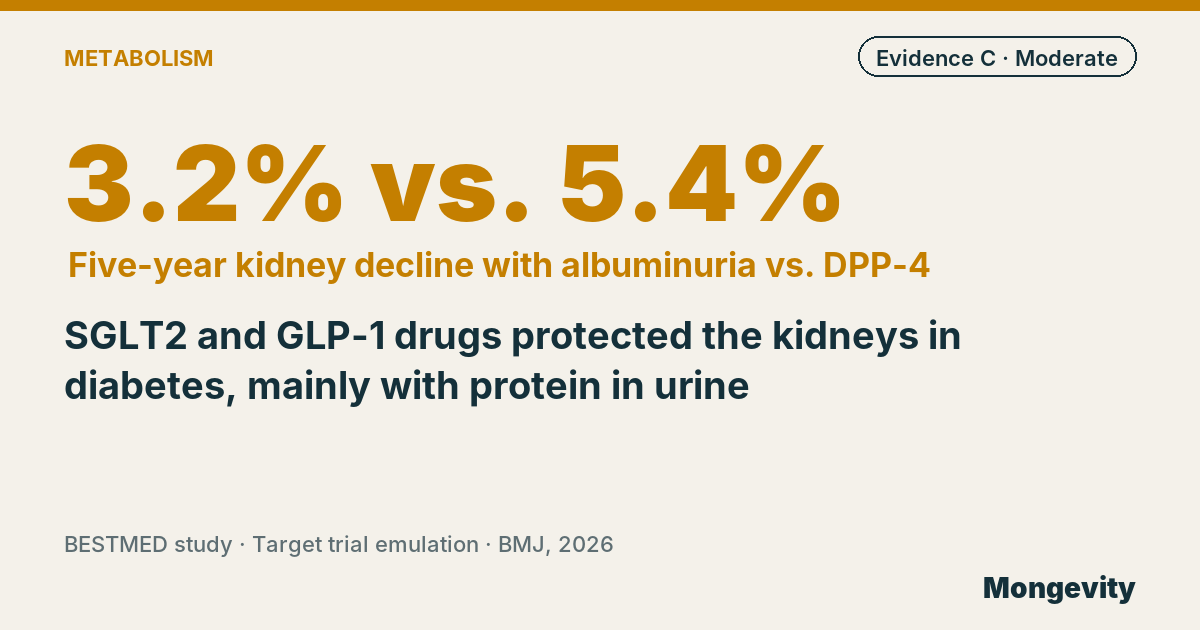
SGLT-2 inhibitors or GLP-1 drugs lowered the five-year risk of kidney decline vs. DPP-4 inhibitors in people with type 2 diabetes and protein in the urine, 3.2% vs. 5.4%, but not in those without it, in a US study published Sept. 16, 2026, in The BMJ. SGLT2 inhibitors protect the kidneys most once damage has begun.
SGLT-2 inhibitors, such as empagliflozin, and GLP-1 receptor agonists, such as semaglutide, lower blood sugar and also protect the heart and kidneys. Trials mostly included people at high risk, often with kidney damage shown by protein in the urine (albuminuria). Do people with diabetes but healthy kidneys benefit too?
What did the study look at?
Researchers combined health records and insurance data from 10 US health systems and two national insurance plans. They included adults with type 2 diabetes, moderate heart risk and preserved kidney function who were taking metformin and started a second medicine between 2014 and 2022. The analysis was designed to mimic a trial. The median age was 60 years and 48% were women. The main outcome was kidney decline: doubling of creatinine or very low kidney function.
What did the study find about SGLT2 inhibitors?
- In people without albuminuria, the five-year risk of kidney decline was 2.4% with SGLT-2 inhibitors or GLP-1 drugs vs. 2.1% with DPP-4 inhibitors (risk ratio 1.10, no clear benefit).
- In people with albuminuria, it was 3.2% vs. 5.4% (risk ratio 0.60).
- Median follow-up was 32 months.
Why does this matter?
These medicines are often presented as kidney protectors for everyone with diabetes. This study suggests that the kidney benefit is clear when there is already protein in the urine, but small or absent over a few years in people without it. That supports routine urine testing to guide treatment choices. It doesn’t change their heart or weight benefits.
How solid is this evidence?
It’s moderate. Mongevity rates it C on our A-to-E scale: a large observational study designed to emulate a trial. Limits: treatments weren’t assigned at random, the two drug classes were grouped together, and follow-up may be too short to see benefits in people with healthy kidneys.
What are the open questions?
Longer follow-up could show whether people without albuminuria benefit over a decade or more, and whether SGLT-2 inhibitors and GLP-1 drugs differ in kidney protection.
What does this mean for you?
If you have type 2 diabetes, ask for a urine albumin test at least once a year, alongside blood creatinine. If protein appears, SGLT-2 inhibitors or GLP-1 drugs are strong options to protect your kidneys. Your doctor will weigh heart, weight and blood sugar goals too.
How do I explain this at dinner?
Two families of diabetes medicines are famous for protecting the kidneys. In a big study, they clearly did so in people whose urine already showed protein, a sign of early kidney damage, but not in people whose kidneys were still healthy. A good question for the table: when was your last urine test?
In one sentence: in type 2 diabetes, SGLT-2 inhibitors and GLP-1 receptor agonists reduced kidney decline compared with DPP-4 inhibitors in people with albuminuria, with little evidence of renal benefit in those without it.
Questions and answers
- What is albuminuria?
- Protein (albumin) in the urine, an early sign of kidney damage.
- Did the drugs protect the kidneys with albuminuria?
- Yes: five-year kidney decline 3.2% vs. 5.4% with DPP-4 inhibitors (risk ratio 0.60).
- And without albuminuria?
- No clear benefit: 2.4% vs. 2.1% (risk ratio 1.10).
- Should I stop my SGLT-2 or GLP-1 drug?
- No. They have other benefits; discuss any change with your doctor.