Menopause caused by surgery or treatment before 45 was linked to higher heart risk
MenopausePart of a story we are following · 11 articles · See every update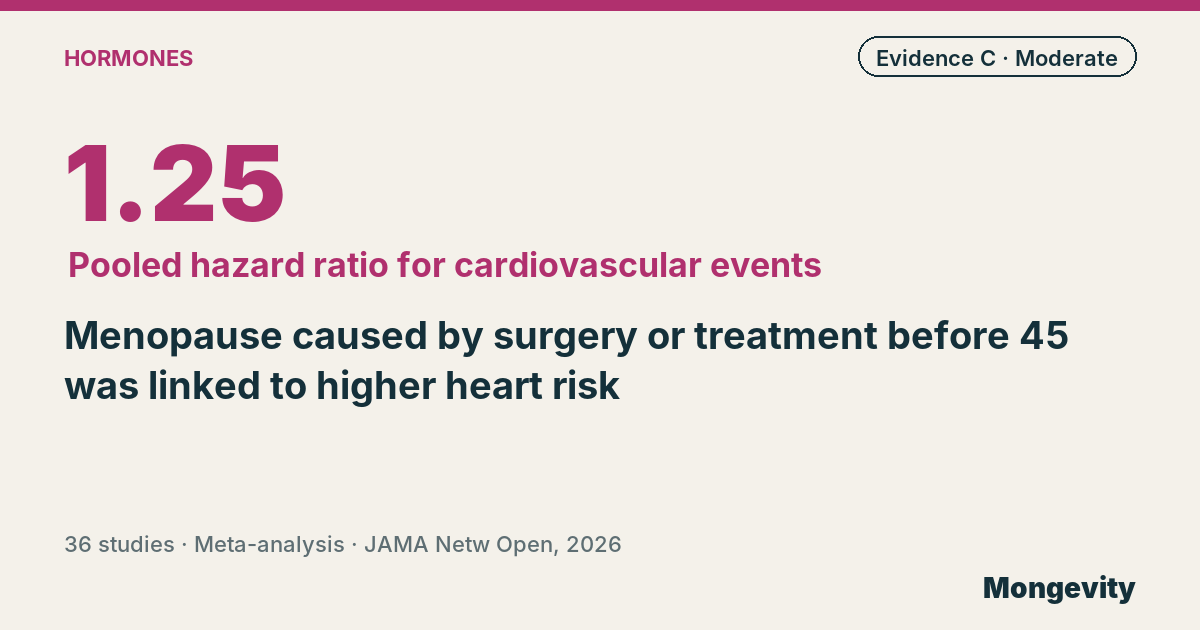
Menopause caused by surgery or medical treatment was linked to more heart disease and stroke, with higher mortality only when it happened before age 45, in a meta-analysis of 36 studies published Oct. 1, 2026, in JAMA Network Open. Age at menopause matters for heart risk.
Iatrogenic menopause is menopause caused by medical treatment, most often surgical removal of both ovaries, but also some cancer treatments. It’s common, and it can happen years before natural menopause. Because estrogen affects blood vessels, doctors have wondered how it affects heart health, and whether age matters.
What did the study do?
Researchers searched seven databases from 2004 to March 2026 for studies comparing women with iatrogenic menopause before the usual age of natural menopause with naturally menopausal or same-age women. They included 36 studies, with a median follow-up of 16.0 years.
What did the study find about menopause?
Compared with other women, iatrogenic menopause was linked to:
| Outcome | Pooled hazard ratio |
|---|---|
| Death from any cause | 1.08 |
| Cardiovascular events | 1.25 |
| Coronary heart disease | 1.48 |
| Stroke | 1.22 |
Higher mortality was seen only when menopause happened before age 45: 1.20 for cardiovascular death and 1.15 for death from any cause. At 45 or older, there was no excess (0.95 and 0.99). Each 5-year increase in age at iatrogenic menopause was linked to lower risk, with a hazard ratio of 0.89.
Why does this matter?
The findings support a gradient: the earlier the menopause, the higher the cardiovascular risk, especially before 45. That’s useful when weighing surgery that removes the ovaries and when planning follow-up afterward.
How solid is this evidence?
It’s moderate. Mongevity rates it C on our A-to-E scale: a large, careful meta-analysis, but mostly of observational studies. Women who need ovary removal may differ from others in health, and the role of hormone therapy after menopause couldn’t be fully assessed.
What are the open questions?
Researchers need to clarify whether hormone therapy after early iatrogenic menopause lowers this extra risk, and for whom.
What does this mean for you?
If you had your ovaries removed or went through menopause because of treatment, especially before 45, tell your doctor. Ask about checking blood pressure, cholesterol and blood sugar regularly, and whether hormone therapy is appropriate for you. If you’re considering ovary removal for a non-urgent reason, discuss these long-term effects first.
How do I explain this at dinner?
When menopause is caused by surgery or treatment, especially before 45, the heart seems to pay a price: more heart attacks, strokes and, before 45, more deaths. The later it happens, the lower the risk. A good question for the table: why might estrogen matter for the heart?
In one sentence: menopause caused by surgery or treatment was linked to more heart disease and stroke, with higher mortality when it occurred before age 45.
Questions and answers
- What is iatrogenic menopause?
- Menopause caused by medical treatment, most often surgical removal of both ovaries.
- Is it linked to heart disease?
- Yes: cardiovascular events had a pooled hazard ratio of 1.25 and stroke 1.22.
- Does age matter?
- Yes: higher mortality was seen only before age 45, and risk fell as age at menopause rose.