Adding a hormonal IUD after ablation for heavy periods cut later hysterectomies
Menstrual healthPart of a story we are following · 6 articles · See every update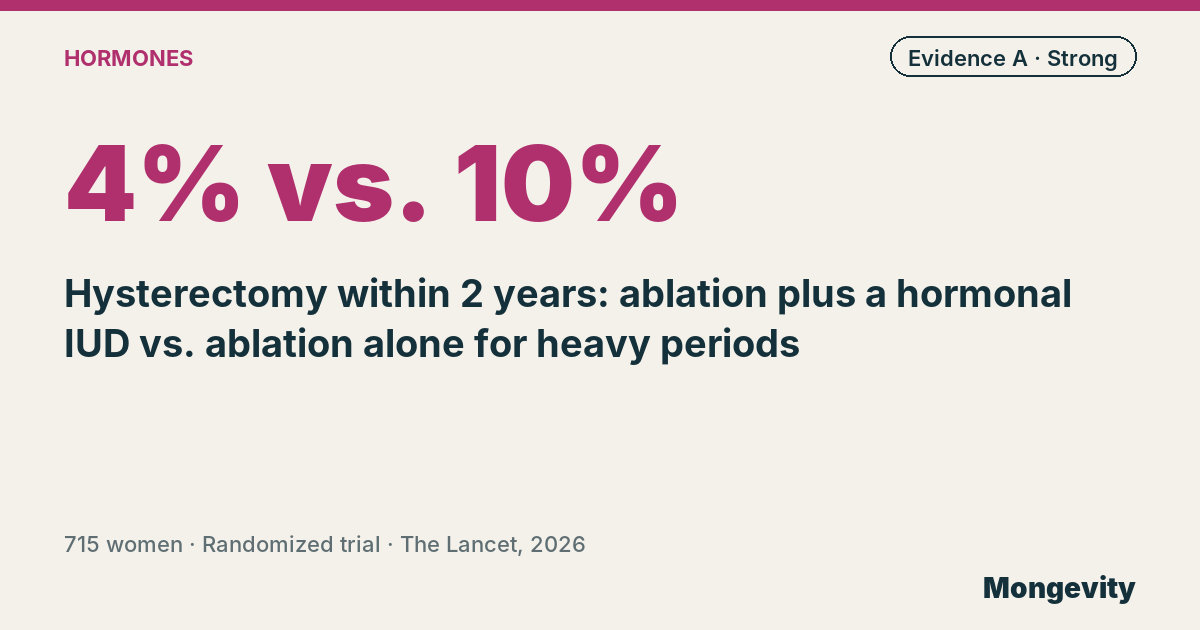
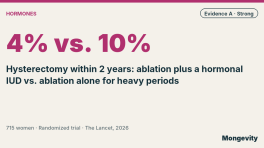
Adding a levonorgestrel IUD to endometrial ablation for heavy menstrual bleeding cut hysterectomies within 2 years to 4%, vs. 10% with ablation alone, in the MIRA2 trial in the Netherlands, published Oct. 21, 2026, in The Lancet. For menstrual health, it means fewer women may need major surgery.
Heavy menstrual bleeding affects many women and can disrupt work, sleep and daily life. Endometrial ablation, a procedure that destroys the lining of the uterus, is an effective treatment, but some women’s symptoms come back, and about 10% end up having a hysterectomy within 2 years.
Placing a hormonal IUD right after ablation cut the need for later hysterectomy by more than half.
What did the trial test?
At 34 hospitals in the Netherlands, 715 women younger than 60 with heavy menstrual bleeding were assigned by chance to ablation alone or ablation plus a levonorgestrel-releasing IUD inserted immediately after the procedure. The idea was that the hormone would quiet any remaining lining and prevent it from growing back.
What did the study find about menstrual health?
| Within 2 years | Ablation + IUD | Ablation alone |
|---|---|---|
| Needed a hysterectomy | 4% | 10% |
| Serious adverse events | 8% | 8% |
The relative risk of hysterectomy was 0.43. There were no treatment-related deaths, and serious side effects were similar in both groups.
Why does this matter?
A hysterectomy is major surgery with recovery time and risks. A small step during the same procedure that prevents many of them could spare women a second operation. It also uses a device that is already widely available, familiar to gynecologists and inexpensive compared with surgery. For many women, avoiding a hysterectomy also means keeping their uterus, which matters to some for personal reasons.
How solid is this evidence?
It’s strong. Mongevity rates it A on our A-to-E scale: a large multicenter randomized trial with a clear result. Limits: it was open-label, so women and doctors knew who had the IUD, and 6% of participants were missing data for the main outcome.
What does this mean for you?
If you’re considering endometrial ablation for heavy periods, ask your gynecologist whether adding a hormonal IUD at the same time makes sense for you, and what the side effects of the IUD might be, such as spotting in the first months.
How do I explain this at dinner?
Some women have very heavy periods. Doctors can treat the inside of the uterus, but it sometimes grows back. Adding a tiny device that releases a hormone helped many avoid a bigger operation later. A good question for the table: when does a small extra step save a lot of trouble later?
In one sentence: inserting a hormonal IUD right after endometrial ablation cut later hysterectomies for heavy periods by more than half.
Questions and answers
- What is endometrial ablation?
- A procedure that destroys the lining of the uterus to reduce heavy menstrual bleeding.
- Does adding a hormonal IUD help?
- In this trial, hysterectomies within 2 years fell to 4% vs. 10% with ablation alone.
- Is it safe?
- Serious adverse events were similar (8% in both groups), and there were no treatment-related deaths.