Hearing, social life and memory: loneliness may not be the bridge, a study finds
Social life and healthPart of a story we are following · 4 articles · See every update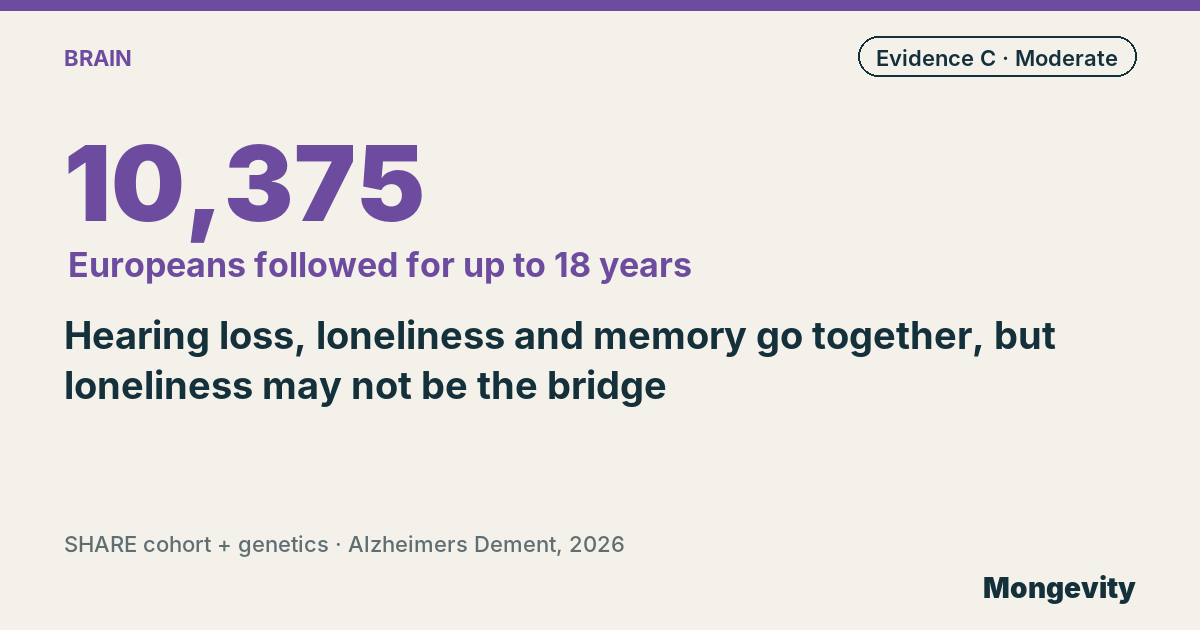
Poorer hearing, loneliness and weaker memory went together in 10,375 Europeans followed for up to 18 years, in a study published in October 2026 in Alzheimer’s & Dementia, but loneliness did not appear to be the main causal link. Social life and health connect in more than one way.
Hearing loss and loneliness are both considered risk factors for dementia that we may be able to change. A popular idea is that hearing loss leads to withdrawal and loneliness, and that loneliness then harms the brain.
What did the study do?
Researchers used up to 18 years of data from the Survey of Health, Ageing and Retirement in Europe, with 10,375 participants. They tracked hearing, loneliness and memory, measured by word recall, over time. They also used genetic data from eight large genetic studies, with methods such as Mendelian randomization, to test whether hearing loss causes dementia directly or through loneliness.
What did the study find about social life and health?
- At one point in time, poorer hearing, greater loneliness and poorer word recall went together, and part of the hearing-memory link passed through loneliness.
- Over time, there was little evidence that changes in hearing drove changes in loneliness, which then drove changes in memory.
- Current hearing aid use was linked to a weaker connection between hearing and loneliness, but long-term past use was not.
- Genetic analyses found little evidence that hearing loss causes Alzheimer’s or dementia, directly or through loneliness.
- Results fit better with a shared vulnerability, including overlap with neuroticism, a personality trait linked to worry and negative emotions.
Why does this matter?
The study suggests the story is more complex than “hearing loss causes loneliness causes dementia.” Hearing care and social connection may still matter, but each needs to be tested directly in trials.
How solid is this evidence?
It’s moderate. Mongevity rates it C on our A-to-E scale: a large long-term study combined with genetic methods, which strengthens it. But it’s observational, memory was measured with a simple test and genetic methods rely on assumptions that can’t be fully checked.
What does this mean for you?
Treating hearing loss and staying socially connected are good for quality of life regardless. If you or a relative struggle to follow conversations, get a hearing check, and if hearing aids are recommended, wear them regularly.
How do I explain this at dinner?
People who hear worse tend to feel lonelier and remember less. Scientists thought loneliness was the bridge between hearing and memory, but genes suggested the three may share a common root instead. A good question for the table: when did you last have your hearing checked?
In one sentence: hearing loss, loneliness and weaker memory go together in older adults, but loneliness may not be the main causal pathway between them.
Questions and answers
- Are hearing loss and dementia linked?
- They go together, but this study found little genetic evidence that hearing loss causes dementia.
- Is loneliness the link?
- There was a link at one point in time, but little evidence that loneliness is the main causal pathway.
- Do hearing aids help?
- Current use was linked to a weaker hearing-loneliness link, but trials are needed to test effects on memory.