Social life and healthy aging: active people showed slower biological aging
☕ Includes a question for the family ↓
Who gets to age wellPart of a story we are following · 9 articles · See every update
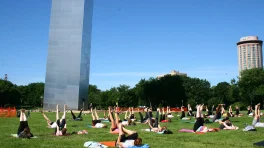
A richer social life was linked to slower biological aging, one piece of healthy aging. Attending meetings was one of the examples of positive social experiences in the study.
In a study of 1,309 adults, people with more positive social experiences, such as attending meetings, had a younger biological age, better health and a lower risk of dying during the study. People with difficult social experiences, including childhood adversity, tended to show the opposite pattern.
How the study worked
Researchers used data from the Midlife in the United States (MIDUS) study, which followed 1,309 adults and looked at their social experiences, blood markers of aging and inflammation, health status and survival. The work was published on August 11, 2026 in NPJ Aging. Because it is an observational study, it shows links between social life and aging, not proof that one causes the other.
What they found
People with more positive social experiences had a lower risk of dying during the study. They also had what scientists call epigenetic age deceleration. In plain words, their bodies looked biologically younger than expected, as measured by tests known as epigenetic clocks. One of the clocks used was GrimAgeV2. These people also reported better health.
The reverse was true for negative social experiences. People who had them, including childhood adversities, had shorter survival, bodies that looked biologically older, and poorer health.
The researchers then asked how social life and survival connect. Biological aging turned out to be part of the answer. It explained part of the link between social experiences and risk of dying, for both the positive and the negative kind.
Inflammation played a role too. It weakened the links between positive social experiences, childhood adversity and mortality. That suggests calmer inflammation is one piece of how a good social life shows up in the body.
The authors conclude that biological aging appears to be an influential pathway linking social experiences to survival. They also say that social conditions that slow biological aging and reduce inflammation offer promise as ways to support longer life.
What is an epigenetic clock?
Your calendar age counts the years since your birthday. An epigenetic clock is a blood-based measure that estimates how fast your body is aging biologically. Two people with the same calendar age can have different biological ages.
In this study, people with richer social lives tended to have clocks that ran slower. That is the encouraging part. Your daily habits and surroundings are linked to how your body ages, not only the number of birthdays you have had.
The childhood adversity finding is a sad one. It also matters because it shows how early life can leave a mark. The positive side is that the study found healthy social experiences were linked to better aging.
What you can do today
Pick one regular group and put its next meeting on your calendar. It could be a class at your local YMCA, a book club at the library, a faith group, a volunteer shift or a neighborhood walking group. Meetings were one of the examples of positive social experiences in the study, so a regular, repeatable gathering is an easy way to try the same kind of experience.
For clinicians and researchers
Design: Cohort analysis of Midlife in the United States (MIDUS) study data, n=1309 participants, examining social experiences, epigenetic clocks (e.g., GrimAgeV2), allostatic load, health status and all-cause mortality. Follow-up duration and comparator are not given in the abstract.
Main result: Positive social experiences (e.g., attending meetings) were associated with reduced mortality risk and epigenetic age deceleration; negative experiences (e.g., childhood adversities) were associated with shortened survival and epigenetic age acceleration. Effect sizes and confidence intervals are not given in the abstract.
Main limitation: Observational design: associations, including the mediation by epigenetic aging, cannot establish causation. Social experiences were likely self-reported and the abstract gives no effect sizes.
How it fits: Extends earlier Mongevity coverage of social life and healthy aging by pointing to epigenetic aging as a possible biological pathway linking social experiences to survival. How can I live longer? · Healthy aging: exercise plus an active social life means more memory-healthy years
Open question: Whether interventions that improve social conditions slow epigenetic aging and reduce inflammation, and in turn lengthen survival, remains to be tested.
Talk about it at home
Your calendar age only counts birthdays, but your body can wear its years differently, a bit like two bicycles bought on the same day, where the one that was cared for and ridden with friends stays smoother. Scientists followed a large group of adults, asked about their friendships and the gatherings they went to, and used blood tests that estimate how fast the body is aging. People with a richer social life tended to have bodies that looked younger than their birthdays say, though this shows a link, not a proven cause.
Try it at home
Look up together how scientists read the rings inside a tree trunk, and talk about why a tree can have a different story to tell than the calendar, with thin rings in hard years and wide rings in kind ones.
Keep exploring
Copies this article and its questions so you can paste them into ChatGPT, Claude, Gemini or the AI you use, and keep the conversation going.
Cite this article
Mongevity Desk. Social life and healthy aging: active people showed slower biological aging. Mongevity. Published November 25, 2026. Accessed November 26, 2026. https://mongevity.science/aging/2026/11/social-life-healthy-aging-slower-biological-aging/Mongevity Desk. Social life and healthy aging: active people showed slower biological aging [Internet]. Mongevity; 2026 Nov 25 cited 2026 Nov 26]. Available from: https://mongevity.science/aging/2026/11/social-life-healthy-aging-slower-biological-aging/Mongevity Desk. (2026, November 25). Social life and healthy aging: active people showed slower biological aging. Mongevity. https://mongevity.science/aging/2026/11/social-life-healthy-aging-slower-biological-aging/
<a href="https://mongevity.science/aging/2026/11/social-life-healthy-aging-slower-biological-aging/">Social life and healthy aging: active people showed slower biological aging</a>
Free to share or quote with credit and a link.
Questions and answers
- Does being social slow aging?
- In this study of 1,309 adults, people with more positive social experiences had bodies that looked biologically younger. It is an observational study, so it shows a link, not proof.
- What counts as a positive social experience?
- The study used examples such as attending meetings. Regular group activities are a simple way to get more of them.
- What is biological age?
- It is an estimate of how old your body acts, based on epigenetic clocks. It can differ from the number of years you have been alive.
- What did the study find about childhood adversity?
- People with negative social experiences, including childhood adversities, had shorter survival, older-looking biological age and poorer health. Inflammation played a part in the link.