Type 2 diabetes: Asian ethnicity and modifiable factors tied to advanced kidney disease
Chronic kidney diseasePart of a story we are following · 3 articles · See every update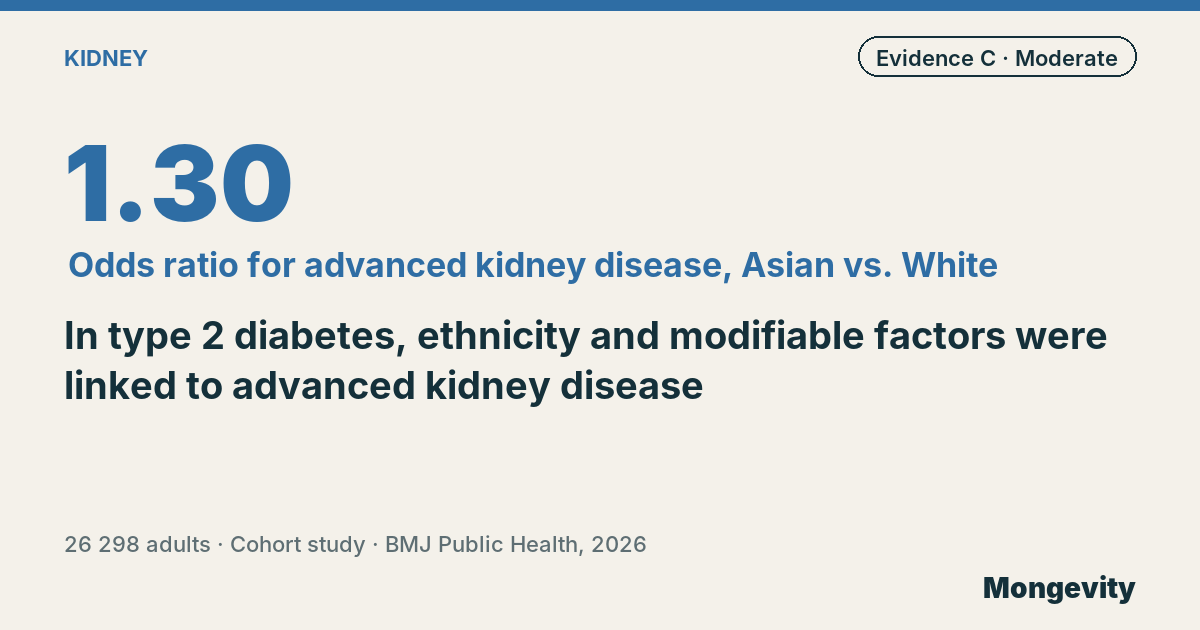
Asian ethnicity (odds ratio 1.30), higher A1c, weight, blood pressure and protein in the urine were linked to advanced kidney disease in 26 298 adults with type 2 diabetes in South London, UK, in a study published Oct. 20, 2026, in BMJ Public Health. Several of these chronic kidney disease risks can be changed.
Chronic kidney disease is one of the main complications of type 2 diabetes. Some ethnic groups seem to progress faster to advanced disease, but it’s unclear how much is explained by measurable risk factors.
What did the study do?
Researchers used primary care records from Lambeth, in South London, on 26 298 adults with type 2 diabetes between 2005 and 2021. The group was 40.5% Black, 36.7% White and 15.5% Asian. They looked at albuminuria, protein leaking into the urine, which is an early sign of kidney damage, and at advanced chronic kidney disease, stage 4 or 5.
What did the study find about chronic kidney disease?
| Linked to advanced chronic kidney disease | Odds ratio |
|---|---|
| Asian vs. White ethnicity | 1.30 |
| Moderate albuminuria (A2) | 1.33 |
| Severe albuminuria (A3) | 1.22 |
| Higher A1c, per unit | 1.02 |
| Higher systolic blood pressure, per unit | 1.02 |
Older age and higher body mass index were also linked to advanced disease, while higher baseline kidney function was linked to lower risk. Severe albuminuria was most common in people of Mixed and Other ethnicities (25.6% and 24.6%).
Why does this matter?
The results point to modifiable targets, blood sugar, weight and blood pressure, that can be addressed in every group, and highlight that people of Asian background with diabetes may need closer kidney monitoring.
How solid is this evidence?
It’s moderate. Mongevity rates it C on our A-to-E scale: a large, diverse primary care data set, but a retrospective analysis of routine records, with self-reported ethnicity and some results, such as higher LDL cholesterol being linked to lower risk, that are hard to interpret.
What are the open questions?
Researchers need to explain why Asian ethnicity carries extra risk and test whether culturally tailored care improves kidney outcomes.
What does this mean for you?
If you have type 2 diabetes, ask for a yearly urine test for protein (the albumin-to-creatinine ratio) and a blood test for kidney function. Keeping blood sugar, blood pressure and weight in range protects the kidneys, and some diabetes medicines also protect them.
How do I explain this at dinner?
In a diverse part of London, people with diabetes of Asian background, and those with high sugar, weight or blood pressure, were more likely to reach advanced kidney disease. Many of these risks can be changed. A good question for the table: when did you last have a urine test?
In one sentence: in type 2 diabetes, Asian ethnicity and modifiable factors such as blood sugar, weight and blood pressure were linked to advanced kidney disease.
Questions and answers
- What is albuminuria?
- Protein leaking into the urine, an early sign of kidney damage.
- Which groups had higher risk?
- People of Asian ethnicity had higher odds of advanced kidney disease (odds ratio 1.30) vs. White.
- What can be changed?
- Blood sugar, weight and blood pressure, all linked to advanced kidney disease.