After thyroid cancer surgery, survivors had more metabolic problems over the years
Thyroid healthPart of a story we are following · 4 articles · See every update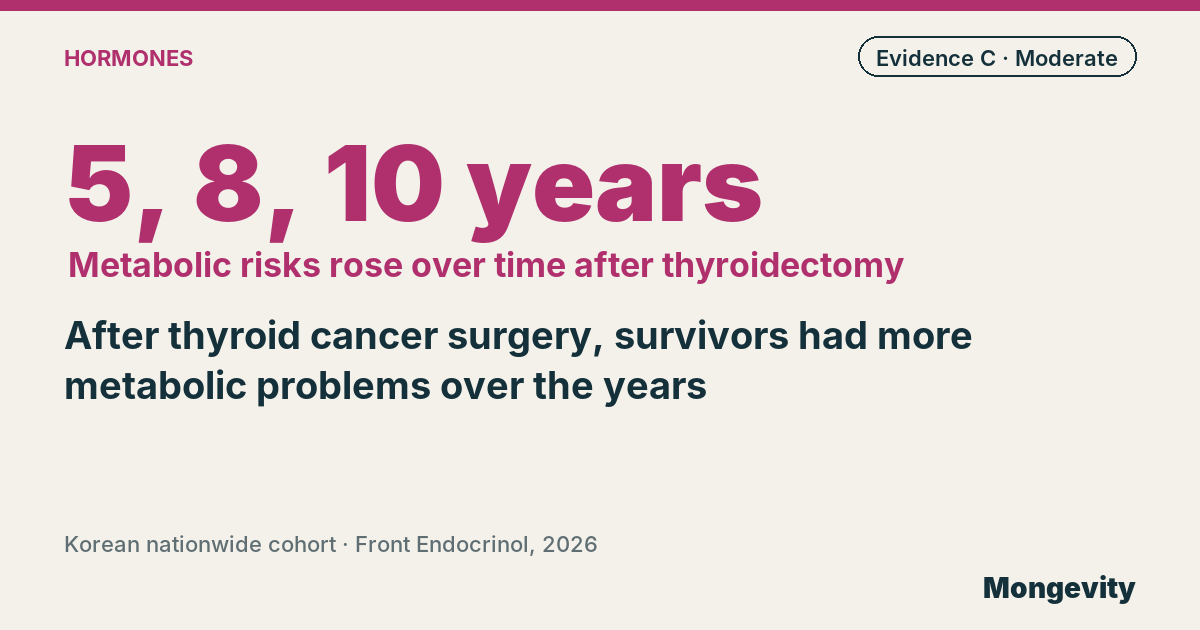
Thyroid cancer survivors who had their thyroid removed had higher odds of obesity, diabetes, high blood pressure and other metabolic problems from about 5 years after surgery, in a nationwide study in Korea published Sept. 8, 2026, in Frontiers in Endocrinology. Long-term follow-up matters for thyroid health after cancer.
Thyroid cancer is common and usually has an excellent outlook. Many survivors have their thyroid removed, a thyroidectomy, and then take thyroid hormone pills for life. As survival improves, long-term effects on metabolism matter more.
What did the study do?
Researchers used Korea’s National Health Insurance Service data to compare thyroid cancer survivors who had a thyroidectomy with matched people without thyroid cancer, and with survivors who didn’t have surgery. They also compared survivors on thyroid hormone therapy with those who weren’t. They looked at new obesity, diabetes, high blood pressure, high cholesterol, metabolic syndrome and fatty liver disease within 5, 8 and 10 years, adjusting for age, sex, income, alcohol, smoking and physical activity.
What did the study find about thyroid health?
- Thyroidectomy was linked to higher odds of several metabolic problems compared with both comparison groups.
- Most links appeared from 5 years onward, and some from 8 years.
- Among survivors who had surgery, thyroid hormone therapy was also linked to metabolic problems.
- Patterns were largely similar in men and women, except that fatty liver disease wasn’t linked to surgery or hormone therapy in men.
Why does this matter?
Surviving thyroid cancer is the main goal, but survivors live for decades. These findings suggest they may need regular checks of weight, blood sugar, blood pressure and cholesterol, and that how thyroid hormone is dosed may matter for long-term metabolic health.
How solid is this evidence?
It’s moderate. Mongevity rates it C on our A-to-E scale: a large national cohort with long follow-up, but observational, and the abstract doesn’t report the size of the associations. Diagnoses came from insurance records, and hormone dosing wasn’t detailed.
What are the open questions?
Researchers need to test whether tailoring thyroid hormone doses, or choosing less extensive surgery when safe, lowers these metabolic risks.
What does this mean for you?
If you’ve had a thyroidectomy, keep taking your thyroid hormone as prescribed and get your levels checked regularly. Ask your doctor about yearly checks of weight, blood sugar, blood pressure, cholesterol and liver health, and keep active and eat well.
How do I explain this at dinner?
People who survive thyroid cancer often have their thyroid removed and take hormone pills for life. In a large Korean study, years later they had more metabolic problems like diabetes and high blood pressure. A good question for the table: what checkups do cancer survivors need years later?
In one sentence: thyroidectomy and thyroid hormone therapy in thyroid cancer survivors were linked to more metabolic problems over 5 to 10 years, supporting long-term monitoring.
Questions and answers
- What is a thyroidectomy?
- Surgery to remove the thyroid gland, often used to treat thyroid cancer.
- What was it linked to?
- Higher odds of obesity, diabetes, high blood pressure and other metabolic problems, mostly from 5 years on.
- Should I stop thyroid hormone?
- No: keep taking it as prescribed and ask about metabolic monitoring.