Menopause hormone pills raised clot risk slightly; patches and gels did not
MenopausePart of a story we are following · 11 articles · See every update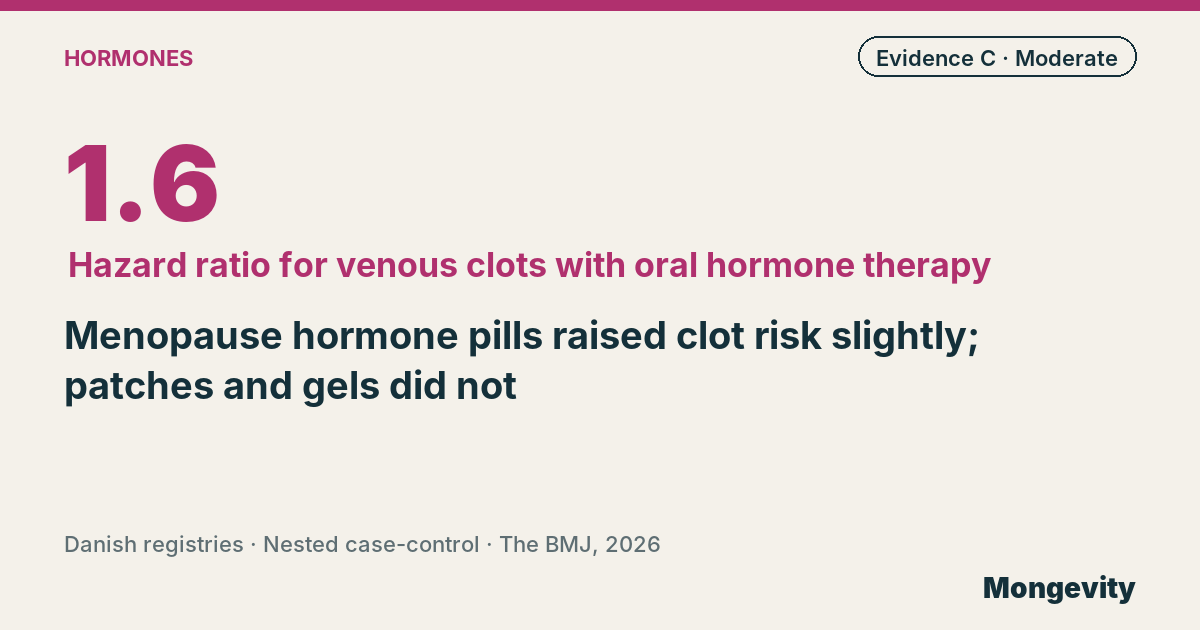
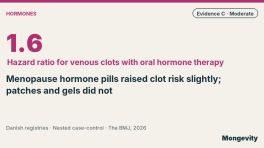
Oral menopausal hormone therapy was linked to more venous blood clots (hazard ratio 1.6), while therapy through the skin was not, in a nationwide Danish study published Sept. 23, 2026, in The BMJ. The route matters when choosing treatment for menopause.
Menopausal hormone therapy relieves hot flashes, night sweats and other symptoms, but concerns about blood clots, strokes and heart attacks make many women hesitate. How therapy is taken, by mouth or through the skin, may matter.
What did the study do?
Using Danish national registries, researchers identified women aged 50 to 69 between 2003 and 2021 without prior clots, cancer or related conditions. They compared 9807 women with venous thromboembolism, a clot in a vein, 18 460 with ischemic stroke and 11 974 with heart attack against matched women without these events, and looked at current hormone therapy use.
What did the study find about menopause?
Among women not using hormone therapy, rates per 10 000 person-years were 15.8 for venous clots, 20.3 for stroke and 13.0 for heart attack. Compared with no current use, oral estrogen therapy, alone or with a progestin, was linked to:
| Outcome | Hazard ratio | Extra risk per year of use |
|---|---|---|
| Venous blood clots | 1.6 | 0.09% |
| Ischemic stroke | 1.3 | 0.06% |
| Heart attack | 1.2 | 0.03% |
That means about 1055 women would need to use oral therapy for a year for one extra venous clot. Oral estradiol at doses above 1 mg/day for more than 5 years was linked to higher stroke and heart attack risk (hazard ratio 1.8 for each). Transdermal therapy, patches or gels, was not linked to more clots, except a higher heart attack risk with transdermal combined cyclic therapy (hazard ratio 2.1).
Why does this matter?
For women who need hormone therapy, the route matters. Transdermal therapy seems a safer choice for clot risk, and the absolute extra risks with oral therapy are small.
How solid is this evidence?
It’s moderate. Mongevity rates it C on our A-to-E scale: a very large nationwide study with careful matching, but observational. Women choosing pills or patches may differ in ways registries can’t capture.
What are the open questions?
It’s still uncertain why combined cyclic transdermal therapy showed a higher heart attack risk, and how these findings apply to women older than 69 or with more risk factors.
What does this mean for you?
If you’re considering or using menopausal hormone therapy, discuss with your doctor whether a transdermal option fits you, especially if you have clot risk factors such as obesity, smoking or a family history of clots. Review the dose and duration periodically.
How do I explain this at dinner?
Hormone pills for menopause slightly raised the risk of blood clots, but patches and gels through the skin didn’t, in a study of Danish women. The extra risk with pills was small: one extra clot for every 1055 women using them for a year. A good question for the table: why might how a medicine enters the body matter?
In one sentence: oral menopausal hormone therapy was linked to a small increase in blood clots, while transdermal therapy was not, with one exception for combined cyclic therapy.
Questions and answers
- Do hormone pills raise clot risk?
- Oral therapy was linked to more venous clots, with a hazard ratio of 1.6 and an extra 0.09% risk per year.
- Are patches and gels safer?
- Transdermal therapy wasn't linked to more clots, except heart attack with combined cyclic therapy.
- Does the dose matter?
- Oral estradiol above 1 mg/day for more than 5 years was linked to higher stroke and heart attack risk.