Cyclosporine eye drops eased dry eye in thyroid eye disease better than lubricants
Thyroid healthPart of a story we are following · 4 articles · See every update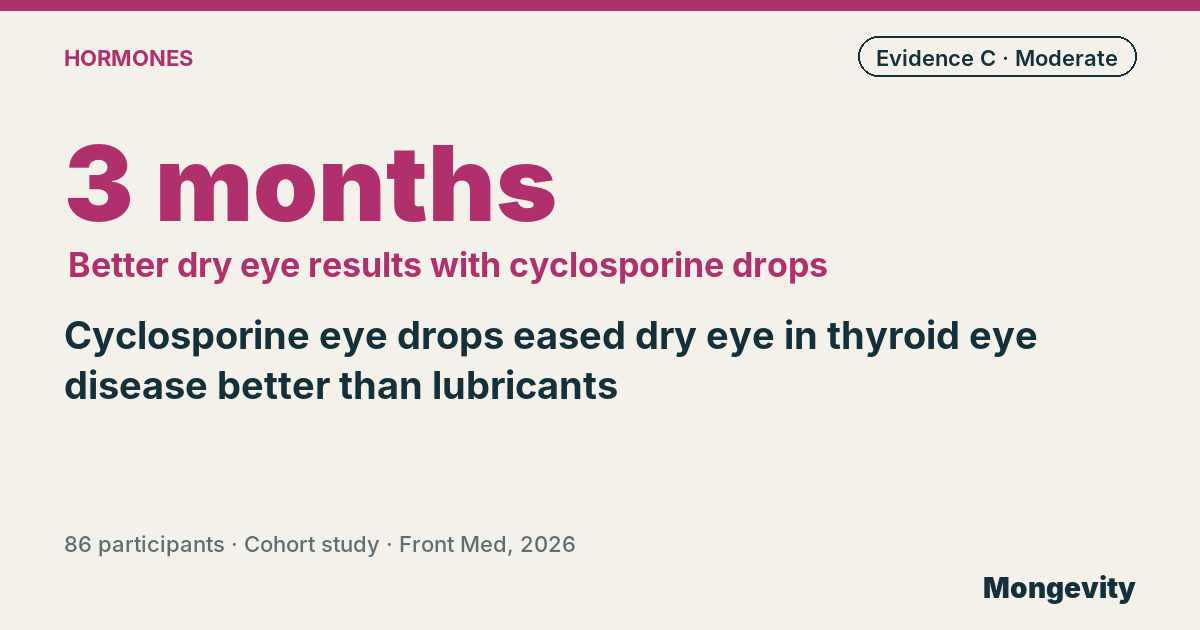
Cyclosporine A eye drops at 0.05% improved symptoms, tear stability and tear production more than lubricating drops over 3 months in 86 people with thyroid eye disease and dry eye, in a study published Oct. 7, 2026, in Frontiers in Medicine. It is a practical option for an eye problem tied to thyroid health.
Thyroid eye disease, also called thyroid-associated ophthalmopathy, is an autoimmune condition linked most often to an overactive thyroid. It can cause bulging, red and irritated eyes, and dry eye is very common. Dry eye can damage the surface of the eye and blur vision.
What did the study do?
Researchers followed 86 people with dry eye due to thyroid eye disease, divided into two groups of 43. One group used 0.05% cyclosporine A drops twice a day; cyclosporine calms inflammation on the eye’s surface. The other group used polyethylene glycol lubricating drops four times a day. Eyes were checked before treatment and at 1, 2 and 3 months.
What did the study find about thyroid health?
After 3 months, the cyclosporine group did significantly better than the lubricant group on:
- Symptoms, measured by a standard dry eye questionnaire.
- Tear film stability, how long tears stay spread on the eye.
- Tear production, measured with a paper strip.
- Damage to the corneal surface, seen with a dye.
Differences appeared as early as month 1. Both groups improved similarly in tear volume and redness. Side effects were few and mild.
Why does this matter?
Dry eye in thyroid eye disease is partly driven by inflammation, so drops that only lubricate may not be enough. Cyclosporine targets that inflammation and may give more relief.
How solid is this evidence?
It’s moderate. Mongevity rates it C on our A-to-E scale: a prospective study with a comparison group, but not randomized or blinded, with a small number of participants and 3 months of follow-up. The abstract doesn’t report the size of the differences.
What are the open questions?
Randomized trials with longer follow-up are needed to confirm the benefit and see whether it lasts.
What does this mean for you?
If you have thyroid eye disease and your eyes feel gritty, dry or burning, tell your eye doctor. Ask whether anti-inflammatory drops such as cyclosporine could be added to lubricants. Protecting your eyes from wind and screen strain, and not smoking, also help.
How do I explain this at dinner?
Thyroid problems can inflame the eyes and leave them dry and irritated. In a study, eye drops that calm inflammation helped more than simple lubricating drops within a few months. A good question for the table: why might calming inflammation work better than just adding moisture?
In one sentence: in thyroid eye disease with dry eye, cyclosporine A drops improved symptoms, tear stability and tear production more than lubricating drops over 3 months.
Questions and answers
- What is thyroid eye disease?
- An autoimmune eye condition linked most often to an overactive thyroid, causing bulging, redness and dry eye.
- Did cyclosporine drops help?
- Yes: they improved symptoms, tear stability and tear production more than lubricating drops.
- Were there side effects?
- They were few and mild in both groups.