In medical trainees, burnout wasn’t reflected in morning cortisol levels
Cortisol and metabolismPart of a story we are following · 4 articles · See every update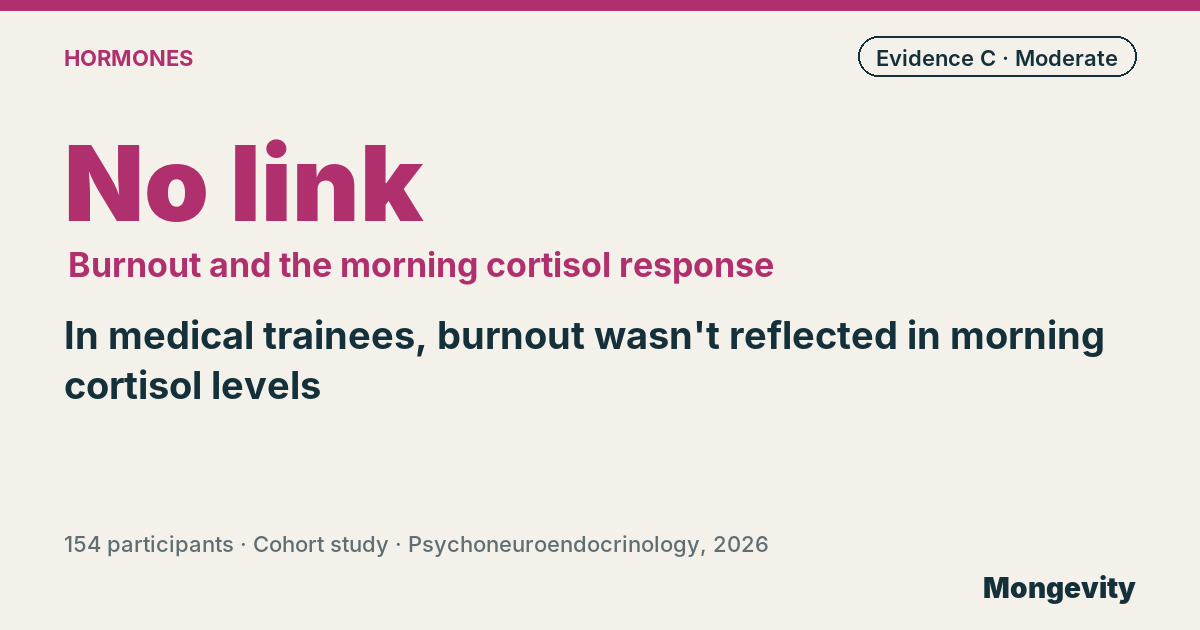
Burnout symptoms were not linked to the morning cortisol response in a three-year study of 154 medical students and young doctors, published in October 2026 in Psychoneuroendocrinology, though higher burnout was linked to a lower inflammation index. A cortisol test is not a burnout test.
Cortisol is often called the stress hormone, and burnout is often described as chronic stress at work. It seems natural to expect burnout to show up in cortisol levels.
What did the study look at?
Researchers followed medical students and physicians-in-training over three years. They measured burnout symptoms with the Maslach Burnout Inventory, a standard questionnaire. They measured the cortisol and cortisone awakening response, the normal rise of these hormones in saliva in the first hour after waking, with a precise laboratory method. They also measured several markers of inflammation in blood. 154 participants contributed 241 measurements.
What did the study find about cortisol?
- Burnout symptoms were not significantly linked to the cortisol or cortisone awakening response.
- Higher burnout symptoms were linked to a lower inflammatory index.
- Inflammatory markers were linked to measures of the hormonal stress system.
Why does this matter?
Many tests marketed to the public claim to measure stress or burnout through cortisol. This study suggests that, at least for the morning cortisol response, burnout doesn’t leave a clear mark. The relationship between burnout, hormones and the immune system appears more complex than a single hormone level.
How solid is this evidence?
It’s moderate. Mongevity rates it C on our A-to-E scale: a longitudinal study with precise hormone measurements. Limits: the group was relatively small, participants were young medical trainees, so results may not apply to other workers or ages, and cortisol was measured only in the morning.
What are the open questions?
Longer studies with more repeated measures, and with other ways of measuring cortisol such as in hair, could clarify how burnout relates to the body’s stress and immune systems.
What does this mean for you?
Burnout is diagnosed by how you feel and function, not by a blood or saliva test. If you feel exhausted, cynical about work or less effective, take it seriously: talk with someone you trust or a health professional, and look at workload, sleep and support at work.
How do I explain this at dinner?
Researchers followed young doctors for three years and measured the stress hormone cortisol each morning. Burnout didn’t show up in cortisol, but it was linked to differences in inflammation markers. A good question for the table: how do you notice when you’re running on empty?
In one sentence: in medical students and trainees, burnout symptoms were not linked to the cortisol or cortisone awakening response, but were linked to a lower inflammatory index.
Questions and answers
- Is burnout reflected in cortisol?
- In this study, burnout was not linked to the morning cortisol or cortisone response.
- Was anything linked to burnout?
- Higher burnout was linked to a lower inflammatory index.
- Can a cortisol test diagnose burnout?
- No. Burnout is identified by symptoms and functioning.
- Who was studied?
- 154 medical students and physicians-in-training over three years.